

Who Makes Festool Tools And Where Are They Manufactured?
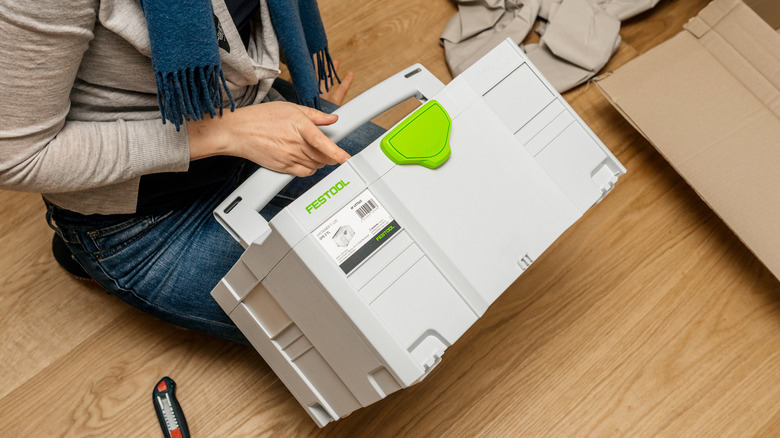
With many power tool brands, pinning down exactly who makes a product — and where it's made — isn't always straightforward. The story behind who makes Ryobi socket sets is a prime example of the complexities of modern tool branding and manufacturing. Against this backdrop, it's refreshing to find a company that relies on a handful of known locations to manufacture the vast majority of its tools. We're talking about Festool, a German company that manufactures 80% of its products in its home country, a rare thing in these days of complex global supply chains and farmed-out manufacturing.
Festool can trace its roots back to Germany in the 1920s, hardly the most promising era to begin such an entrepreneurial enterprise, but the company's founders, Albert Fezer and Gottlieb Stoll, went ahead and set it up. Originally called Fezer & Stoll, this was shortened to Festo before becoming Festo Tooltechnic in 1992 and Festool in 2000. While the branding has changed, much else has remained strikingly consistent. Today, Festool operates as part of TTS Tooltechnic Systems, alongside other brands such as SawStop and Shaper. However, the company has remained family-owned throughout its history and continues to be headquartered in the same region of Germany where it was founded over a century ago.
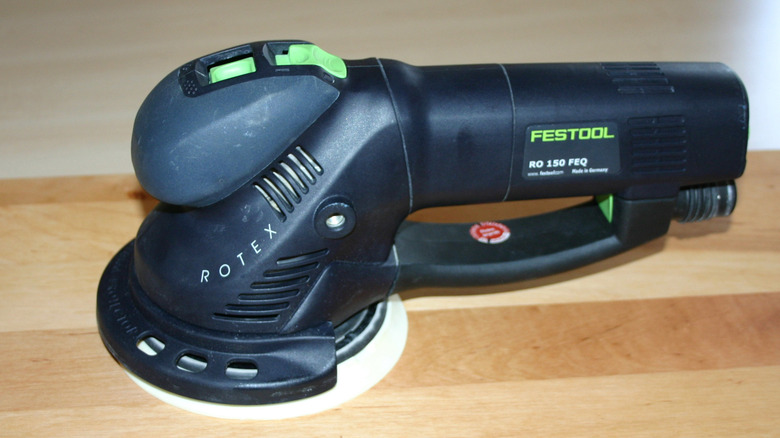
The company now manufactures a wide range of tools and accessories, including drills & screwdrivers, sanders, routing tools, planers, and even exoskeletons.
Festool: Made in Germany, mostly
The history of Festool is closely linked to the Baden-Württemberg district of Germany. The company was founded in Esslingen am Neckar, near Stuttgart, before relocating its headquarters to Wendlingen when the Festool rebranding happened in 2000. That move kept the company firmly rooted in its historic heartland, where it all began over a century ago.
Today, the Wendlingen site serves as Festool's headquarters, and houses the company's research & development, logistics, and quality assurance assuring operations. Within the same region are two of the company's German production facilities — Neidlingen and Weilheim an der Teck. Neidlingen is one of the main production hubs and has been recognized several times as "Factory of the Year". Also close to Festool's heartland is its Weilheim an der Teck factory, a modern 10,000 square-meter facility. The final German facility is the Illertissen plant in Swabian Bavaria; it's here that the company develops and manufactures its mobile dust extractors.
The company also manufactures in the Czech Republic at its factory in Česká Lípa. This factory specializes in large-volume production runs and uses the same processes and standards as the company's German factories. Finally, we need to mention Festool's US manufacturing. The company's US headquarters in Lebanon, Indiana, is also where Festool manufactures its guide rails for routers, track saws, and jigsaws.
Ultimately, when looking at who owns every major tool brand, the Festool story is among the most straightforward.