

If A Tire Comes Off While You're Driving, This Is What You Need To Do
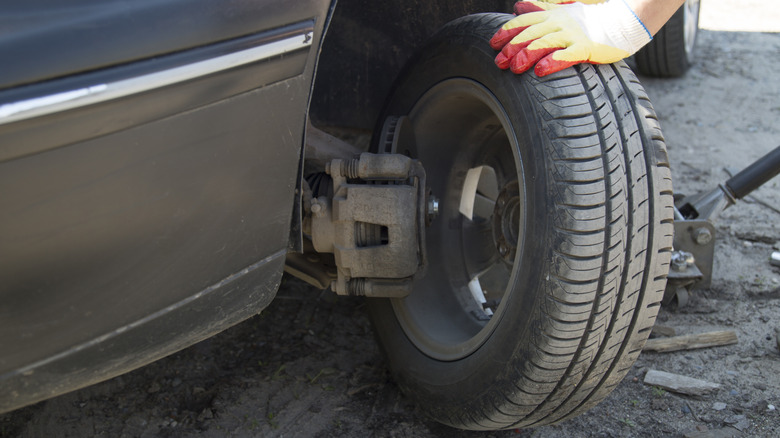
Unlike a flat tire, which could just be a nuisance depending on the situation, a tire that actually comes off your vehicle during driving can be extremely dangerous. The National Highway Traffic Safety Administration (NHTSA) hasn't published specific guidance for a tire separation. But it has given recommendations for tire failures and blowouts, which would have some warning signs ahead of time. The NHTSA's tips, however, do outline a safe response.
First, keep a firm grip on the steering wheel as it will probably be shaking, especially if you're driving fast. Try to keep from hitting the brakes, and slowly take your foot off the gas to slow down. Steer the vehicle as smoothly as you can, and find the closest place to pull over. Once you're safely out of harm's way, turn on your hazard lights, call for help, and don't try driving any further. The New York State Department of Health has similar safety guidelines for the loss of a wheel, with some important differences. When the failure happens, put your hazard lights on right away, and as you're slowing down, steer straight ahead instead of turning the wheel.
Though it won't be easy, keeping your cool is the key to remaining safe. If you panic and make a mistake, things could get much worse, not only for yourself, but for other drivers as well. For more information on your state's highway safety guidelines, contact your local department of public safety.
How to prevent catastrophic tire failure
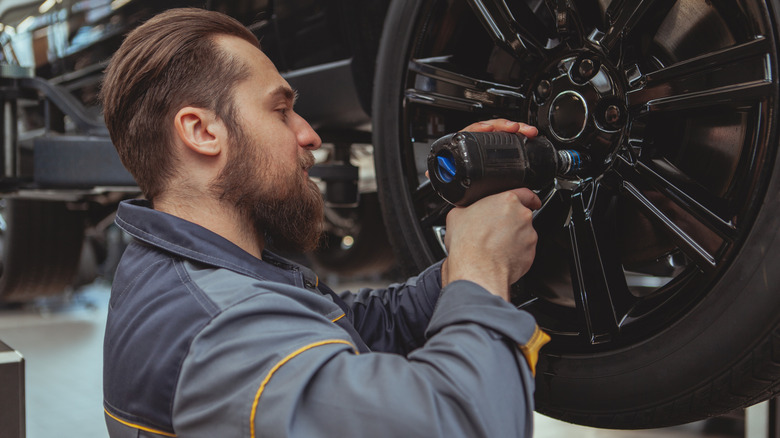
If a tire comes off your vehicle while you're driving, chances are it's due to improper tire installation. This means your lug nuts may not have been tightened enough, and when that happens, they could eventually fail as your car is moving. However, damaged or corroded lug nuts could be the culprit as well. Even if you're obeying the speed limit, if your lug nuts are already compromised, a sudden jolt from a road hazard could be enough to result in an accident.
It's important to catch the problem early, so don't be afraid to follow up with your mechanic, especially if your tires feel wobbly after a rotation. After you drive the first 50-100 miles, you should also check the lug nuts yourself. If you did the work instead of a tech, tighten the lug nuts to the right torque specification, and follow the proper tightening pattern for even pressure. Regularly inspect the nuts for any signs of damage or corrosion, and tighten them as needed.
Some automakers are even installing advanced systems like the Loose Wheel Indicator (LWI), which can catch wheel problems long before the worst occurs. This safety feature is from NIRA Dynamics, a company that develops tire pressure monitoring systems. LWI uses a vehicle's built-in speed sensors to track early signs of loosening on the lug nuts or wheels. If a problem is detected, the LWI sends a warning to the driver, so the issue can be addressed.