

Why Are Some Ethernet Cables Flat – And Are They Better Than Round?
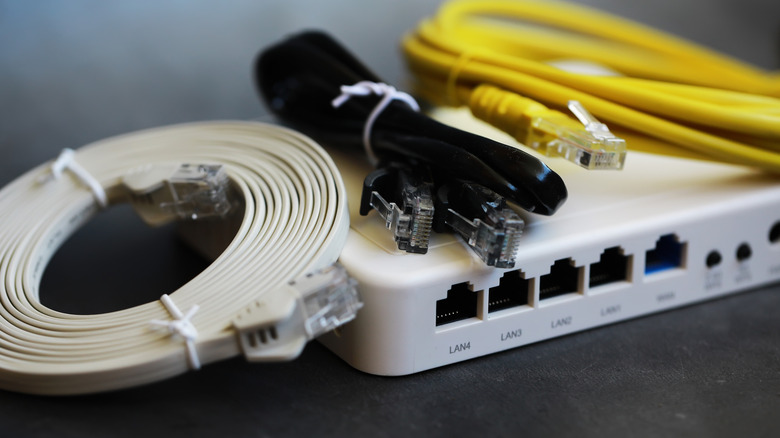
The trusty old Ethernet cable is still the most reliable and fastest way to connect devices to the internet or across networks. Generally considered more reliable than wireless connections, wired connections are favored by gamers and other users who rely on robust, fast network connections. However, not all Ethernet cables are born equal. For instance, Ethernet cables come in different colors, with yellow cables often, but not always, being suitable for power over Ethernet.
While the color of Ethernet cables is one difference, another is their shape. These cables can vary in design, including their shape. The vast majority of Ethernet cables are the traditional round type, but a less common shape is the flat Ethernet cable. The shape of the cable might not seem to matter very much, after all, it has a relatively simple job to do — transmit data through copper wires.
If we take apart an Ethernet cable, one thing that's immediately apparent is not that the cable is made up of eight separate wires, but rather it's made up of four sets of pairs of wires twisted together. This is important because the twisted-pair characteristic of Ethernet cables helps prevent signal degradation; we'll return to this point later. But first, let's answer the question: why are some Ethernet cables flat? Put simply, this design allows flat Ethernet cables to be installed discreetly in places like under carpets or along flat surfaces. However, this simple design characteristic does have potential downsides.
The pros and cons of flat Ethernet cables
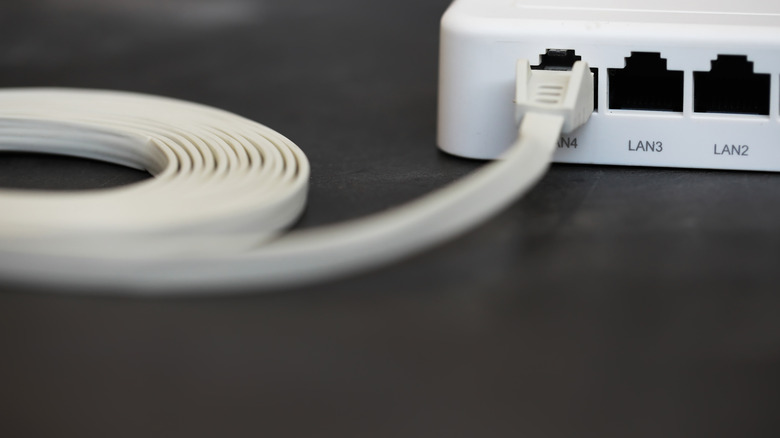
We've established that flat cables are designed for discreet installation and, in these situations, flat cables could be considered a better option than their round cousins. However, there are downsides to flat cables that definitely need to be factored into the flat vs. round Ethernet cable discussion. The issues with flat cables can be traced directly to the design compromises that were needed to make flat cables — well, flat. Because these cables need to be low-profile, most flat cables have reduced shielding against electromagnetic interference (EMI).
There is also the twisted pair characteristic of Ethernet cables to consider. This matters because Ethernet relies on the twisting of its wire pairs to cancel out electrical noise. In a traditional round cable, each pair is twisted at a precise rate and separated from the others by internal filters or shielding, which helps to reduce crosstalk and external interference. Flat Ethernet cables, by contrast, often arrange their conductors side-by-side, limiting how tightly those pairs can be twisted. This can make them more susceptible to interference from nearby power cables, household electronics, and other sources of electromagnetic noise. Additionally, they're generally less robust than round cables.
Over shorter distances, and in 'low-EMI' situations, these downsides will rarely cause noticeable problems. However, with longer cable runs or in areas with high levels of EMI, the design compromises of flat Ethernet cables can become apparent. In short, it's important to consider all the factors when choosing the right Ethernet cable.