

Don't Get Hurt: How To Safely Hit The Snowmobile Trail This Winter
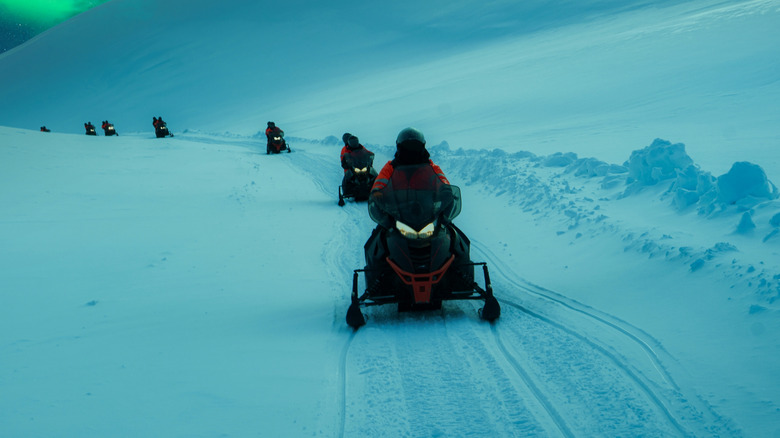
If you live in the Midwest or Northeast, winters consist of the ground being covered in snow, and below freezing temperatures. But this doesn't mean the fun times have to be put on pause; many Americans embrace winter wholeheartedly by engaging in winter sports. Snowmobiling is the ultimate adult winter activity, with thrills coming fast at the twist of the throttle, allowing enthusiasts to experience little-explored parts of local landscapes at eye-watering speeds. Whether it's one of the many Yamaha options or a Ski-Doo, there are a ton of impressive rides on the market these days. But with this gas-powered sledding comes risk — high-octane trail riding can be quite dangerous without heeding the ground rules.
While modern snowmobiles are marvels of engineering, they're really only as safe as the person holding the handlebars. Before you even consider buying a snowmobile to conquer the trails, beginners should take time to read tips about the sport in general. Obviously, there are similarities to riding a dirt bike or jet ski here, as riders can only project themselves by wearing gear on their person. Being exposed in this manner is all the more reason for riders of all stripes to respect the inherent dangers before hitting the snow, as these machines can reach speeds of up to 120 mph. Staying on marked trails, riding 100% sober, not riding alone, watching speeds, and taking a safety course are all crucial for safety.
Safety first, fun later
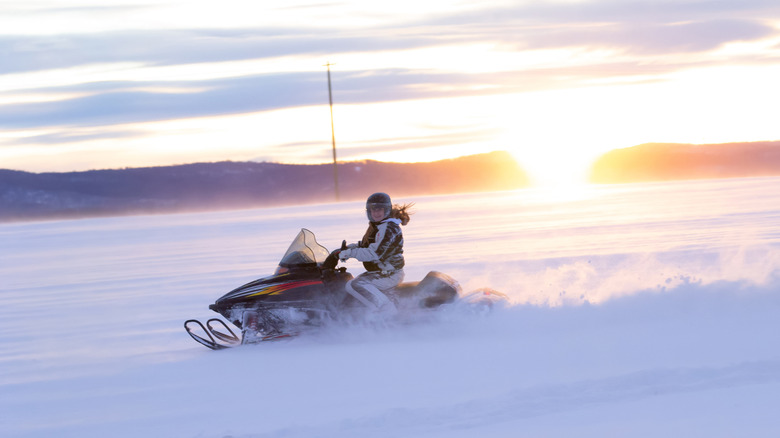
We get it, riding a crazy fast snowmobile is very fun. But accidents on a Ski-Doo can be fatal, especially if you factor in the remote areas they often take riders to. If you have an accident so far from a hospital, you're putting yourself — and possibly other riders — in grave danger. Before you go on a leisurely ride, it's best to review a comprehensive safety checklist. Things like inspecting the drive belt for any cracks, checking the throttle and brakes to ensure they respond accordingly, as well as testing the kill switch for emergency stops, are key. Double-check that all lights function before a ride, too.
The International Snowmobile Manufacturers Association (ISMA) is a great resource for enthusiasts. On their website, they have a comprehensive safety guide that aims to keep all 10 million North American riders safe each winter. It covers things like knowing your own limits on a snowmobile, as well as respecting the limits of your ride. According to ISMA, having a general sense of the lay of the land and the extent of the trails via maps can also help. Lastly, for more safety measures, keeping your snowmobile tuned with regular servicing will ensure you don't break down. Only riding on frozen lakes or ponds with safe ice levels must be taken into account, and personal safeguards like dressing appropriately (warm, weather-appropriate gear with high-visibility reflective accents) and always wearing a helmet should be non-negotiable protocols for all riders.