

What Do The Strange Code Symbols Stand For On Your Snap-On Tools?
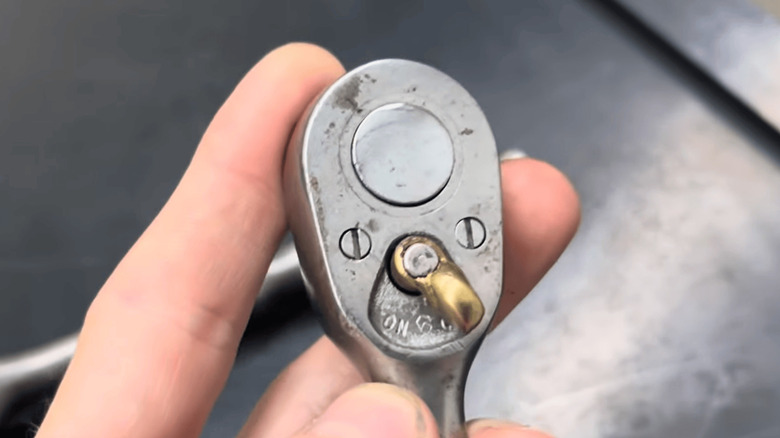
Snap-on has been making its own tools in the U.S. for decades now, and throughout that time, the company has become world-renowned for building some of the most durable and high-quality tools on the market. In fact, Snap-on traces its history back over 100 years, which means some of the tools in your toolbox may actually be much older than you think, especially if you inherited them from someone giving them away, or purchased them used to save a fistful of dollars.
These can make it pretty difficult to date your tools if you want to, but fortunately, there are a couple of ways to do so. This is particularly useful for vintage tool collectors, but it's also just interesting, and the answer might just surprise you. The first way to understand how old your tools are is to check out the logo. The Snap-on logo has evolved over the years, going through numerous designs, so this can help you to pinpoint the rough era in which your tools were manufactured.
However, while that method might help you to highlight the decade or era it was produced in, there is a more accurate method that can tell you the exact year. Snap-on tools are marked with unusual symbols, and each symbol correlates to a particular production year. Cross-referencing the marks on your tools with a Snap-on date chart will tell you exactly how old the tool is.
Understanding limitations and details of the date symbols
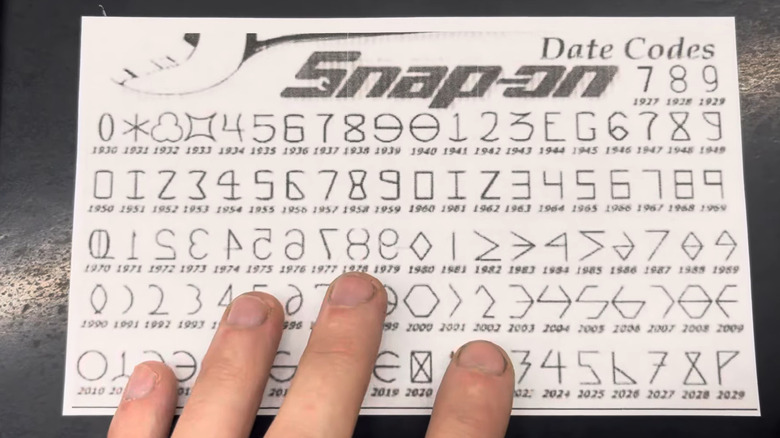
It's not a foolproof method, but it is pretty close. Limitations include the very earliest tools, as Snap-on has been producing tools since 1920, although the symbol system wasn't employed until 1927. So, if you've got something that features an early logo and you can't find a date symbol on it, the chances are you've got something that Snap-on collectors might get quite excited about.
As of now, the date chart goes up to 2029, which means the next few years are decided, but anything from 2030 onward has not currently been allocated a symbol. Of course, there is plenty of time for Snap-on to sort this out, but it will be interesting to see what the toolmakers go for next. It's also worth noting that, with exceptions being made for the first few years of date-symbol-use, the fonts used for the symbols are quite irregular. This is likely so the symbols don't confuse users — the last thing you need is to confuse a date symbol with a measurement on a tape measure or similar. So, it makes sense that Snap-on would use an irregular font. The symbols are often finished in red too, so they stand out, and again reduce confusion to users of the tool.