

Rare Form Of Helium Found In The US Being Hyped As Possible Future Fuel Source
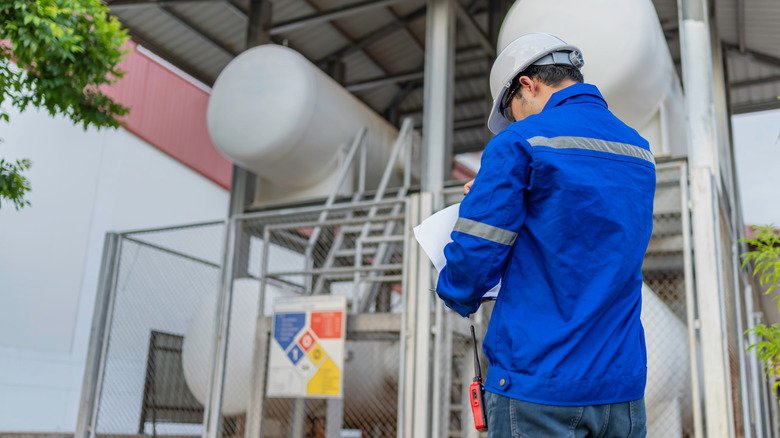
Forget about harvesting these rare isotopes from space: A recent announcement from Pulsar Helium has found measurable levels of helium-3 beneath the ground of northern Minnesota. Pulsar Helium's laboratory analysis revealed that levels range from 1.3 to 14.5 parts per billion in produced gas. What's more, the isotopic signature stayed consistent across samples. In other words, it's all coming from one big common source.
For context, helium naturally occurs in different isotopes. Those isotopes are set apart by the number of neutrons in their atomic nuclei. The most familiar form, helium-4, has two protons and two neutrons. It's mainly used for medical imaging, industrial processes, and cooling systems. Helium-3, by comparison, has just one neutron. That small difference gives it unique physical properties with potential to be used as a "clean" nuclear energy source, but it also makes it way more rare.
So sure, those northern Minnesota figures might sound laughably small, but the discovery of helium-3 is nevertheless a big deal: this stuff is typically only found in Earth's atmosphere. What's more, it's usually at trace levels measured in parts per trillion and rarely concentrated in any sort of usable form.
A specialized fuel, or a long-term energy solution?
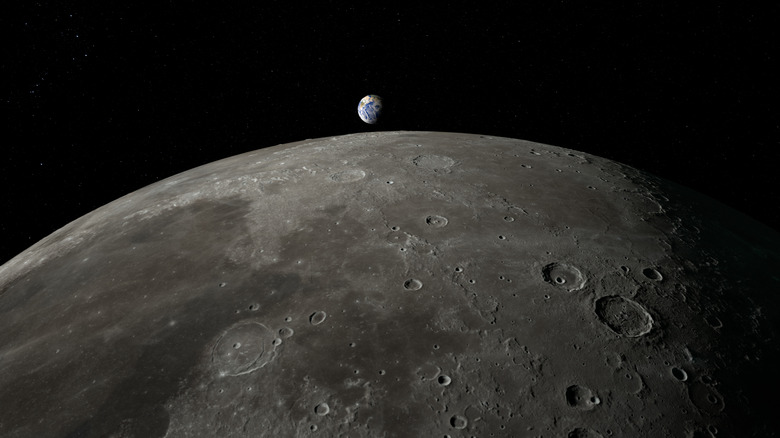
According to Pulsar, the Minnesota reservoir contains both helium-4 and helium-3. And, interestingly, it's close to the helium-3 concentrations found in lunar soil samples brought back by NASA's groundbreaking Apollo missions. The hope is that, one day, this element might be able to be used to generate "clean" nuclear energy without having to head to the moon to grab it. For the time being, though, the stuff can really only be used in highly specialized applications. Think ultra-low-temperature refrigeration systems that cool quantum computers and physics experiments to near absolute zero.
In theory, a natural supply of helium-3 could help us get away from the old-fashioned way of harvesting helium-3: either from the moon or from the decay of tritium in nuclear weapons programs. If they could get it out of the ground, there'd be no need to mess with radioactive waste. Of course, it's too early to say if this Minnesotan supply could ever be enough to support large-scale fusion energy experiments. Still, it could lead to more research that could, in turn, lead to more major discoveries.