

What Happens To Returned Tools At Ace Hardware? Here's Where They Actually Go
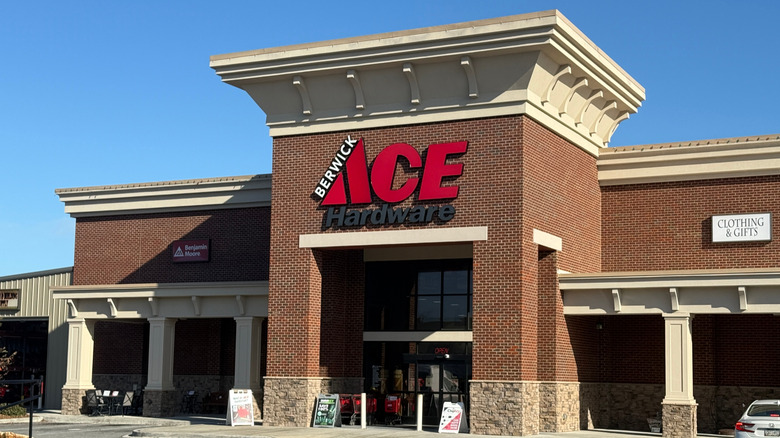
It's not unusual for DIY enthusiasts and homeowners to frequent stores like Home Depot, Lowe's, and Harbor Freight. Known for their massive inventories and wide product selections, these big-box retailers are great when you're tackling a large project. But they can also feel overwhelming — especially when all you need is a single tool, a fastener, or a quick replacement part. In moments like those, a smaller neighborhood hardware store becomes far more appealing: One that's close by, easy to navigate, and staffed by people who may personally know you. And that's precisely the niche that Ace Hardware has targeted successfully over the years.
Another major difference in how Ace Hardware operates is that it functions as a cooperative of independently owned stores rather than a single corporation that controls every location. This single detail also affects how returns are handled at your neighborhood store and where these returned products ultimately end up. While the company advertises a 30-day return policy on its website, they do clarify that the day-to-day enforcement of that policy is largely handled at the store level. For the same reason, the experience of returning a tool can vary depending on the location, the product, and even the store manager.
Despite differences in how returns work at Ace Hardware, the final fate of products returned to these stores is surprisingly similar to that of Lowe's and Home Depot. These retailers have what's called B-Stock programs; they partner with liquidation specialists that auction returned or damaged products in bulk to resellers. The only difference here is that while big box companies tend to work with a number of liquidators, Ace Hardware products are primarily sourced by a single resale vendor instead.
Why Ace Hardware prefers B-Stock programs for returns
If you are a regular at your neighborhood Ace Hardware store, you probably know they don't handle returns like Harbor Freight, which often relies on "open box" or "as-is" promotional pricing. You might find occasional Clearance or Best Sales and Specials deals at Ace Hardware instead, and these may include unopened, undamaged returned items up for grabs. However, by and large, Ace Hardware prefers liquidating customer-returned items (with their primary liquidator being named B-Stock, appropriately enough). Defective items aren't included in these liquidations; those items are usually returned to the original manufacturer.
Thanks to its liquidation policy, Ace Hardware offers thousands of dollars worth of product pallets filled with returned inventory up for grabs on B-Stock at any given time. Those pallets are purchased at bargain prices by resellers, who then offer them to smaller-scale businesses. These small retailers often refurbish and repair those products and sell them at a discount. This is advantageous for Ace Hardware, as liquidating old, returned, and unused tools lets them clear their inventory faster and make space for newer items, which sell at higher margins. With the typical Ace Hardware store being much smaller than a retailer like Home Depot, Lowe's, or Harbor Freight, being able to maximize profit is critical to remaining competitive.
Liquidation programs are beneficial for Ace Hardware, but they're also good news for even smaller retailers as well. Small-scale stores like discount outlets gain access to quality products at a price they likely wouldn't be able to afford otherwise, as they don't have the same resources at their disposal. So the next time you return something at your local Ace Hardware, chances are that product might end up in the hands of another consumer by going through the liquidation process.