

This Japanese Road Has To Be Cut Out Of 65 Feet Of Snow: Here's How They Do It
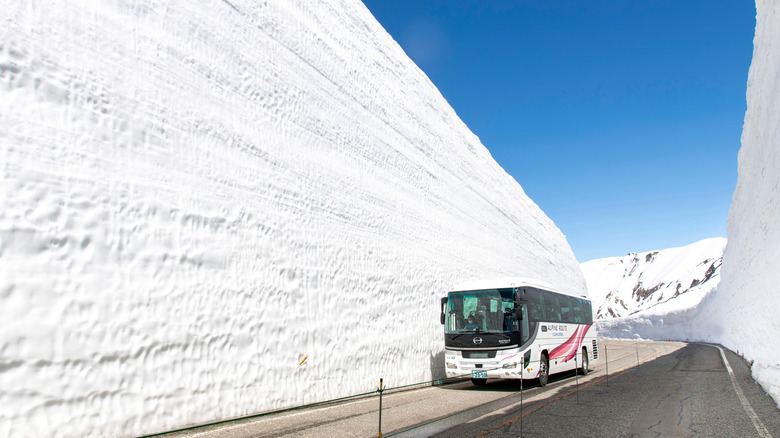
When you think of the Alps, you may picture stunning vistas, charming villages, scenic train rides, and panoramic views from cable cars. You probably don't imagine snow drifts 65 feet high that remain through spring and into summer, but that's exactly what tourists flock to see in the Tateyama Snow Corridor in Japan's Northern Alps, thanks to modern technology and a dedicated snow removal team.
Dealing with that much snow means more than just driving carefully in inclement weather; it involves major adaptations. That's exactly what's necessary for Japan, as it is actually the world's snowiest country. According to AccuWeather data, three cities in Japan are among the top in the world for annual snowfall in locations with more than 100,000 people. More than half the country is considered a heavy snowfall zone, with mountainous regions seeing more than 600 inches every year.
Here in the U.S., some areas see massive amounts of snow every year, but the majority of us are used to dealing with snowfall in inches, not feet. The amount of snow that the Tateyama Corridor receives can make landscapes virtually unidentifiable — you can't just throw a snowplow attachment on a truck and start clearing. In this case, you need specialized bulldozers equipped with both GPS and a satellite phone. Once an initial path is carved, other heavy equipment like backhoes and heavy-duty industrial rotary snow blowers are used to finish the job, carving a valley through the snow and leaving walls behind that can tower above visitors.
How you can visit the Tateyama Snow Corridor
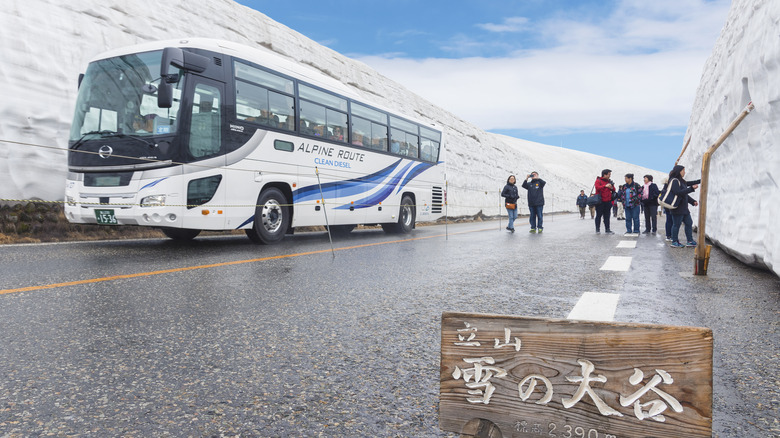
Located about three hours north of Tokyo by train, the Tateyama Kurobe Alpine Route connects Nagano and Toyama prefectures. Typically open from mid-April through late November, this adventurous route takes about five hours to travel. It's known for views of the Kurobe Dam and countless valleys and peaks, but one of the biggest draws is undoubtedly the Tateyama Snow Corridor. Travelers can bus or even walk down this stretch to marvel its towering snow walls, cleared by a group of hard-working snow plow drivers.
This 14-mile section of the Tateyama Kurobe Alpine Route, which takes about a month to clear, is open from mid-April through mid-June. If you want to avoid crowds, the route's official website recommends you wait until June. Do so and you'll also enjoy a warmer visit, as then temperatures average between 45 and 57 degrees Fahrenheit. You'll be bused in, but visitors are allowed off the vehicle to marvel at the sites and take pictures. Tourists are advised to wear an easily removable jacket, a warm hat, and waterproof boots or shoes, and to bring sunscreen and sunglasses.
If you want to check out some impressive snow walls closer to home, visit the Donner Pass Road in California, where snow also stacks up in winter. Named for the infamous group of pioneers that became stranded there, the route offers beautiful scenery and is even part of one of the longest train rides in the world.