

Need To Store Tires Long Term? Don't Make These Mistakes
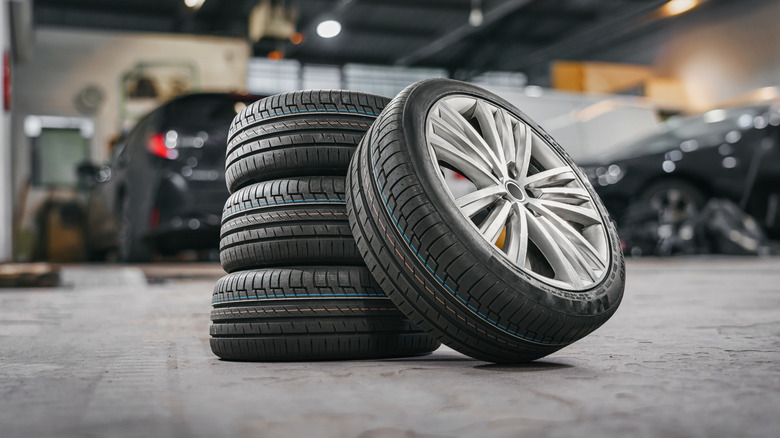
When you remove your winter tires to swap them out, you might not need them again until the following year. Whether you're a professional, own multiple vehicles, or are simply storing away some new tires until they're needed, you shouldn't underestimate the importance of proper tire storage. Sometimes, we might not think too deeply about it, assuming that tires that aren't in use won't sustain any wear or damage as long as nothing falls on them or something similar in our garage. However, there are several good reasons why tires have to be carefully stored in a dry, safe place without extreme temperature fluctuations. Between approximately 50 and 77 degrees Fahrenheit is a good range to maintain their condition and slow the impact of the elements. Even brand-new tires that have never been driven on will not remain as such if you don't exercise due diligence when storing them. It's very rare to see new vehicles with spare tires these days, so great care has to be taken with every tire you have.
A common mistake drivers make when storing a vehicle for a longer period is not removing the tires from it or not keeping it elevated. When a vehicle is parked in the same spot on its tires for some time, the result will typically be unfortunate flat spots. The key is to try to ensure they wear evenly across their surface, and this doesn't allow for that. In addition, tires that are inadequately prepared for the elements will tend to see rapid erosion in performance. Failing to keep them dry, protected, and ventilated, and/or storing inappropriate materials with them, can prove disastrous for your tires.
Consider how long you're planning to store your tires, and prepare accordingly
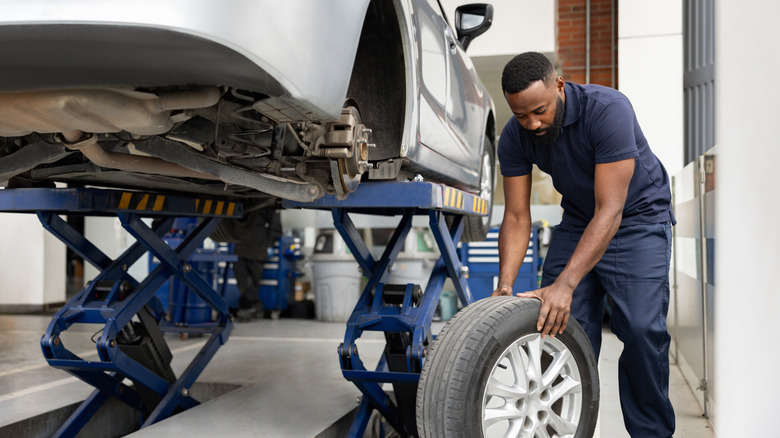
When we're simply parking our cars in our garage overnight, while parking securely is still paramount, there is no need to worry about the question of long-term storage. However, if you'll be storing it for the foreseeable future, there are certain precautions to bear in mind. As noted, there's the risk of tire damage if they're left to bear the weight of the vehicle in the same area for weeks, months, or an even longer period. Typically, the best means of protecting a tire as effectively as possible is by keeping them separate from the vehicle. Kwik Fit recommends a strategy that's frequently employed for longer-term storage of all kinds of attic and basement mainstays: Airtight bags. Alternatives such as durable garbage bags can also serve this purpose.
The air itself can get to tires and harm the rubber, reducing the life of the tires or making them unsafe. Secondly, while you may have much more room outside, storing tires outdoors can quickly cause them to degrade. You can store tires outdoors, but this should be a temporary measure, and you should take extra steps to keep them secure while doing so. If you don't have an appropriate place to store your tires, quite a few dealers offer a storage service themselves, so be sure to inquire about the options you have, associated fees, and so on. You should also try to avoid bad habits that could reduce the life of your tires and, if necessary, allow professionals to take care of them.
Not cleaning your tires before storing them can be another huge mistake
Just as a hibernating bear must eat as many calories as possible to take it through its winter hibernation, tires that are stored for long periods need to go through their own care regimen before being put away. The most important thing is a thorough cleaning, because dirt doesn't just affect a tire aesthetically. With all the rigors of the road (and off-roading for those drivers who partake), tires can get filthy very quickly. Mud, grit, and even harmful road debris like nails can become fixed to your tires. Failing to clean your tires can cause much more harm to their surface than you might expect.
With cars, the smallest annoyance becomes a huge problem if ignored and left to worsen. These tiny particles could harden as time goes on and atmospheric conditions worsen, scratching or potentially even puncturing the tire. Storage is a time when a vehicle's bodywork is perhaps most vulnerable to damage or corrosion, not subject to regular scrutiny from a loving owner, and so should be washed and treated beforehand so it can withstand the conditions in your garage or other storage facility. If you're storing both vehicle and tires separately, it's safest to do that and also pay particular attention to your tires, because you might need them again sooner than you think and find yourself stymied by damage to one of them. Another factor to keep in mind is that tires should be treated differently depending on whether they're mounted on rims or not. For example, if your tires are fitted to rims, they could be damaged if they aren't stacked correctly or hung.