

eSim Phones Have Their Pros, But It's Not All Roses
With everything that our smartphones can now do, a good majority of us rarely use one for its intended purpose, which is making phone calls over a cellular network. Yet, a SIM card is one of the first things we purchase or transfer into a new phone. The physical dimensions of the SIM card have reduced drastically over the past decade and a half, with nano SIMs having a smaller footprint than microSD cards.
The next step forward involved the adoption of eSIM technology. Unlike regular SIM cards, an eSIM is embedded right into a phone, which is how it gets its name. This electronic module contains the same technology as a physical SIM — it just doesn't come preconfigured with the information that establishes a connection between your phone and a cellular network. If you're picking up a phone that comes with eSIM support, you will have to follow a few steps during or after setting it up to get your eSIM activated.
This setup process usually involves scanning a QR code that your network operator provides you and following on-screen instructions. Once done, your phone should connect to a cellular network and allow incoming and outgoing calls and SMS as usual. Many modern smartphones come with dual SIM support — usually through one physical SIM card slot and another via an eSIM. Before you make the switch, however, it's useful to know not just the advantages but also the limitations that come with eSIM.
eSIMs are fast and convenient
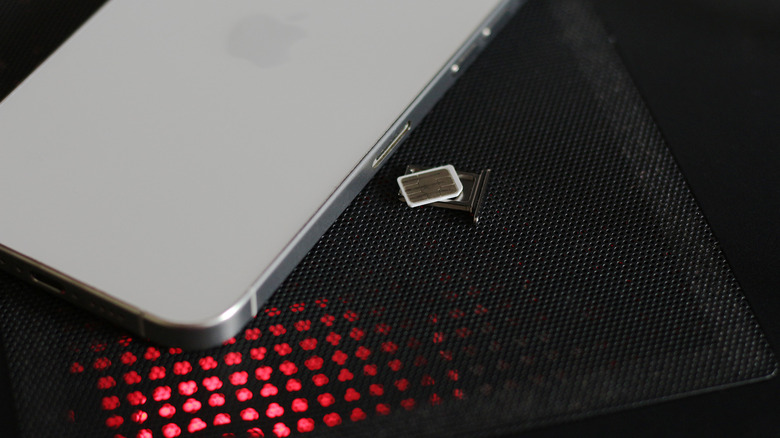
The biggest annoyance that an eSIM solves is that of the initial setup process. If you're using a traditional SIM card and need a new connection, you will either have to head to your network provider's store yourself or order one online. In both cases, you will need to wait a while before you have the physical SIM card in your possession. By contrast, adding a new eSIM to an iPhone takes a few minutes at most, and you can do it without using any tools.
Another huge convenience you get is the ability to store multiple eSIMs on a single phone. For instance, modern iPhones can accommodate more than eight eSIMs. Though you can only have up to two eSIMs active at once, switching to a saved one takes very little time. This is extremely handy if you frequently travel to other countries and find it bothersome to physically swap SIM cards out for temporary use.
Switching to eSIM is also more secure. If your phone is ever stolen, bad actors can't physically remove your SIM card and use it in another device to request one-time passwords. From a manufacturing standpoint, adopting an eSIM module in a phone saves valuable space that can be used for a bigger battery and a better seal for waterproofing. Apple claims the eSIM-only version of the iPhone 17 Pro lasts two hours longer during video playback than the model that comes with a physical SIM card slot.
The caveats of switching to eSIM
Better security, quicker setup, and easier storage might be reasons good enough for one to switch to eSIM, but the technology doesn't come without its pitfalls. For starters, what makes a physical SIM card so convenient is its ability to be hot-swapped between devices instantly. This means that if you're switching to a new phone, all you have to do is extract your SIM card from your old device and insert it into your new one. There are no extra steps involved.
Transferring eSIMs between devices isn't too complicated, but it does involve a few more steps, and the process might be a little different depending on which phone you have. Once again, if you ever wish to remove an eSIM from a device, you have to go look for the option in the settings app. With physical SIM cards, it's as easy as popping out the SIM tray and yanking the SIM card out.
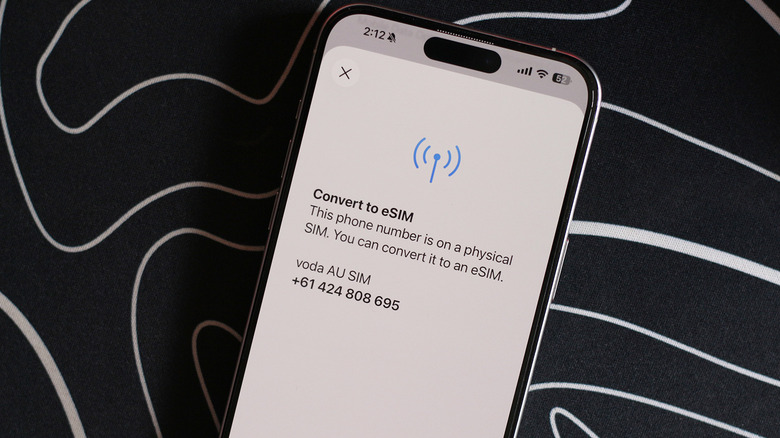
Compatibility is also a thing to worry about. If you're fully transitioning to eSIM, you need to ensure any future devices you buy also come with eSIM support. Though you can always convert an eSIM to a physical SIM, you'll have to reach out to your carrier for assistance. You also need an active internet connection when you first register a new eSIM on a phone — something you don't have to worry about when dealing with physical SIM cards.