

The World's Largest 'Smart Transformer' Just Went Online, According To China
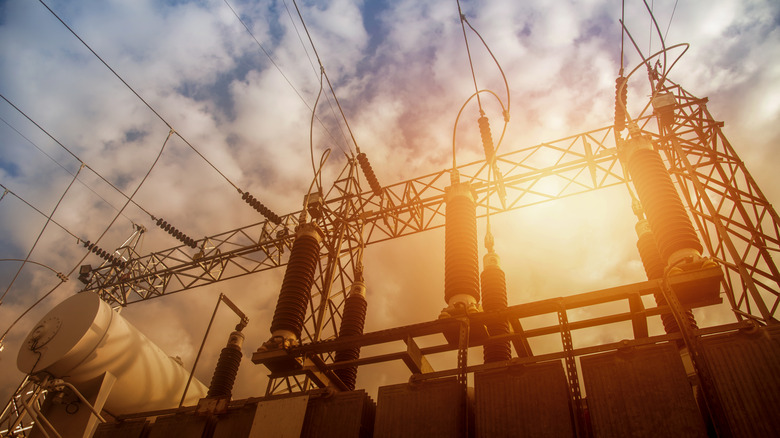
In the modern age of technology, power lines transmitting electricity and the transformers that manage that output remain vital components of nearly every country's power grid. The same is true of China, which revealed in late 2025 that it had brought the world's most powerful smart direct current (DC) transformer online. DC, which operates differently from alternating current (AC), is better for moving large amounts of electricity over long distances. This new transformer is rated at a whopping 750 million volt-amps, according to Changzhou Xidian Transformer, the unit's manufacturer.
A smart transformer is one that's designed with real-time controls, allowing operators to adjust current, temperature, and voltage, as needed. In the case of China's newest unit, the transformer is considered "smart" because it apparently utilizes these digital control features within a high-voltage direct current (HVDC) system. China reports that this technology is intended to improve the stability and reliability of long-distance power transmission. The transformer also helps address any shifts from renewable energy resources.
The new 750 MVA smart unit is an improvement over the country's existing HVDC transformers. That's because the capacity of those transformers, rated at 587.1 MVA each, just doesn't match up to China's latest unit. At the time of their installation, the previous transformers set an all-time record for capacity, which made them the most powerful HVDC transformers in the world.
China has a history of power grid problems

China's northwest power grid suffered an unexpected failure in the fall of 2024. The incident was believed to be a "low-frequency power oscillation." This means that temporary fluctuations in the supply of electricity and demand caused the power running through the system to waver. This sudden swing threatened stability not only in the Xinjiang region, but also to the country's wider grid as well.
Such power oscillations are especially dangerous in areas like Xinjiang, which has some of the world's largest wind and solar farms. That's because wind and solar energy produce electricity that can change depending on the weather. Solar panels don't produce as much energy on cloudy or rainy days, and wind turbines only generate real power when wind speeds reach a certain range. So the ability for power converter stations to properly balance supply and demand becomes that much harder.
China's power grid continues to face ongoing challenges as the country has taken steps to expand both wind and solar capacity. In 2025, some regions of the country actually couldn't use all the electricity that was being generated. This forced government officials to limit output to certain areas. So even though China's efforts to build renewable energy sources are proving successful, ensuring that electricity can actually reach the power grid has become a major priority.