

Your Power Bank Could Be A Problem On Southwest Airlines Flights
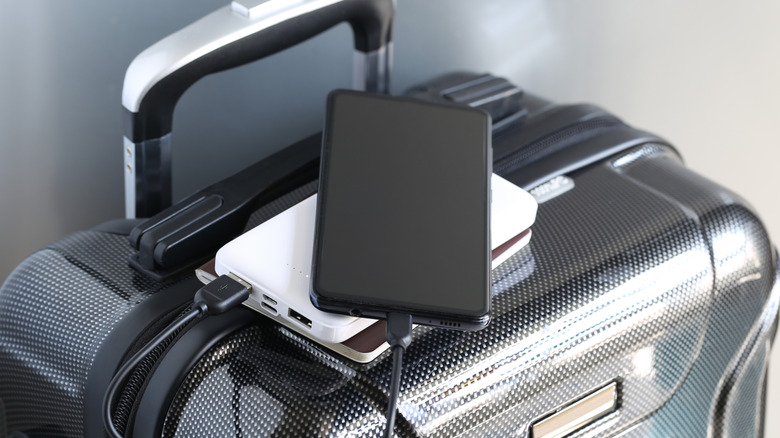
When packing for a trip, many people don't neglect to bring a portable power bank. If your phone dies mid-flight, it's bound to cause a few headaches at the gate, so it's common for travelers to juice up in the air using an external battery bank. In fact, the portable power bank market is a multi-billion-dollar industry according to market research from Credence, highlighting how common these devices are.
But new rules from Southwest are going beyond TSA rules on electronics to take power away from fliers in more ways than one. In May, the airline put new rules into effect that govern how portable chargers and power banks must be stored and when and how they can be used during a flight. The rules allow for up to 20 "spare batteries," which include power banks, portable chargers, and external batteries and chargers for mobile devices. They must be packed either in your carry-on or stored on your person, and they must not exceed 100 watt-hours (which is quite a lot of juice, to be clear — more than double the capacity of a standard, 10,000 milliamp-hour battery pack). But the real kicker for many travelers could be the new requirement that portable power banks must be visible while in use.
While stored, Southwest requires battery banks to have their ports covered. If you want to top up your phone or laptop during a flight, however, you'll need to find an open space away from your bag. Here's how to navigate these rules the next time you fly with Southwest.
Put your chargers where we can see them, says the new Southwest rule
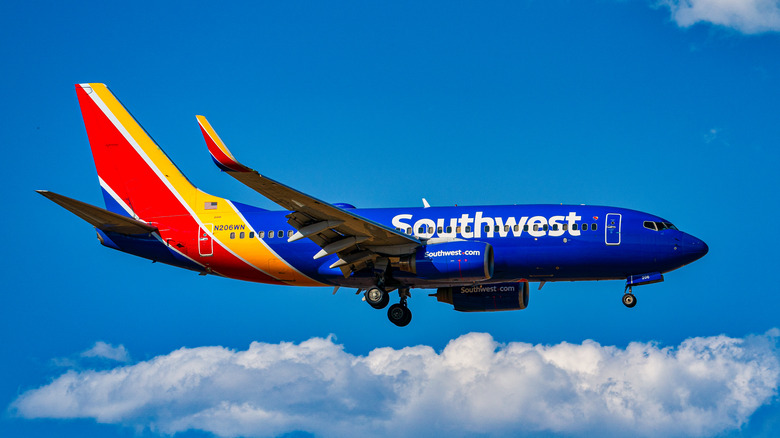
According to Southwest's current rules, passengers who use a power bank during a flight to top up their devices will be subject to specific rules governing its use. Specifically, you must keep your battery bank or charger visible, meaning it cannot be in your bag while in use, and presumably must be placed somewhere that makes it clearly visible to Southwest staff. The rules also prohibit using portable power banks to charge devices that are stored in overhead bins. Gone are the days of threading a charging cable out of your bag stored under the seat in front of you while topping up mid-flight. You'll need to find a spot on your lap or tray instead. Since power banks are among the electronics the TSA banned from checked bags, you've got no choice but to pack them in your carry-on
Although there are legitimate safety concerns around portable power banks and other lithium battery products — especially given the prevalence of suspiciously cheap, poorly built charging accessories on online marketplaces — Southwest's rules differ significantly from those in place at other major American airlines. Reviewing guidance on dangerous or restricted items from Delta, United Airlines, and American Airlines, none of those companies' policies around spare batteries and power banks include any language that seems to require the items be visible while charging. Some airlines are banning power banks on flights entirely, but those are based in Asia.
Southwest is in the midst of a rapid transformation
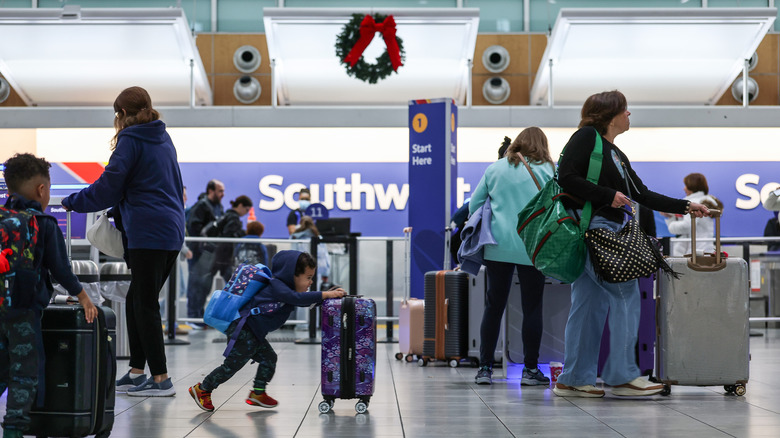
Southwest Airlines is a relatively young airline among the major American carriers, and its unique approaches to things like seating and baggage have earned it a passionate, loyal customer base. But things are changing as the company aggressively pursues new revenue streams. While some things, like seating policies, are becoming more aligned with the standards set by its American competitors, others, such as the updated battery bank rules, are moving out of step.
The most bothersome change for Southwest loyalists has been the end of the airline's admittedly generous Bags Fly Free policy, which offered two checked bags per passenger free of charge. But the airline's seating policy change has ruffled feathers, as well. Southwest was unique among airlines in that it did not assign seating, instead allowing passengers to choose any open seat upon boarding. Customers would try to secure an early boarding slot to get the best seats rather than paying for those seats directly, and savvy flyers were often able to secure an extra seat, or even an entire row for themselves.
But beginning on January 27, 2026, both of those fan-favorite policies are going the way of the dodo. Passengers will need to cough up cash for each bag, and pre-select their seats when purchasing tickets. Most controversially, Southwest will begin requiring customers whose size "encroach[es] upon the neighboring seat" to purchase an additional ticket. Although this change has precedent at other airlines, it has drawn criticism from plus-sized and disability advocates. Southwest's updated guidance on portable power banks is yet another example of the rapid changes its customers will adapt to if they wish to continue flying the airline.