

How Your Smartwatch Tracks Sleep (And How Accurate It Really Is)
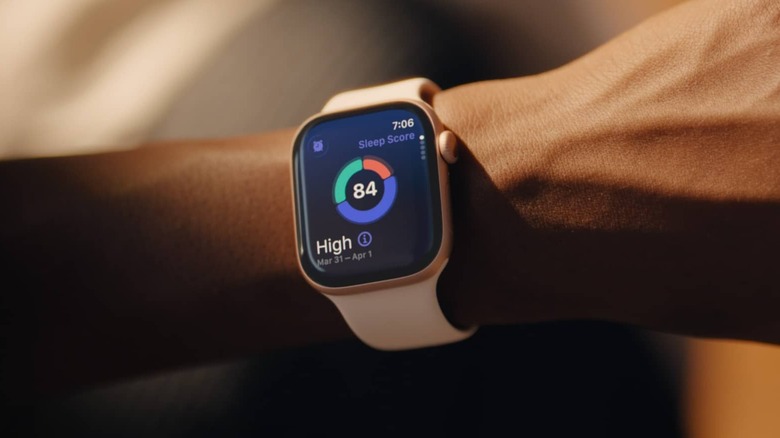
A good night's sleep is a fundamental part of a healthy and productive lifestyle, so it's no surprise that many of the most popular smartwatch makers have added sleep tracking to their wrist-mounted wearables over the years. In fact, market research from CCS Insight has shown that health tracking is the primary motivator for most first-time smartwatch buyers. Among owners, nearly half use their watches to track sleep, which helps explain why brands like Apple, Garmin, Google, and Samsung continually offer new sleep-tracking improvements with each product generation.
Although one basic technology is ubiquitous among watches with sleep-tracking capabilities, not all smart watches use the same sleep-tracking technology. Different companies often take different approaches, and budget devices typically have fewer sensors on average than high-end watches. For that reason, we'll be discussing the techniques used by the latest and most popular smart watches like the Apple Watch Series 11 and Samsung Galaxy Watch8.
So, how does your smart watch track your Zs, and can you actually rely on the data it collects? As we will address, though, most sleep tracking uses the same basic motion-sensing technology to provide a baseline level of monitoring, with additional sensors and measurements taken to enrich that data, depending on the user's settings. But what your health management application actually does to process that data, be it Apple Health, Samsung Health, or Google Fitbit, can result in varying levels of accuracy, which may even vary from person to person. Here's what you need to know about smartwatch sleep tracking capabilities.
Motion sensing, blood oxygen, and more tell smartwatches about your sleep
Smart watches can use a variety of different means to determine when and how deeply you're sleeping, in addition to data that may help deepen the watch's understanding of your sleep quality, REM cycles, and check for sleep apnea, among other things.
Perhaps the most commonly used metric is motion sensing — even your smartphone can surprisingly track you the same way. Using the accelerometer in your watch, the software can determine whether you're awake or asleep based on when you stop moving. This alone isn't entirely accurate. If you didn't move your wrist for an hour, were you napping, or were you engrossed in a particularly riveting movie? But did you know that your wrist actually moves, even when you're not moving? Apple tracks "respiration-induced motion patterns," which is a technical way of saying the micromotions you make as you breathe, and then uses data it collected during studies to estimate whether the readings it gets are more likely to indicate a sleep or wake state. Samsung and Garmin both use functionally identical technology to achieve their own baseline sleep tracking. In other words, smart watches are not actually tracking sleep, per se. Instead, they are tracking activity, which they use to infer information about sleep.
But many watches also track your heart rate and blood oxygen levels, which tend to drop while asleep. They may track your body temperature, which elevates while asleep, or use microphones to listen for breathing or snoring. Many of these are opt-in features that enrich your sleep data when activated, but are not necessary for the basics of sleep tracking.
Smart watches can vary in accuracy depending on the person and device
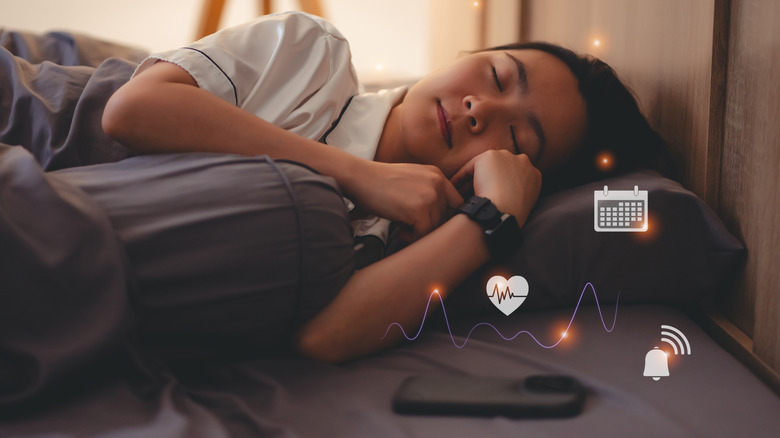
The question of how accurate smart watches are at tracking sleep is a minefield for misinformation. Each watch — and, more importantly, each person — is different, so a watch that provides extremely accurate information about one person's sleep may struggle to provide similarly accurate data for another. Moreover, a software update can degrade or improve a watch's accuracy overnight. Keeping the watch properly fitted on your wrist can also make a difference. Leave it too loose or strap it too tightly, place it too high or too low on your wrist, and you can throw off the sensors. But assuming a properly functioning watch with a correct fit and placement on an average human, it is fair to say that the best major smart watch brands make wristwear that tracks your sleep within a ballpark of accuracy. However, that doesn't mean you should trust them, especially if the data your watch gives you seems misaligned with your personal experience.
If you're worried about your sleep habits or have trouble sleeping, Johns Hopkins recommends talking to a doctor or another health professional. Data from your watch should be taken with a grain of salt, although it may be of interest to a healthcare professional during your initial consultation. For the most trustworthy and accurate sleep data, there is still no substitute for a clinical sleep study. Treat your sleep watch's measurements skeptically, and always be aware that it is not equipped with the full range of tools to make a diagnosis.