

New BMW Patent Would Make Working On Your Own Car Even More Difficult

Over the past decade, right to repair and ease of repair have emerged as crucial talking points for consumer rights advocacy. And as of 2025, we even have upstarts such as Amazon-backed slate that are not only boosting repairability through fundamental design simplicity. Also ease access to servicing by training thousands of local auto shops instead of limiting it to in-house service centers. But it appears that BMW wants to go in the opposite direction, a strategy with multiple pitfalls and one upside.
As per a patent spotted in the World Intellectual Property Organization database, the company is toying with the idea of a custom screw head design. The schematics listed in the patent documents show a screw head that mirrors the brand's logo. It's a neat idea to establish some brand identity that seeps deep into the bones of a BMW ride. But here's the worrisome. BMW envisions only a handful of authorized tools.
"The shape of the engagement recesses prevents the screw from being loosened or tightened using common counter-drive structures," says the document. Simply put, you won't be able to open or tighten the screw in place, unless you have the right tool that is either sold directly by BMW and limited to its own servicing outlets, or partner brands that hawk auto parts. Either way, it's not a repair-friendly approach, and almost certainly not a wallet-friendly dream, either. Now, before we get too deep into the merits and demerits, here's the standard disclaimer. Consumer electronics, heavy machinery, and automobile giants file hundreds of patents. More importantly, only a handful of them make it to a mass-market device or vehicle. Therefore, it's plausible that BMW just might nuke the idea of a custom screw head design, or it's a little too far in the future.
But why?
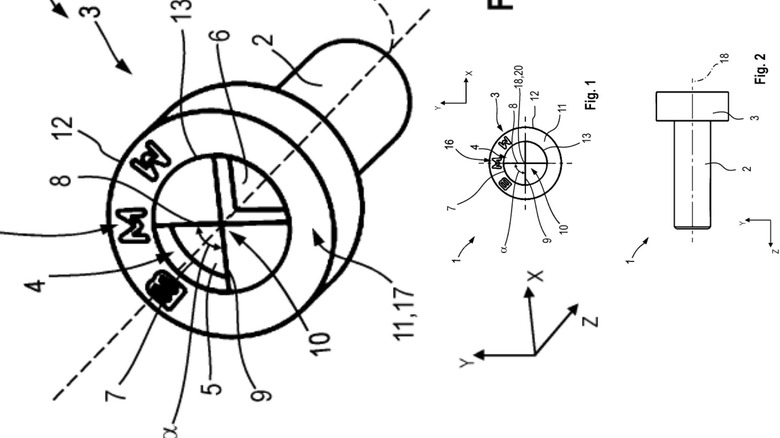
Let's start with the German carmaker's logic. The patent application notes that a custom screw head design "could make it more difficult to protect against unauthorized loosening of the screw or manipulation of the screw with standard tool drives." The idea is practically rewarding, and there's plenty of real-world justification for it. Forced entry into motor vehicles remains a major headache, leading to burglary and theft.
In light of rampant license plate thefts, the Queensland Police Service started distributing special anti-theft screws for free to vehicle owners so that they can secure their car's number plates. The awareness drive about anti-theft screws continued well into 2025. An expert in vehicle crimes working for the Houston Police Department also recommended special screws to protect the metal tags on cars in Texas, following a rule change that involves shifting away from paper plates.
These proprietary screws, as per the patent, will be suitable for holding vehicle components together, such as the console and seats, but they can freely be deployed in other parts, as well. BMW's vision of using custom screw heads — and locking their access to only approved tools — seems like a step in the right direction. But if the history of consumer electronics and automobiles is anything to go by, it's reminiscent of past woes and will only worsen the problem for car owners. In 2022, the Competition Commission of India lambasted Nissan and Skoda, among others, for restricting access to spare parts. The U.S. FTC also classified parts restriction as a 'right to repair' issue. And even after an apparent truce between consumer rights advocates and automobile associations over concerns involving repair tools in 2023, critics are skeptical. BMW's custom screw head design is yet another alarm, and if it's implemented, buyers are in for a troubling ride.