

Variable Speed Limits Are Popping Up Across America – Here's How The System Works
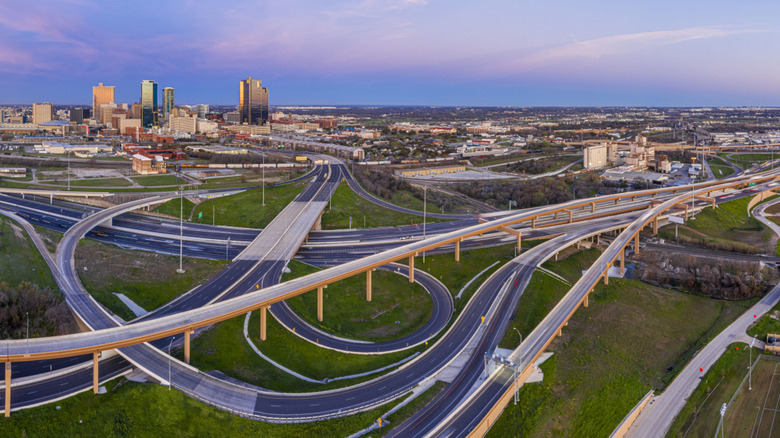
Speed limits are a subject of constant discussion across America, and because of decentralized state regulation over the limits, there can be a wide variance in limits from state to state. Arizona, for example, is considering a law which would basically remove speed limits altogether – albeit on certain stretches of highway and at certain times. But what it all ties into more broadly is an idea that posted, static speed limits often don't match the individual conditions on a highway at a given time.
It could be a sunny, clear afternoon with very light traffic, where a posted speed limit could seem unnecessarily slow for a modern vehicle, or it could be a dark, stormy evening on a busy route when trying to maintain the posted speed limit might be far too fast for the conditions. This is why the idea of a variable speed limit can make a lot of sense. Variable speed limits are already fairly common on European motorways, but thus far, they've been pretty rare in America.
That might be changing soon, though, with the state of Texas joining other states in rolling out digital signs with variable speed limits for certain sections of highway. When it comes to variable speed limits, it's typically the implementation and enforcement that are more complex than the idea itself.
Safety over speed

If you just hear 'Texas' and 'variable speed limit', you might first imagine some sort of high-speed, Lone Star State Autobahn system. While indeed Texas is currently ranked at the top of U.S. states with the highest speed limits, the new variable system being implemented on certain parts of highways in Fort Worth and El Paso are actually more geared toward slowing traffic down in certain conditions.
Although Texas had experimented with the idea of variable speed limits (VSL) in 2014, the rollout that's happening now is the result of a 2023 law that was passed in response to a deadly 2021 pile-up on Interstate 35 in Fort Worth during a winter storm. Investigation into the accident determined that a temporarily imposed lower speed limit would have likely prevented the pileup, or at least made it less severe, with cars having more time to stop.
Texas isn't the first U.S. state to implement variable speed limits, though. Several states across the country have had sections of highway with VSL for a while, with speed limits being adjusted for weather, congestion, or road work. The systems vary from state to state, but real-time traffic and weather data are typically gathered by a combination of roadside sensors, cameras, and radar. Using this data, state transportation department centers can adjust the limits either manually, automatically, or via a combination of both.
Promising, but not perfect
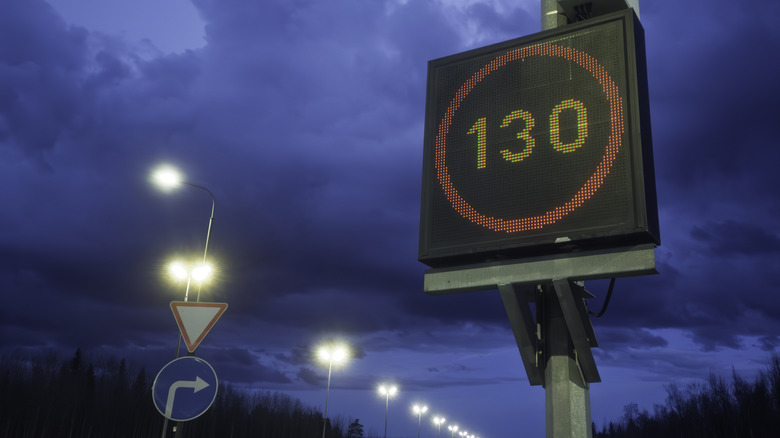
Some of the biggest issues that have popped up with variable speed limits come with implementation and enforcement. Even if a state has state-of-the-art technology to adjust speed limits in real-time, there've been difficulties in both conveying the current limit to drivers and being able to effectively enforce a variable speed limit. States have also reported issues with shifting limits in a way that feels natural to drivers.
On the new VSL system that Texas is implementing, the state has to post the new limit between 500 and 1,000 feet before it's implemented, and the temporary limit itself cannot go more than 10 miles per hour below the normal limit. Texas says that further expansion of VSL zones across the state will depend on both safety needs and existing traffic monitoring infrastructure. While the possibility of a large-scale variable speed limit system across wide ranges of American highways is unlikely as of this writing, it's possible that it could change in the future.
Increasingly common driver assistance tech, like radar, cameras, and semi-autonomous driving systems, could all improve the likelihood of variable speed limits becoming both more common and more effective down the road. For now, the American systems are largely experimental, but if implemented properly, there's a lot of potential for both safer and faster highway travel. Variable speed limits, for example, are a part of the reason why the famous German Autobahn can function in the way it does.