

Dodge Hellcrate Vs. Hellcrate Redeye 6.2L Hemi Crate Engines: What's The Difference?
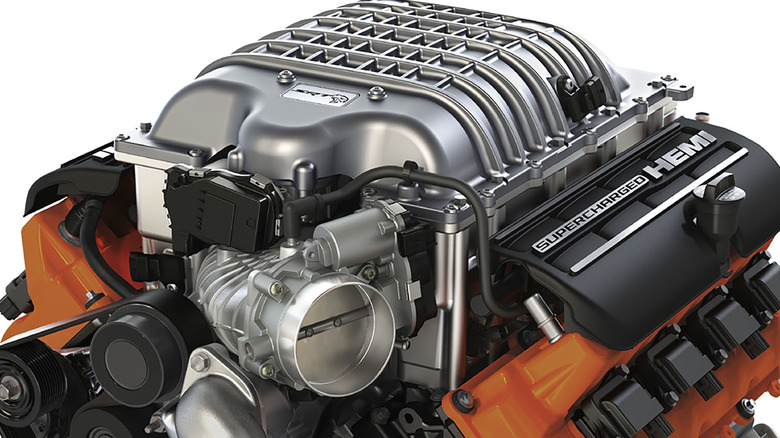
When it comes to their current crop of production vehicles, Dodge, Ram, and Jeep don't offer nearly as many HEMI V8 options as they did a few years ago. The good news, though is that the tide seems to be shifting, with some models bringing back the HEMI and likely additional V8-powered performance options on the way. In the meantime, for serious enthusiasts and hot rodders, Direct Connection, the Dodge brand for its factory-backed performance parts and accessories, still offers a variety of HEMI V8 crate engine options. From the entry-level 5.7-liter naturally aspirated crate HEMI all the way to NHRA-spec race motors, there's a Direct Connection HEMI for everyone.
The lineup currently includes a few variants of the 6.2-liter supercharged HEMI that was first made famous in the Challenger and Charger Hellcat — including both the standard Hellcrate package and a more expensive, more powerful Hellcrate Redeye version. While these two engines are similar in a lot of ways, there are some key differences between the two, including the size of the supercharger.
With both engines north of 700 horsepower, either choice will offer a serious amount of muscle for any sort of road-going project car. But by comparing the output, parts and price of the two Hellcrate engines, you can decide whether the Redeye is worth the extra money or whether that money is best saved for other parts of the build.
How much Hellcrate do you need?
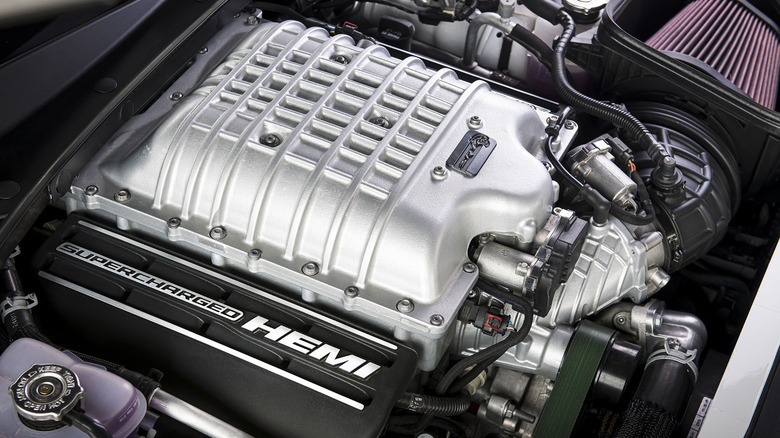
Both the Hellcrate and Redeye engines are important entries in the Dodge Hellcat lineage, and no matter which of the Hellcrate options you look at, the power isn't going to come cheap. Based on the original Hellcat engine from the Challenger, Charger, Jeep Grand Cherokee Trackhawk, and others, he standard Hellcrate engine has an MSRP of $17,925 and is rated at 717 horsepower and 656 pound-feet of torque.
Stepping up to the Hellcrate Redeye will set you back another few thousand bucks with an MSRP of $21,807. And how many extra horses do you get for that money? 90 to be exact. The Hellcrate Redeye is rated at 807 horsepower and 717 lb-ft of torque. The displacement of both engines is the same, as is the compression ratio. The primary difference is the size of the supercharger, with the standard Hellcrate blower displacing 2.4 liters, the Redeye's larger supercharger displacing 2.7 liters. There's also a slight difference in the peak RPM between the two engines, with the Hellcrate revving to 6,200 RPM and the Redeye revving to 6,500 RPM.
The bigger question then is whether you'll actually notice that extra power. Now on a less-powerful engine, a 90-horsepower jump would be a huge deal, but the difference is less stark at these power levels. For example, testing has shown a relatively small difference in acceleration between the Hellcat and Redeye engines in comparable models, with traction being the primary limiting factor for either engine.
Overkill? What's that?
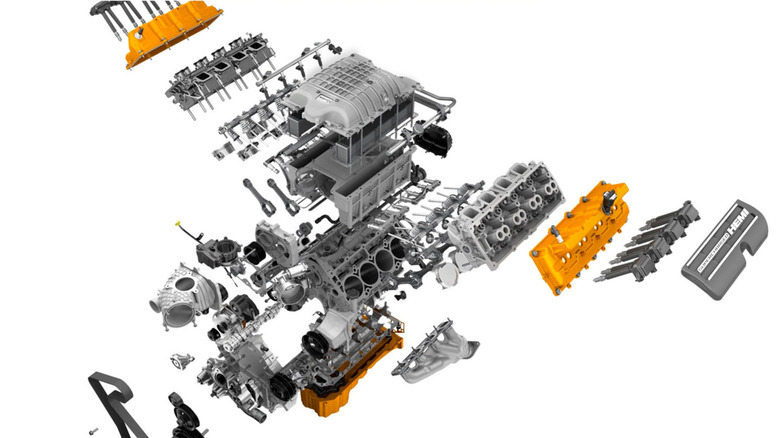
When choosing one of these crate engines, don't forget that in either case, you'll also need to add the Direct Connection engine kit which includes the PCM, wiring, and other accessories to complete the crate motor package and make the install as trouble-free as possible. Expect a retail price of around $2,400 for one of these kits.
As for recommending one of these crate engine options over the other, there's really no right or wrong choice. On one hand, the logical argument is that 717 horsepower is an insane amount of power already, and that the extra power and expense of the Redeye engine are overkill. The money saved could be used for the aforementioned install kit or on other parts needed for the project.
Then again, dropping a brand new, high-horsepower supercharged V8 into a project car isn't really about being logical in the first place. Sure, in the real world, you'll probably be paying more for the extra street cred and bragging rights of the Redeye name rather than any substantial performance benefit – but there's nothing wrong with that. No matter which of these Hellcat-based engines you choose, though, you'll be getting the kind of turn-key, pump-gas-friendly, modern supercharged muscle that used to be available only in purpose-built racing cars.