

What Are The Water Jets For Bullet Trains Actually For?
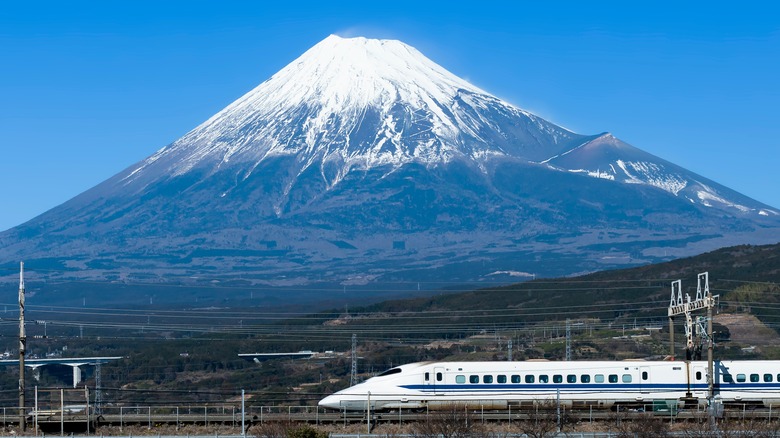
Japan's Shinkansen bullet trains have long been considered one of the most impressive railway systems, with a punctuality and safety record that's simply unmatched. It's been that way since the mid-1960s, when the first Shinkansen line began operating between Tokyo and Osaka. In the decades since, the Shinkansen network has expanded and modernized. Even as other high-speed rail lines have opened in countries around the world, Japan's system remains the global standard in many ways, and there's a whole lot of interesting science behind the Shinkansen's incredible speeds.
But just because the Shinkansen was the world's first bullet train doesn't mean that Japan was an easy place to build, operate, and maintain a high-speed rail system. In fact, with the country's heavily mountainous terrain and lack of flat, wide-open spaces, it was actually a difficult place to build a modern high-speed rail system. That's not even mentioning the weather.
Shinkansen trains need to run at high speed through some of Japan's coldest and most snowy regions. To do this safely, several different innovative techniques are employed, including a fascinating method of spraying passing trains with water jets. The primary reason for doing this is to prevent a potentially harmful buildup of ice and snow from damaging the train and putting passengers at risk.
The water jets help increase safety in snowy conditions
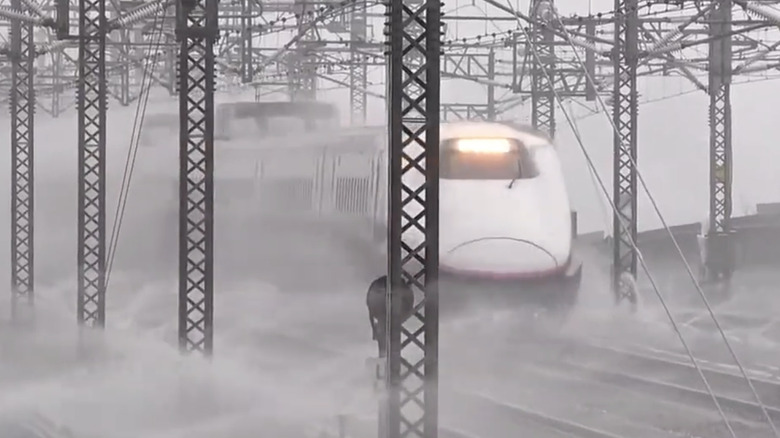
Whether you are just watching videos online or have been fortunate enough to experience them in person, there's no shortage of fascinating things about the Japanese Shinkansen lines, which still rank among the fastest high-speed trains in operation today. Depending on the region and the time of year, you may have seen water being sprayed from nozzles alongside the track onto trains as they pass by. Although it looks cool and dramatic, the water spray is not for cosmetic effect, nor is it a way to clean the exterior train. (Japan actually has its own impressive way of bullet train washing.) Instead, the trackside water sprayers play a very important role in the safe and timely operation of the Shinkansen during the winter months.
Before the sprinklers were utilized, the high speed of the Shinkansen would create wind that lifted snow off the tracks and into the undercarriage of the train, where it would then freeze into hardened ice chunks. When these pieces of ice would come dislodged from the train, it created a potentially dangerous situation that could damage the train cars. With the water sprayers in action, the snow can be rinsed away and melted. This prevents it from billowing up and clogging up underneath the passing trains.
The process on trains works similar to de-icing planes
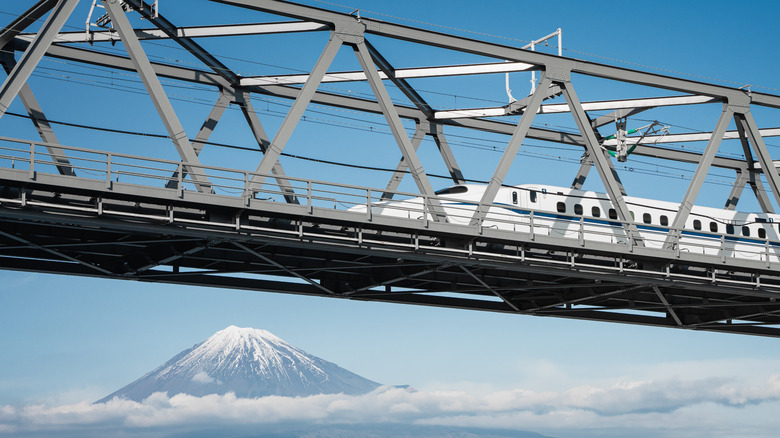
Since the sprayers were first implemented, their use across the rail system has expanded. Along the way, the sprinklers themselves have been improved with better nozzles to further reach under the trains. Though they have proven to be very effective when it comes not just to safety but to keeping speed up during snowy conditions, water sprayers aren't the only method the Shinkansen uses to combat snow and ice.
Along with traditional equipment like snowplows, snow removal teams can also be deployed from beneath station platforms to quickly pressure wash the undercarriage and remove any buildup the sprayers may have missed. Of course, despite its world-class reputation for punctuality, the Shinkansen is not unstoppable. During periods of heavy snow, service can and will be delayed or cancelled. But thanks to mitigation methods like the water sprayers, the delays are not as common as you might expect — especially given the snowy regions the trains travel through.
Whether its how they look on the outside, how they feel on the inside, and even how fast they speed by, bullet trains are a lot like land-going versions of jet airliners. In that sense, the Shinkansen's water-spraying safety measure is much like the crucial airplane de-icing process that is used in aviation. The physics and process may be different, but the goal is the same: to ensure safe and efficient operation in cold, snow, and icy conditions.