

Experts Say These Are The Signs You Might Be Too Old To Drive

Each stage of life can bring about its own rewards and its unique challenges. Early adulthood allows us to find a career and build a family, but many of us also experience social, familial, or financial difficulties. Middle age often brings a sense of financial stability, but some juggle raising teenagers while caring for aging parents. Finally, the later years in life offer the joys of retirement and grandchildren, but often present health challenges and the loss of loved ones. Whatever stage in life you happen to be, you may have found yourself wondering when the right time is to put away the car keys for good.
While some states have rules that affect older drivers, it's not legal anywhere in the U.S. to ban someone from driving solely because of age. Knowing when it's time to stop can be a delicate question, but Harvard Health encourages drivers and their family and friends to be on the lookout for red flags. These can include getting lost on familiar roads, an uptick in minor incidents or accidents, and even a reluctance for others to want to ride with the older driver. You should also be on the lookout for friends or neighbors who are concerned about this person getting behind the wheel, unexplained damage to the car, and an increase in traffic citations or incidents that involve the police. If you notice one or more of these red flags, it may be time to have that hard discussion.
Are older adults the most dangerous drivers on the road?
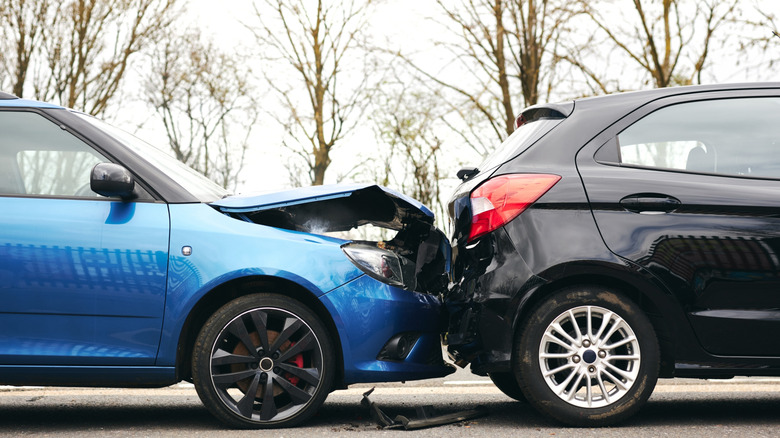
If you're an older adult, you may be thinking, I am not the worst driver on the road! And statistically speaking, you aren't wrong! Teenagers are the most dangerous drivers and have the highest crash rate. They are inexperienced and often engage in unsafe behavior like distracted driving, speeding, drinking and driving, and not wearing their seatbelts. A 2017 report from the Foundation for Traffic Safety, however, found that drivers aged 80 and older have the second-highest accident rate and have the highest rates of driver deaths. According to the CDC, 25 older adults are killed and over 740 are injured in crashes every day.
What happens as we age that can contribute to a decline in our driving skills? Sometimes we experience difficulty with our vision or hearing that can make it difficult to drive. Older people also tend to suffer from medical conditions that can impact driving skills, such as arthritis or cataracts, and are often on medication. Reaction times can slow, and memory issues can affect driving skills and impair judgment. Sometimes older drivers simply need to adjust their habits. For example, if night driving has become difficult, they can keep their time behind the wheel to only daylight hours. They can also speak to their physician to ensure medications won't impair driving, and have their eyes checked annually.
How to help if it's time to hang up the keys

According to Harvard Health, the first step to having a conversation about driving with an older adult is to acknowledge that the talk will be difficult for both of you. If you approach the conversation with sensitivity and compassion, however, you may be surprised by the reception you receive. According to Hebrew SeniorLife, a survey of older adults found that more than half who'd been approached about their driving were receptive to feedback and suggestions.
Still, some loved ones may get defensive. Remember, asking anyone to give up their independence is difficult, especially if public transportation isn't an option. If your loved one doesn't share your concerns, the discussion has the potential to turn into an argument. Finding a path forward may be difficult, but if you're truly worried about the safety of your loved one or the people around them, including passengers and other drivers, consider involving a trusted doctor in your discussion, or tag in other friends and family members.
If you're an older driver and you're wondering if there are any steps you can take to protect yourself and others, there are! Harvard Health recommends that you make an action plan, which can include having a frank conversation with a trusted family member, talking to your doctor, and taking a self-evaluation or even an on-road driving test. Driverless cars may be the future, but for now, many people rely on driving — be sure you and your loved ones stay safe.