

Confused About The Steam Machine's HDMI Port Specs? You're Not The Only One
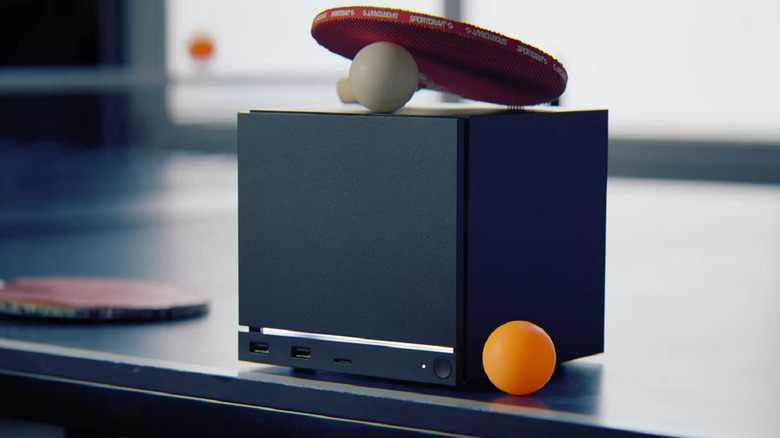
The announcement of Valve's upcoming Linux-based Steam Machine hit the internet with a largely positive reception — alongside some understandable confusion. Valve's console will purportedly offer up to 4K resolutions with a refresh rate of 120 Hertz (Hz), and support for High Dynamic Range (HDR), Freesync, and CEC via an HDMI output. So far, those specs make sense. The Steam Machine is set to be a pricey device, so you would hope it could handle high-end gaming and offer the newest specifications available. What doesn't make as much sense is that Valve's preliminary tech specs also suggest that this will be handled by an HDMI 2.0 port.
Standard HDMI 2.0 can't actually offer native support for a full 120 Hz refresh rate, instead maxing out at 60 Hz. Generally speaking, you would need an HDMI 2.1 output to be able to reach the specifications set out for the Steam Machine. As the name suggests, HDMI 2.1 is the next generation of HDMI that follows directly on from 2.0. It offers much higher refresh rates, alongside support for other features like dynamic HDR, Variable Refresh Rates, and Quick Frame Transport. As a result, the Steam Machine's specs come across as a confusing combination of HDMI 2.0 and 2.1.
Valve sought to clear up some of the confusion via an interview with Ars Technica. Currently, the Steam Machine's hardware supports HDMI 2.1, but offering full support in terms of its software is still a "work-in-progress". This is in part because it relies on Linux drivers that are still in development, and in part due to restrictions set out by the HDMI Forum when it comes to open-source implementations of HDMI 2.1.
Implementing HDMI 2.1 in Linux comes with challenges
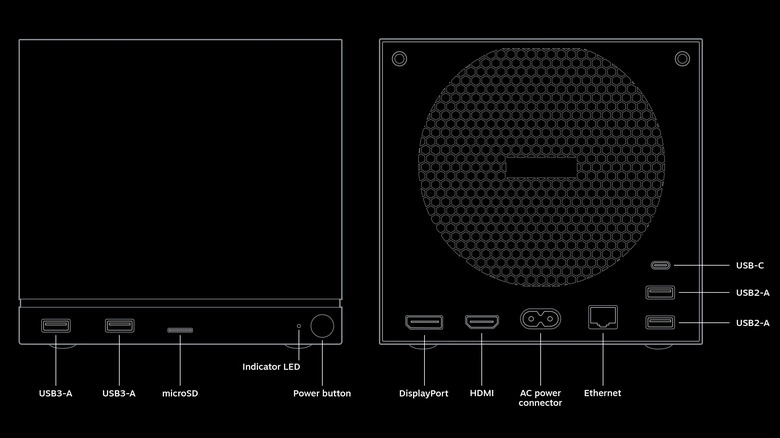
The HDMI Forum doesn't make it easy to integrate HDMI 2.1 with Linux systems. In turn, this creates a significant obstacle for the Steam Machine. This is because it runs on SteamOS: Valve's own Linux-based operating system. Linux drivers for HDMI 2.1 are still currently in development, and have been that way for a few years now due to official blockages placed on the specification.
Back in 2021, it was shared on Phoronix that the HDMI Forum closed public specification access for HDMI 2.1, meaning select spec information can't be shared with the public. Then, in 2024, engineer Alex Deucher shared an update to the AMD GitHub forum stating that the HDMI Forum had rejected a proposal to allow open-source implementations of HDMI 2.1, despite private specifications. Consequently, it isn't currently possible to legally implement HDMI 2.1 through open-source means, leaving the Steam Machine in a tight spot.
Ars Technica has reported that unblocking some of HDMI 2.0's limitations to increase performance where possible. This is how the Steam Machine is set to reach its max 4K resolution and 120 Hz refresh rate, despite the limitations generally put in place by an older-gen HDMI port. It achieves this using chroma sub-sampling, which compresses select color and light data so it requires less bandwidth — making it a practical option for achieving higher resolutions even with HDMI 2.0.