

Denmark's Proposed VPN Ban Had Experts Sounding The Alarm Bell
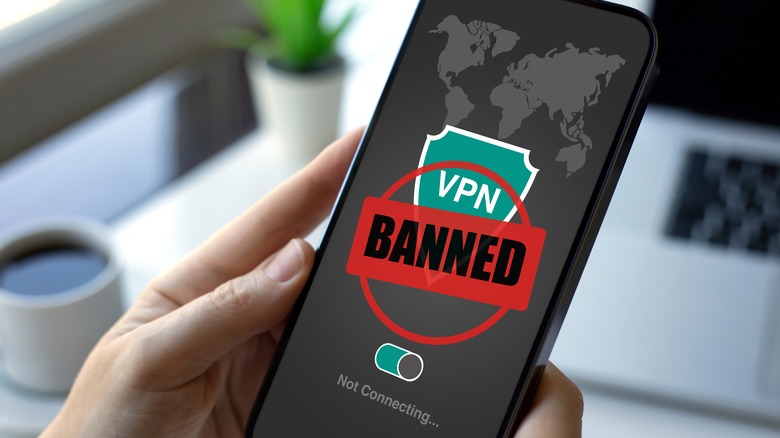
Denmark's government faced some intense scrutiny earlier this month when a drafted bill proposed regulating how virtual private networks (VPN) could be used by the public. Critics argued that relatively broad language in the bill could have made it illegal to use VPNs to access anything online that was unavailable in Denmark, in addition to bypassing blocks on illegal websites.
As cybersecurity experts will tell you, however, the best VPN services aren't exclusively used to download movies or watch sporting events. Big picture, VPN services are tools used to encrypt internet connections and obscure IP addresses in the name of online security. To make that illegal could put millions of internet users at greater risk for online threats.
While officials later walked back the controversial language surrounding VPNs, it still sparked a fierce debate over privacy. Just how much freedom do people deserve on the internet, and how far can governments be allowed to go to fight piracy? These are questions that go far beyond Denmark. The precedent set by a bill like this could impact the world at large.
Officials insist the original goal of the bill wasn't to ban VPNs at all

Why even propose something so controversial in the first place? As it turns out, Denmark wasn't really even trying to. The proposal was actually meant to modernize the country's copyright and broadcasting laws, which officials say have failed to keep up with modern piracy methods. The government argued that outdated rules were too focused on physical devices like illegal decoders and IPTV sticks, while modern piracy increasingly relies on the internet. To address this, lawmakers attempted a broad, technology-neutral bill that was designed to remain effective even as new and future methods emerged.
This broad language quickly became the proposal's biggest issue, however. As it was written, the bill didn't clearly distinguish between using a VPN for illegal streaming and using one for completely legal reasons, like protecting personal data on public Wi-Fi or accessing perfectly legitimate services while away from home. After the backlash, Culture Minister Jakob Engel-Schmidt announced he was removing the VPN-related section from the proposal entirely.
Other regions have proposed VPN-related regulations as well
The pushback wasn't exclusive to Denmark. Michigan proposed a similar VPN ban in late 2025. There are similar debates happening in the United Kingdom, too. There, VPN use surged after new online safety laws brought age verification requirements to adult sites. When the government imposed new restrictions on internet use, VPN use went up — not down. It's not hard to imagine something similar happening in Denmark if the initial bill had been passed.
In the past, Denmark has been involved in controversial efforts such as the European Union's "Chat Control" initiative. (This act would require platforms to scan users' private communications for illegal material.) While that's completely separate from the VPN debate and was also scaled back after hearing from the public, it still shows that Denmark's lawmakers have been at the center of similar issues before. For now, Denmark's backtracking has temporarily put immediate fears to rest (at least until policymakers debate and finalize the bill later on down the line).