

Menards To Pay Out Millions Over Misleading Rebate Program

If you've never heard of Menards, well, you probably don't call soda "pop" or know the best place to hunker down during a tornado warning. You likely head to Lowe's or Home Depot when you're ready to tackle your next renovation, but many Midwesterners go to Menards, a home improvement chain with more than 300 stores across 15 states. The big box retailer is famous for its "Save big money at Menards" jingle, and its founder, John Menard Jr., is the second-richest person in Wisconsin, according to Forbes. He has an estimated net worth of more than $20 billion, but his company just reached a multi-million dollar settlement with several states over deceptive marketing practices.
Many of us have fallen victim to shady retailer practices at one time or another. Deceptive marketing ploys can include bait and switch ploys, hidden fees, bad warranties, and even counterfeit goods. Menards did not admit to any wrongdoing, but 10 states, including Arizona, Illinois, Iowa, Kansas, Michigan, Minnesota, Nebraska, Ohio, South Dakota, and Wisconsin, alleged that the company intended to deceive customers with its 11% Rebate Program and engaged in other price gouging practices during the COVID-19 pandemic. To resolve the allegations, Menards will pay $4.25 million in total to the states involved in the lawsuit.
What is the 11% Rebate Program?
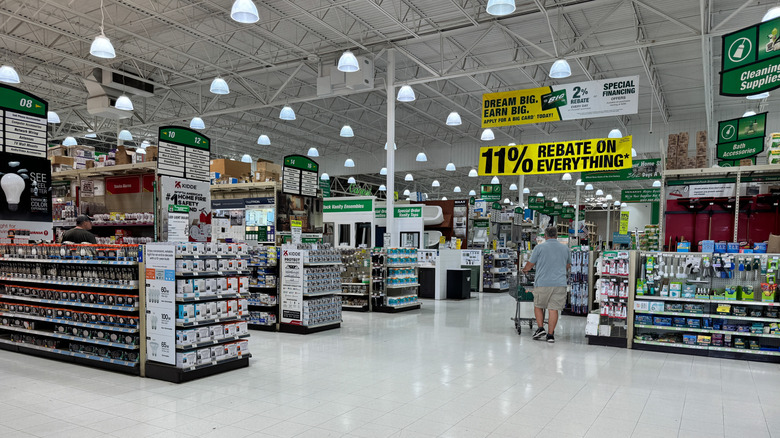
We all like to save a few dollars when we shop, but there's a difference between a discount and a rebate. A discount is applied at the point of purchase and immediately saves you money. When a rebate is offered, the customer typically pays full price and achieves savings at a later date, usually after mailing in a card or applying for the rebate online. According to Illinois Attorney General Kwame Raoul's office, Menards' 11% Rebate Program led customers to believe they'd be receiving an immediate discount at the point of purchase. The lawsuit also alleged that the home improvement store's prices appeared to be reduced by 11%, leading customers to believe that they were achieving extra savings.
Additionally, after customers filled out the rebate form and mailed it in, they didn't actually receive any money back. Instead, they received an in-store credit that could be used on a future purchase. The suit also alleges that Menard intentionally tried to make customers believe that the rebate forms were being sent to another company, when in fact, Rebates International is part of Menards.
In addition to a deceptive rebate program, the lawsuit also alleges that Menards intentionally overcharged customers during the COVID-19 pandemic by increasing prices on popular items including gloves, rubbing alcohol garbage bags and more. And this was during a time when supply chain woes were affecting virtually every retailer.
Menards policy moving forward
Menards agreed to make specific changes going forward as part of the settlement. It cannot advertise any program that is providing store credit as a discount. The limitations of the program have to be shared with customers, and terms and conditions must be clearly stated. Customers must be given at least one year from the purchase date to submit a rebate claim, and the online rebate system must update within 48 hours of the rebate application hitting the system. The online rebate tracker must also provide information about how returns can affect the rebate.
While customers were affected by Menards' alleged misleading rebate program, it's the states involved in the lawsuit that are receiving the payout from Menard, not individual customers. For example, Illinois plans to use its portion of the funds for "future consumer protection efforts," according to local affiliate NBC 5.
Menards is far from the first company to be called out for deceptive business practices, especially during the pandemic. DoorDash recently agreed to pay $18 million to settle allegations that it advertised delivery services from restaurants without their consent during those years. Meal kit delivery company HelloFresh was ordered to pay $7.5 million for allegedly violating California's Automatic Renewal Law, which requires companies to notify customers before auto-enrolling them into any subscription. From buying cars to groceries, it can be difficult to protect yourself as a consumer, but remember that if a deal seems too good to be true, it likely is. Keep your receipts, and always read the terms and conditions.