

5 Surprising Substances That Could Actually Power A Car

Sometimes, things are designed a certain way because they have to be. A shoe is shaped to fit the foot, and the shape of an airplane's wing is dictated by the laws of physics to generate lift. There's only so much fiddling you can do to either without losing what makes them a shoe or a wing. Other times, things go down one path when they could have gone down another. The automobile engine falls into the latter camp.
Today, we take for granted that cars run on gasoline refined from oil that's pulled from the ground. That's how it's done, largely because it's how it's always been done. But all you really need to make an engine work is some way to reliably transform fuel into work. In a conventional combustion engine, gasoline is mixed with air and burned in a series of tiny, controlled explosions. The pressure of that reaction moves a piston, which, in turn, sends you wheeling down the highway. Of course, there are many ways to move a piston and many ways to fuel a car.
As climate change becomes an increasingly serious global problem, folks are looking for alternatives to fossil fuels. So far, electric cars are leading the charge (no pun intended), but plenty of researchers and innovators are cooking up unconventional fuels to keep combustion cars on the road. These are five of the weirdest and coolest.
Seaweed

Sargassum seaweed is an invasive and troublesome presence in parts of the Atlantic Ocean. A giant mat of the stuff, called the Atlantic Sargassum Belt, often sheds pieces that wash up in the Caribbean or the Gulf of Mexico. Once on shore, sargassum starts to rot, producing hydrogen sulfide as it breaks down, a stinky gas that makes the beach a little less like paradise.
Multiple groups of researchers, including a team at Princeton and another at the University of the West Indies in Barbados, are working on ways to transform this unwanted invasive plant into an energy source. The Caribbean team has developed a method of transforming sargassum into a functional fuel for cars by mixing it with other waste products.
They can collect the algae as it washes up on the shore and mix it with manure from local farms and wastewater from alcohol production in a fermentation tank. Bacteria from the manure break down the sargassum and produce biogas, which can be used to power a vehicle. With a little work, and the ability to hold your nose, you can transform an aquatic invader into an asset.
Liquid nitrogen
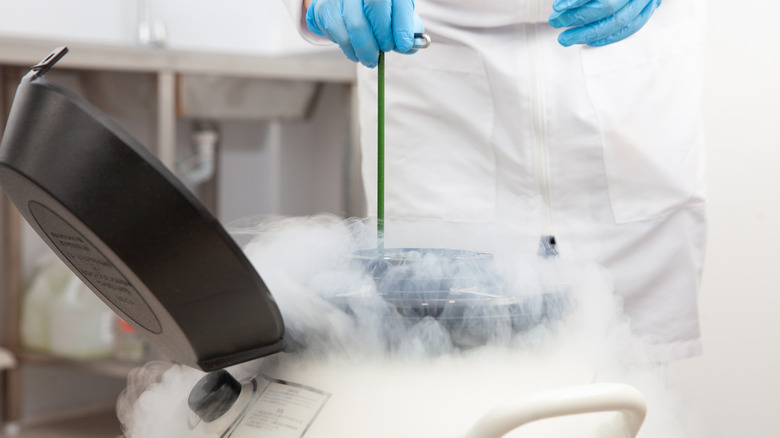
Abe Hertzberg, a retired professor of aeronautics and astronautics at the University of Washington, has argued that liquid nitrogen is the fuel of the future. As a proof of concept, Hertzberg converted a Grumman Kubvan mail truck into an experimental vehicle dubbed the LN2000. Instead of gasoline, the LN2000 is powered by liquid nitrogen in a process similar to a steam engine in reverse.
In a steam engine, water is heated until it turns into steam and expands, turning a turbine. In a nitrogen engine, liquid nitrogen is kept at a frigid negative 320 degrees Fahrenheit inside specially insulated tanks. Then it gets pulled through a series of aluminum tubes and pipes and warmed to ambient temperature by the circulating air. In the process of transforming from a liquid to a gas, the nitrogen expands to 700 times its original volume, powering the engine. The only exhaust product is gaseous nitrogen, which already makes up 78% of the atmosphere. Unlike the release of carbon dioxide, nitrogen exhaust would have no measurable negative impact on the environment.
Hertzberg has also argued that the process of producing liquid nitrogen actually removes pollution from the atmosphere. Air is run through a refrigeration system to cool and condense the gases. Nitrogen is then isolated while pollutants, including carbon dioxide, are pulled out and contained. It's not a completely carbon-neutral process, but it could be a dramatic improvement over the status quo.
Chicken waste

Using chicken waste as fuel has a surprisingly long history. A couple of college students converted a car to run on chicken manure back in the 1970s. As chicken poop decomposes, it produces methane gas, which can be used to power an engine. At the time, the students estimated that 100 pounds of manure would move the average vehicle about 400 miles.
Today, more complicated chicken waste operations are in the works. They would use manure, like the 1970s project, but also feathers, bones, and processing waste from chicken farms. Often, all that waste is discarded, spread onto nearby fields, or finds its way into the water system. Automotive entrepreneurs want to offer an alternative fate.
Waste products would get dropped inside anaerobic digesters, heated tanks where microbes break down the waste products and convert them to methane gas. The leftover byproducts can even be used as fertilizer. However, it's worth noting that methane is itself a potent greenhouse gas, so while this might be a good way to deal with waste from the meat industry, it's not necessarily the most climate-friendly option.
Human waste
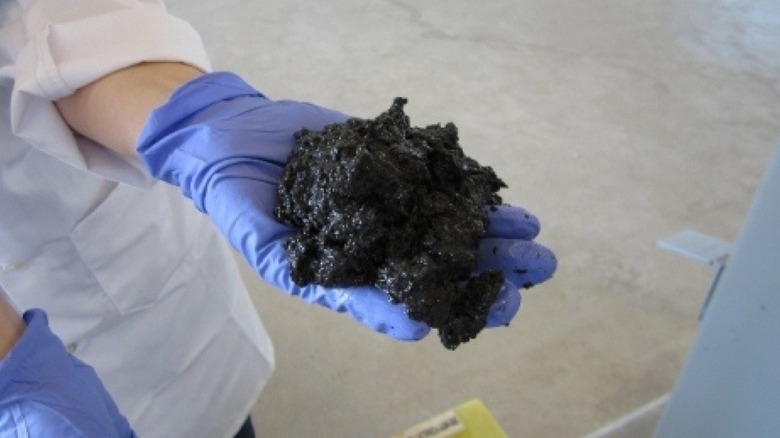
Roughly 34 billion gallons of sewage water are treated every day in the United States. Using a process called hydrothermal liquefaction (HTL), it's possible to transform human excrement (or any other wet biomass) into biocrude oil and, ultimately, liquid fuel.
Waste products are placed inside an HTL reactor, pressurized to 3,000 psi, and heated to 660 degrees Fahrenheit. The process takes only about 30 minutes and converts roughly 60% of the starting material into biocrude or biofuel that can be used similarly to petroleum, according to a discussion between the U.S. Department of Energy's Bioenergy Technology Office and scientists from the Pacific Northwest National Laboratory.
HTL reactors could be installed at wastewater treatment plants and could produce as much as 30 million barrels of biocrude per year from the waste products already in place. Because reactors could be placed at the community level, they would even help reduce the burden of transporting petroleum and petroleum products around the globe.
Coffee

Coffee is a common fuel for powering people and, as it turns out, you can also use it to power a car. In 2010, inventor Martin Bacon drove a 1988 Volkswagen Scirocco 337 kilometers (about 209 miles) from London to Manchester, using a few modifications and a whole bunch of coffee. The achievement earned him a world record for the longest journey by a coffee-powered car. The modified vehicle heated coffee grounds in a charcoal fire, releasing hydrogen gas. The gas was then cooled and used to power the engine.
Later, Bacon built another coffee-powered vehicle, this time a Ford P100 pickup truck, and set a separate record for top speed. The Coffee Car Mark 2 reached 65.5 miles per hour and later went on tour. The Mark 2 could reportedly travel about 55 miles on a 22-pound bag of coffee grounds.
Meanwhile, researchers from the University of Bath found that used coffee grounds can be transformed into biofuel through a process called transesterification. A catalyst kicks off a chemical reaction converting fats in the coffee grounds into biofuel. Used coffee grounds are up to 20% oil by weight, and researchers estimated that the average small coffee shop produces enough coffee ground waste to make about half a gallon of biofuel every day.