

Yes, Even Landlocked Countries Have Navies – Here's Why They Need Them
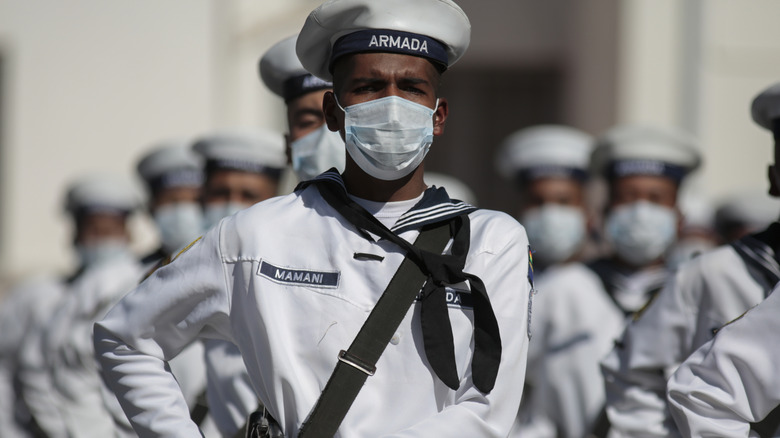
It's little surprise that the militaries of the world tend to dedicate an awful lot of their resources to naval operations. The mighty U.S. Navy, for instance, has a total of around 620,000 personnel between reserve, civilian, and active duty members. Of course, the U.S. and other big seafaring nations, such as China, have interests to have ample access to the world's oceans. The 44 countries in the world that are landlocked, however, are in a rather different and more challenging situation in that regard. You might expect that these countries have no navies, as they've no access to the ocean.
However, a naval force doesn't necessarily have to mean the world's biggest aircraft carriers and destroyers. Some of these countries, though cut off from the ocean, have other valuable waterways to protect, and the naval forces with which to do just that. Whether this is prioritized by a given nation depends on whether they have such interests to protect. The smallest country on Earth, Vatican City, is landlocked and doesn't have a navy or a traditional army, but a Papal Navy used to exist.
Charles H. Jenrich writes in the U.S. Naval Institutes' Proceedings that "for about 1,000 years ... it rescued hundreds of thousands of Christians from slavery, convoyed merchantmen, guarded the coast against barbaric invasions, and sent expeditions to the relief of Christian settlements in the Holy Land." Italy took over this small force in 1870. There are other landlocked countries that with navies today, though.
Bolivia's fiercely patriotic navy

The most prominent landlocked country with a navy is Bolivia. The South American nation, alongside Peru, lost the War of the Pacific to Chile in 1884, after five years of the conflict. The resultant territorial changes meant that Bolivia lost Antofagasta, which had been the home of its only port. For almost a century and a half, then, Bolivia has been landlocked. Ever since, the troubled relationships between the nations' governments have soured several times when Bolivia's insistence on sea access has come up.
In 2011, the BBC reported that then-Bolivian President Evo Morales declared, "our fight for maritime revindication, which has marked our history for 132 years, must now include another element ... we must go to international tribunals and organisations to demand free and sovereign access to the sea." Negotiations on the broader subject continue. For Bolivia, an important part of the efforts to regain that access is to keep new generations interested in the ocean and naval service. As of 2018, the Bolivian navy has 5,000 personnel, and their role isn't just symbolic. Regardless of their access to the ocean, they have one of the world's most iconic bodies of water to patrol: Lake Titicaca, South America's biggest lake and the highest in the world from its lofty spot among the Andes.
There are also the varied waters of Amazonian rivers, which the tankers and other ships of the force defend from traffickers and use for other purposes, such as disaster response. Some of the other landlocked nations maintain naval forces for the same reasons. The largest landlocked country on the planet, Kazakhstan, has a naval force that operates within the Caspian Sea (which is not technically an ocean as it's inland), and it's in a unique position of power there.
Unique navies and other military forces on the waters
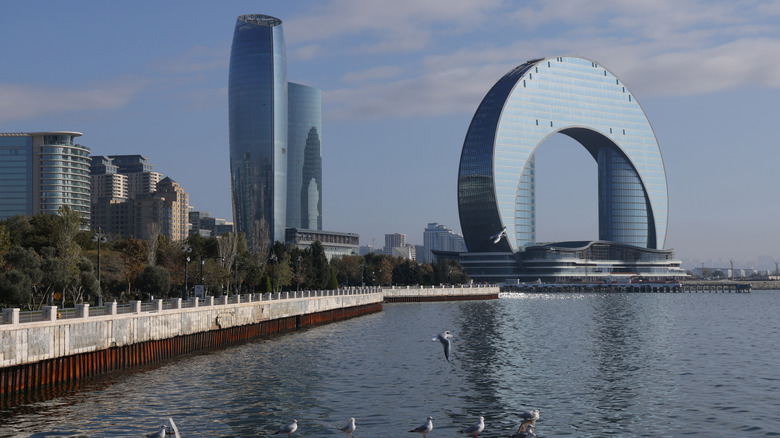
Kazakhstan's navy, operating in the Caspian Sea, where the legendary Soviet Caspian Sea Monster aircraft was discovered, focuses on vessels that can function well in those difficult waters. The Caspian's water level is steadily dropping, gradually making it more difficult for larger vessels to even pull into ports. Smaller forces, then, can reap benefits from the smaller size of their more specialized vessels, which can be a real boon for landlocked countries' navies. This isn't to say that landlocked nations have to only have smaller ships. Another highly unconventional navy is the merchant navy of Switzerland.
It's the biggest in any landlocked country's inventory, and some of its ships, such as the trio of Bregaglia, Tzoumaz, and Diavolezza that weigh in at 87,000 tonnes apiece, are formidable. Smaller vessels like speedboats also patrol lakes on Switzerland's borders. Rwanda doesn't have a navy as such, but security forces still patrol its waters. The Rwanda National Police was able to expand its Marine Unit to 15 vessels with over 150 personnel, and is expanding to protect locations like Lake Kivu.
Their role was to help put an end to criminal activity and violence on the waters, as well as to perform rescue operations. Personnel are equipped with the abilities they need to handle a range of situations, from water rescue to firefighting. Landlocked countries that have navies typically have them for security, protection, and law enforcement purposes in lakes, rivers, and large landlocked seas.