

Is It Safe To Use WD-40 On Rusty Tools?
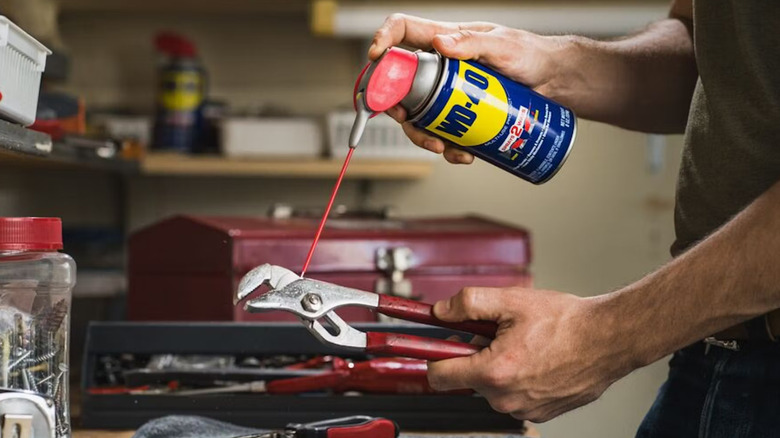
When it comes to all-purpose items you should keep on hand in your shop or garage every day, nothing compares to WD-40. Its versatility and ease of use makes it a go-to solution for everyone from professionals to DIYers. While there are some things WD-40 should never be used on, when it comes to removing stubborn rust from your tools, WD-40 is a great way to do it.
The original WD-40 formula, also known as WD-40 Multi-Use Product, will remove rust on everything from drill bits and hammers to pliers, screwdrivers, and a lot more. It's even one of the items we suggest you use to clean your tool chest. Just take some sandpaper or a wire brush, spray the rusted area with WD-40, and give your tools a good scrub. You should begin to see the difference right away. Of course, some tools may need more attention than others, so take your time and adjust the pressure you're using as needed.
Once you're done, wipe your tools dry and then add an additional protective layer of WD-40 before storing them. Doing so will decrease the likelihood of more rust buildup later on. If your tools are in great shape already, take a cloth to wipe them down after using and add some WD-40. Taking these steps can help extend the life of your tools, and keep parts moving smoothly. Plus, you can also reduce the chances of rust returning after use.
How to protect your tools from rust the right way
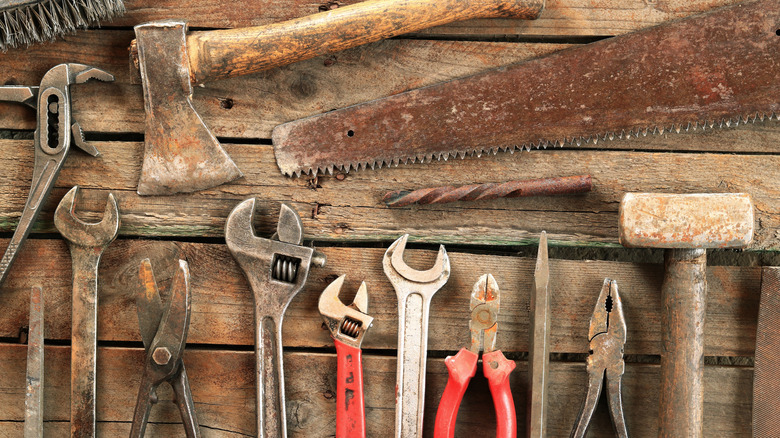
No matter how you use or store your tools, be sure that you take some steps to prevent rust. Tool manufacturers use ferrous metals like iron for their strength and durability, but the drawback is that these metals are prone to oxidation as a result. To compensate for this problem, toolmakers often add rust-resistant layers to their products, but those layers won't last forever. This where preventative maintenance comes into play, but you have to make sure you use the right products to protect your tools from rust.
The original WD-40 Multi-Use Product is great for removing tool rust and is invaluable for anyone looking to protect hand tools. WD-40 can also be used to maintain power tools effectively as well. However, you should take care when using it, as WD-40 can negatively affect rubber components, including gaskets and certain plastics. If you use WD-40 on a tool with rubber or plastic parts too often, it will break these materials down over time. However, WD-40 does offer several products that are both formulated for fighting against rust and are also safe to use on non-metal tools. These products would be better for long-term use, as would any highly rated product designed for the same purpose.
The best way to prevent your tools from rusting will always be with proper care and storage. First and foremost, keep your tools clean and dry at all times. Then, store them in a cool place and out of humid conditions, as high moisture levels can lead to corrosion. You can use some moisture-absorbing packs of silica in your toolbox to help protect your tools from humidity as well. To go the extra mile, you can use storage bags or liners designed with vapor corrosion inhibitor (VCI) technology.