

3 Easy Ways To Upgrade Your Garage For Winter Comfort
We may receive a commission on purchases made from links.
Your garage's primary role might be to protect your cars, and if temperatures drop, it can work just fine. But if it doubles as a DIY workspace, a home gym, or a storage space, when winter settles in, that chilliness could be more than just a minor convenience. Cold winter temperatures will not only hinder your activities but also shorten the lifespan of your power tool batteries. Plus, a drafty garage will bleed cold air into your home, forcing your heating unit to work much harder, and this will drive up your energy bills.
But the good news is that there are basic things you can do to turn this frosty area into an inviting oasis, even in the heart of the cold winter months. Even better, most of these strategies are simple enough to pull off on your own without contacting a pro. They are also budget-friendly and will keep your garage usable year-round, without requiring major renovations. With that said, here are tips that will help your garage remain at a warmer temperature this winter.
Insulating your garage properly
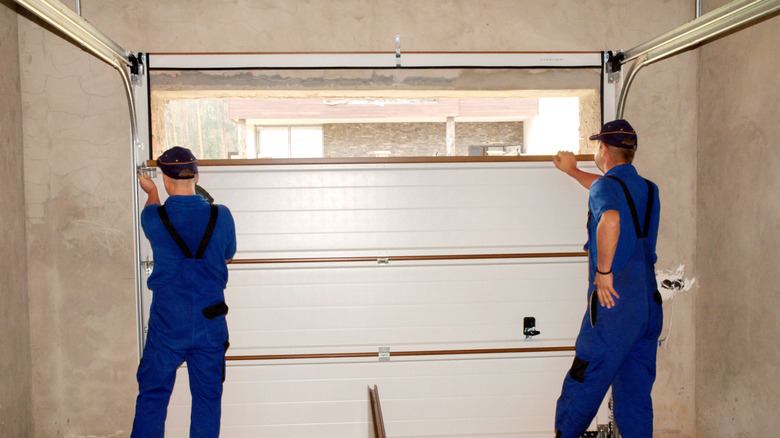
If your garage feels more akin to a walk-in freezer than a cozy space, check whether it's properly insulated. Compared to other rooms in your house, your garage might lose heat faster because it's designed to brave the cold with minimal (or no) insulation. This means that cold winter air will seep in through walls, the garage door, and windows, making any heating effort feel pointless.
To upgrade your garage for winter comfort, you'll first want to insulate the floor. A convenient way to do this is to use rigid extruded polystyrene boards like the Celotex GA4050, which offers a high R-value per inch and is easy to install. Next, think about insulating the ceiling and walls. Not only will this keep your garage warm, but it will also create a barrier that prevents cold air from penetrating your home. As a bonus, doing so will shield your HVAC system from overworking, reducing energy costs.
But insulating the walls and floor may not be enough. It's also a wise idea to insulate your garage door, though it's best to avoid this Dollar Tree hack and stick with the pros' approach. You can choose between fiberglass panels that provide solid thermal protection and polystyrene panels, which are easy to install.
Seal all gaps and cracks
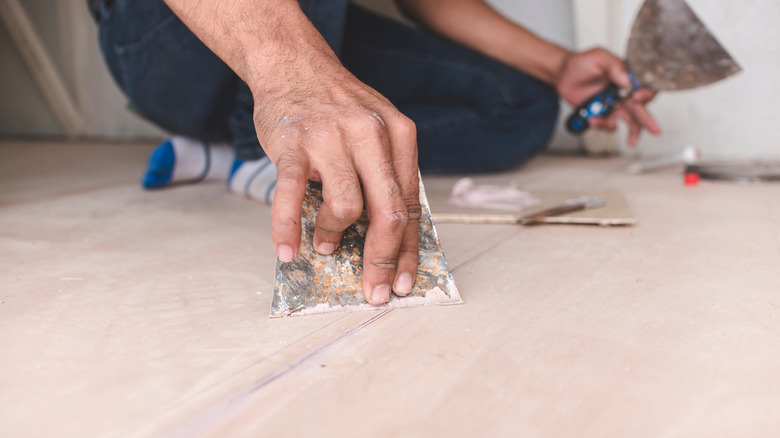
Even with proper insulation in place, small cracks and gaps can undo much of your progress. They will not just allow cold drafts to creep in; these gaps are also the easiest entry points for critters like insects, mice, and other unwanted guests. Luckily, sealing these gaps is not a complicated DIY project. It's quite affordable, and you might be able to tackle it in a single weekend.
To seal large cracks and gaps in walls and other tight spaces, you'll want to use a foam insulation spray, such as the Stanley F905 Foam Sealant from Amazon. You'll need to fill the gaps halfway, as the foam will expand to occupy the remaining space. For cracks around garage windows and outlets, a high-quality caulk is your best friend here.
Besides that, you'll want to winterize your garage door by replacing the bottom seal — after all, worn-out weatherstripping is one of the most common causes of heat loss. So, if you see signs that your garage's weatherproofing seals need replacing, don't hesitate; you might be welcoming garage flooding and cold drafts.
Warm up your garage with the help of heaters

Beyond insulating and sealing gaps, you can also improve the comfort of your garage with the help of a heater. For most homeowners, a portable space heater like the Dreo DR-HSH004A is the easiest and most flexible way to keep warm without committing to expensive HVAC installation. However, you have to be careful with space heaters. Although they are highly effective at keeping your garage toasty when the weather gets chilly, they can be dangerous if they lack safety features such as an automatic shut-off.
Given that these heating gadgets might pose safety risks, it's wise to consider top-rated space heater alternatives. If your garage has proper ventilation and local codes permit it, propane heaters may provide consistent heat, especially for large areas. Alternatively, if your budget allows, you can go all in and invest in underfloor radiant heating. It's a high-comfort upgrade that will make a huge difference, especially where cold concrete is your biggest source of discomfort. Plus, though it's quite expensive to install, it's low-maintenance and offers impressive energy savings when paired with sound insulation.