

What Is A Finlet Actually Used For On The MC-130J Military Aircraft?
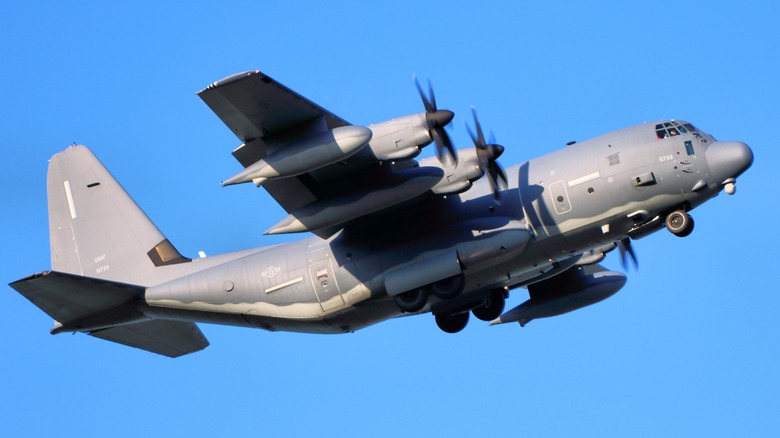
The MC-130J Commando II is a special variant of the United States Air Force's C-130J Super Hercules. It's designed specifically for Special Operations Forces, and flies predominantly at night for air drop missions, seizing enemy airfields, refueling SOF aircraft like helicopters, and more. Unlike most aircraft in the C-130 family, which have been in service for more than 70 years, the MC-130J is highly advanced, featuring improved avionics and weapons systems and an extended range.
The MC-130J is packed full of classified technology it uses for its missions. In addition to all these improvements, it also boasts some sporty Finlets. A Finlet is a passive, fin-like attachment on the rear of an aircraft. They're designed to smooth airflow and reduce drag, which are important factors in improving fuel efficiency. Finlets are a new addition to the MC-130J, not normally installed on any of the other C-130-type variants, as the 417th Flight Test Squadron began installing them in mid-2025.
The purpose of the Finlet installation is to test the aircraft's ability to operate with the aluminum attachments, which are mounted on the rear door, as well as both sides of the tail fin. Engineers and air crews will analyze the Finlets' ability to withstand the rigors of flight operations during all kinds of conditions. Should the Finlets prove useful, it's likely more aircraft will see them installed, as they should improve fuel efficiency, ultimately saving money, an ongoing goal for the U.S. Department of Defense.
What finlets can do for an MC-130J Commando II
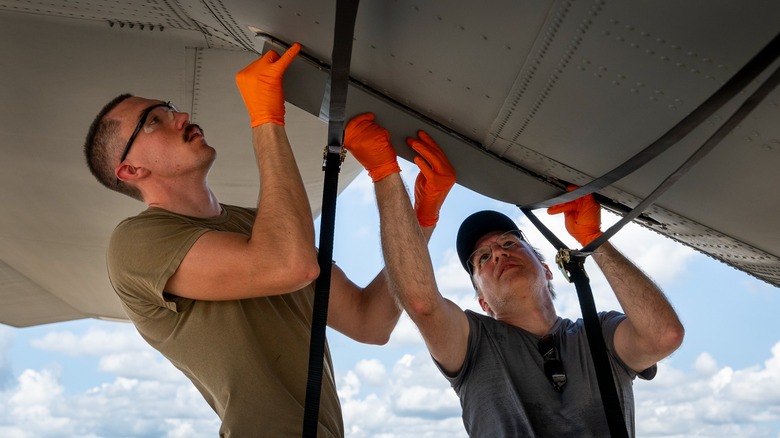
Finlets aren't large pieces of equipment. Despite their small size, their addition is expected to reduce drag by around six to eight percent on the legendary aircraft that still uses propellers. While that may seem like a small amount, the cumulative amount of fuel saved annually would likely be in the millions of dollars. Putting Finlets onto Air Force aircraft is a multi-year effort between the Air Force Operational Energy Office, the Air Force Special Operations Command, and other units.
In a United States Air Force press release, Roberto Guerrero, Deputy Assistant Secretary of the Air Force for Operational Energy, Safety, and Occupational Health, said of the Finlet program: "It is an exciting day for the Department of the Air Force for Finlets to reach this milestone in research, testing, and development as we seek to rapidly deploy innovative technology. Drag reduction initiatives like Finlets are a tangible way we can modernize our fleet, reduce costs, and increase combat capability for the warfighter." He added that for each gallon of fuel saved, it extends the operational reach and readiness of missions in contested logistical environments.
Following the initial flight at Eglin Air Force Base, Florida, further testing will commence at Edwards AFB, California, which will include airdrop evaluations. Should the prototypes prove successful, the USAF is positioned to continue testing and optimization for installation on aircraft throughout the fleet. The goal is to extend the installation of Finlets on the entirety of the C-130J fleet, consisting of hundreds of variants.