

Powerful Nvidia AI Chips Are Already In China: Here's How

On December 8, U.S. President Donald Trump announced that Nvidia would be granted permission to sell its powerful H200 artificial intelligence processor to China subject to a 25% export tax. But according to an investigative report from Reuters, the hardware has already found its way to plenty of machines in China. Universities, technological research labs, and data center operators have all managed to purchase the chips through various gray-market channels ahead of its legal availability.
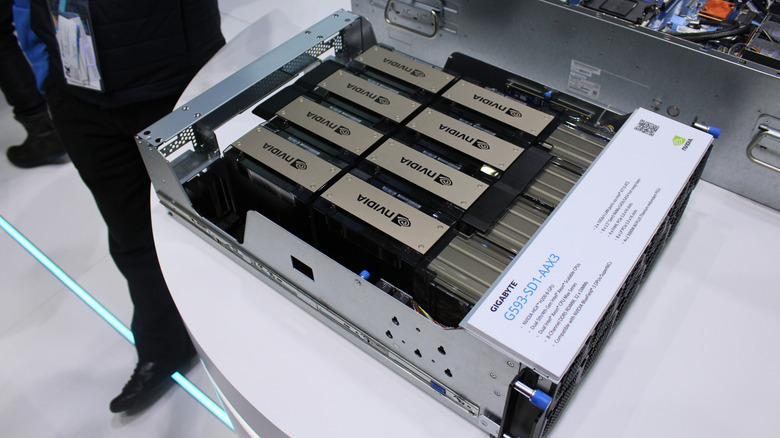
Reuters looked at dozens of documents that revealed that Chinese buyers have been integrating Nvidia's second-most powerful AI chip into large-language models, advanced research, and more. It's hardly a secret, either: One Beijing university professor said unashamedly that his lab had eight H200 chips to support AI model development. Publicizing that they have cutting-edge AI tech on hand helps academic institutions in China recruit new talent, creating a sort of university arms race. Exactly how the chips got from legal channels to China's grey market remains unclear, but U.S. authorities have been cracking down on companies sending American AI tech to China.
Concerns about selling AI chips to China
The president's decision to allow H200 sales to China is a departure from years past. Traditionally, the U.S. enforced strict export controls on critical bits of tech. Perhaps the realization that the chips are already in China created an "If you can't beat 'em, join 'em" mentality. If China wants the chips, the administration seems to think it best to capitalize on that, even if it means losing the lead in the AI race. The U.S. still hasn't authorized the sale of Nvidia's latest and greatest Blackwell chips, but some lawmakers are already concerned about potential security issues.
Reuters suggested that the chips have made it beyond China's academic and corporate realms to the nation's military facilities, and there are some scary military applications of AI. The true implications of this decision remain to be seen, and there are still details to be worked out. As of this writing, China plans to limit access to the imported H200 chips in favor of domestic technology, and Nvidia's market share in China plummeted so steeply this year that the company may rethink its export plans.