

Neither In The Garage Nor In The Shed – Here's A Great Place To Safely Store Ryobi Batteries
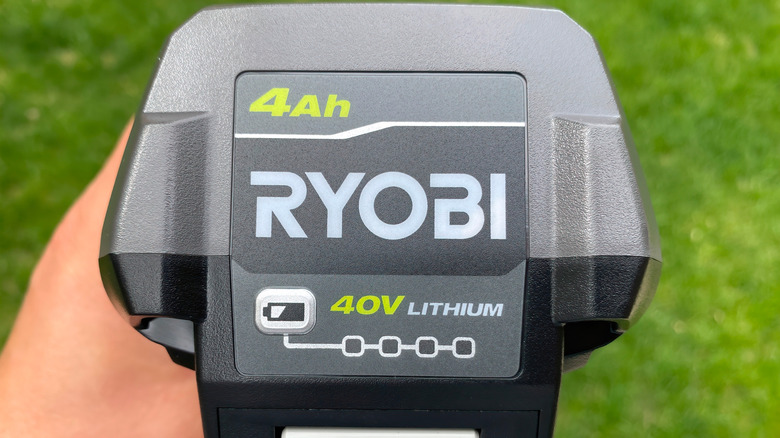
Ryobi is one of the bigger names in the tool game, offering a broad range of hand and power tools that cover everything from household DIY and yard maintenance to cleaning and recreation. In fact, DIYers and pros alike appreciate this brand, as it offers accessible, affordable power tools that utilize rechargeable batteries with ONE+ battery technology. This means they're interchangeable, and you can use the same battery to power a range of Ryobi handheld tools of the same voltage.
That said, given that the lifespan of Ryobi batteries depends on how you charge and store them when not in use, you'll want to do everything possible to keep them in the best condition. And if you're like most homeowners, you might be subscribing to the myth that the best place to store your Ryobi batteries is in your garage or shed. But before you do this, you'll want to think twice; it's one of the biggest mistakes you can make to ruin your power tool batteries. After all, storing your batteries in the garage or in the shed will drastically reduce their performance. Even worse, prolonged exposure to extreme temperatures increases the risk of common problems affecting power tool batteries, such as faster-than-normal discharge.
Given these risks, the safest place to store Ryobi batteries is inside your home — after all, if you're comfortable with your space, your power tool batteries will be, too. According to Ryobi's website, the best place to store your lithium-ion batteries is in an indoor closet, as it offers stable temperatures, protection from direct sunlight, and low humidity.
What happens when you store your Ryobi power tool batteries in a garage or shed
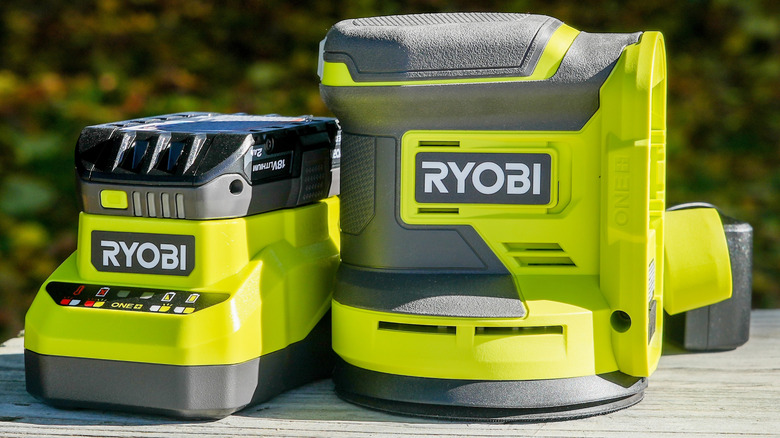
Before you even consider keeping your power tools and accessories on your garage or shed wall, you need to think about the area's environment. Unless you've a luxury garage with proper insulation, an air-conditioning unit, and a heating system, chances are your garage will experience significant temperature fluctuations. According to Ryobi's website, the ideal storage space for Ryobi batteries is a location with a consistent temperature of around 41 to 68 degrees Fahrenheit. This means that if you go above or below this range, you risk damaging your tool battery, as it doesn't tolerate heat well.
Storing your batteries in an unheated garage in winter is a big deal because temperatures there can drop significantly. Since most modern Ryobi 18V ONE+ tools use lithium-ion batteries, which rely on chemical reactions to operate, below-freezing temperatures will slow down these reactions. As such, your battery will generate a weaker current, meaning that if you try to power your tools, you'll get less runtime than normal. On the other hand, exposing your batteries to extreme temperatures can increase the risk of thermal runaway, which can result in an explosion or fire. This can pose a significant risk if you live in a state like Nevada, Arizona, or New Mexico where desert temperatures are common.
Here's how to safely store your Ryobi power tool batteries
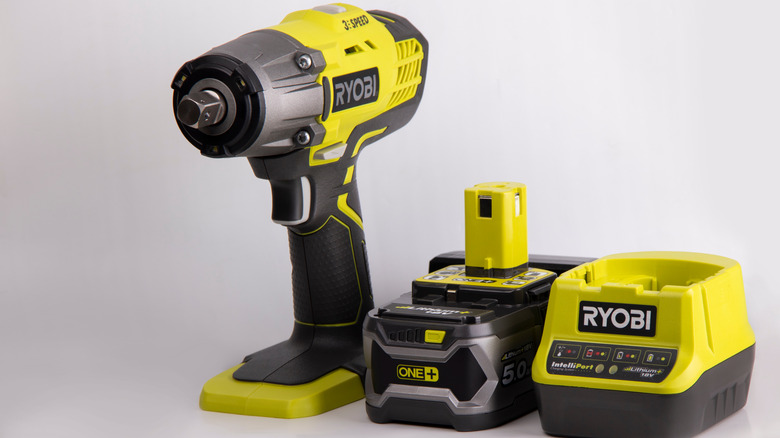
Storing your Ryobi power tool batteries safely is pretty straightforward. Again, per Ryobi's website, you'll want to store them in a climate-controlled environment with dry conditions. The space should be away from direct sunlight and heat sources like radiators or fireplaces. An indoor closet is the ideal solution. However, if your garage is well-insulated and maintains a reasonable temperature year-round, you can store them here. It's best to store them in an organized, uncluttered location to prevent accidents like short circuits and physical damage.
Another storage option for your Ryobi batteries is an insulated cooler or storage container. Though it might seem weird at first, a cooler will act like a hot box and protect your battery from sudden, extreme temperature drops. You'll just have to be vigilant and check the batteries regularly; if they overheat, that could result in an explosion or fire. If you're storing your Ryobi battery for an extended period, ensure it's charged to at least 50% capacity. Storing a battery that's completely depleted or fully charged is detrimental to its longevity and health.