

This Caulk Gun Mistake Is Making Your DIY Home Improvement Look Sloppy
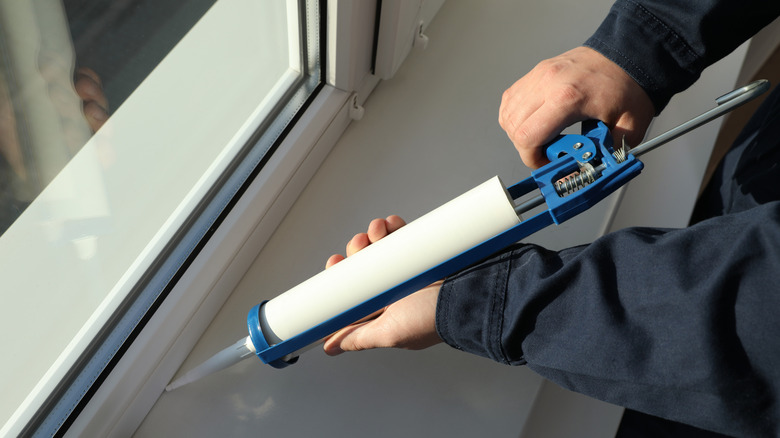
If you're a DIYer trying to conquer everyday household repairs, then doing the job right the first time and making it look good is likely your main priority. This is especially true of caulking, because if you use too much, the end result can look, well, like a DIYer did it. The best way to avoid that is to control how much caulk comes out as you're working. This can be done by cutting the tip of the caulk tube just before you start.
The best move is to cut at a 45 degree angle. You should do the same when using this cheap fix to repair your driveway. But beware: if the width of the gap you're filling is too narrow versus the hole in your caulk tube's tip, you're going to make a mess. If you begin working and see that you've cut the hole too small, go back and make another cut. But the best time to address it is when you begin, so keep an eye on the amount of caulk coming out and go from there.
It's also important to keep going once you start. If not, you're risking putting down too much caulk, either at the beginning of a pass, or at the end. This makes for an unprofessional appearance, and you might leave some gaps behind. Keep an even pressure on the trigger, maintain a steady pace, and you should end up with a great line in the end.
Better caulking starts with simple prep
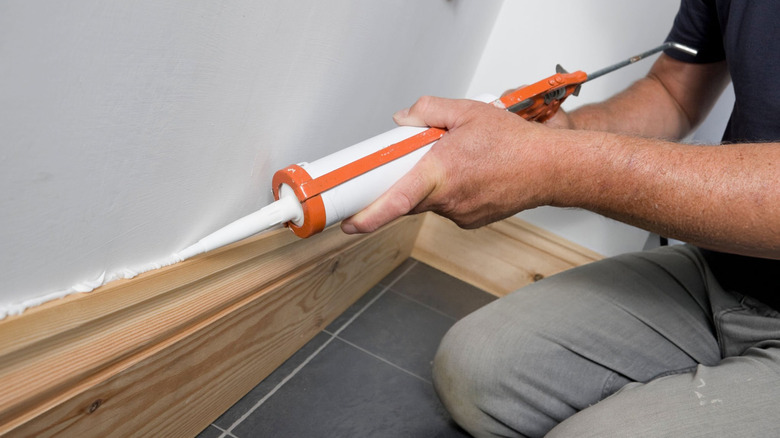
Caulking with a tip cut at a 45-degree angle might be a problem when you have to change direction. If this happens to you, there is a hack you can try. Cut the tip straight across instead, and smooth out the cut edge with an abrasive cloth so it's rounded. Then you should be able to go in any direction and still get an even application. But of course, you'll need to be sure the opening is sized correctly before you start working.
You might also want to think about stuffing some material into the gap you're going to caulk ahead of time. This will help support the caulk as it dries, preventing cracking later on. If you go this route, be sure the gap you're filling is both clean and dry. Any foreign debris or substance can actually keep your caulk from adhering effectively. Plus, it's harder to fix after the fact.
However, simply applying the caulk may not be enough to guarantee the job is done. You'll want to smooth the caulk before it dries, and you can use a putty knife, which is one of the tools that are fine to buy cheap, or your finger, to do so. But keep one constant motion while doing it and once you're finished, you can remove any extra caulk with a damp sponge.