

Will WD-40 Help Remove A Stripped Screw Or Make It Worse?
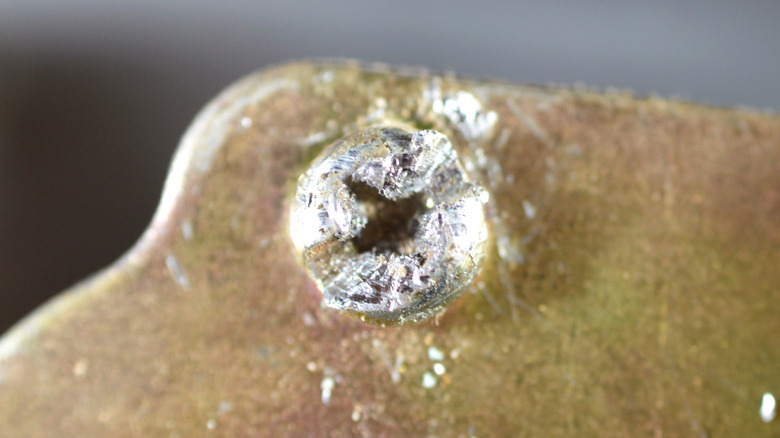
It's a tale as old as time: You try to remove a screw using a screwdriver or drill, only to find that the head is stripped. Thus begins the long and frustrating process of going through removal options. You may even find yourself reaching for a can of WD-40, which, in its traditional multi-use form, is advertised as getting metal pieces moving with ease. If you're lucky, this could work, with the WD-40 actively loosening the screw just enough that, even with limited grip onto your tool of choice, you can get the hardware moving. Still, it should be applied properly, and emphasis should be placed on the words "could work."
In a perfect scenario, you take your can of WD-40 and spray the solution around the screw, specifically where it makes contact with the object it's screwed into. From here, you give it some time to work its magic, seeping its way between the screw and material. After a few minutes, press down as hard as you can into the screw head with the bit of your drill or screwdriver and twist in a counterclockwise direction. Ideally, the WD-40 will have loosened the screw enough to let it move.
It's worth reiterating, though, that spraying WD-40 isn't a guaranteed way to get a stripped screw moving again. After all, technically speaking, WD-40 isn't considered a full-on penetrating oil. In the event WD-40 can't release enough tension to get a stripped screw moving, you'll have to explore other options. Thankfully, this is a frequent enough issue that there are a few proven methods you can try.
How to remove a stripped screw when WD-40 isn't enough
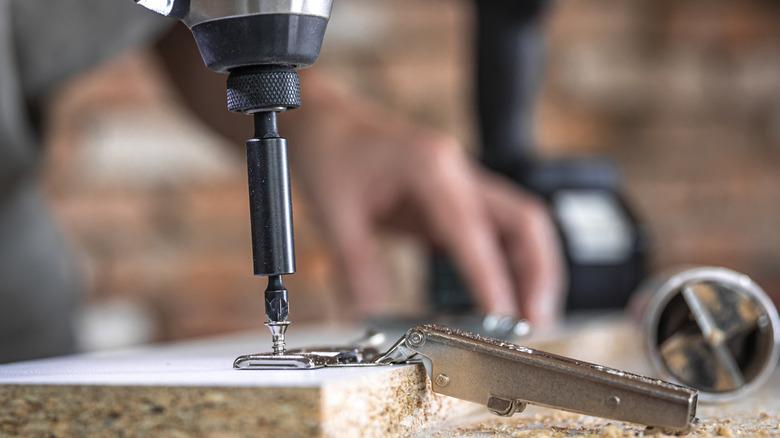
One way to remove a stripped screw involves getting traction on the worn-out screw head. This can be done by cutting a rubber band and placing it over the screw head, or by adding hot glue or duct tape. With them inserted, push in your screwdriver or drill bit with force and attempt to unscrew it. With any luck, these additions alone, or with the aid of some WD-40, will remove your stuck, stripped screw with little to no struggle.
Should these methods not work, there's another approach to take. Instead of adding material to the screw head, you can try different tools that work around the lack of grip. Pliers of all shapes and sizes, including screw extraction pliers, can help get the job done. If there's room, grab the screw beneath the head and material and twist until it's out.
A larger screwdriver or one of a different shape could be your key to success as well. With the aid of a hammer, you can carefully hammer it into the screw head to create a new connection point. If this works out, then you should be able to remove the screw as normal. This is just the tip of the iceberg when it comes to stripped screw removal tactics. While it's not a sure solution to a stuck stripped screw, in any case, spraying some WD-40 can be a great first step before you move on to other methods.