

Why Almost Every One Of Your Devices Uses USB-C Ports These Days
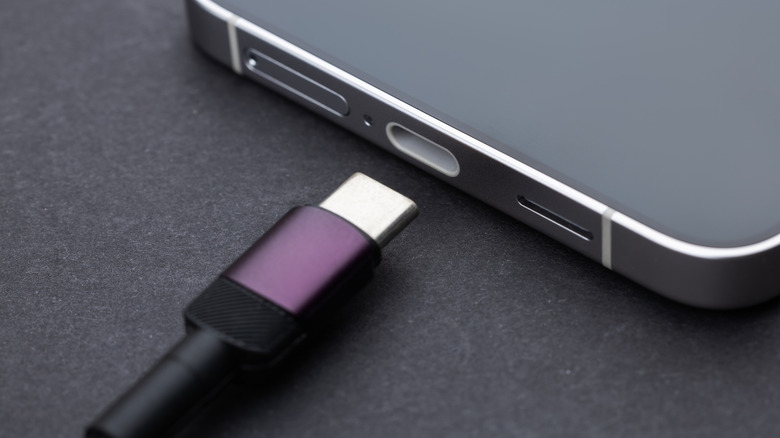
USB 1.0 ports were once the most advanced means of connectivity for electronic devices. But USB-1.0 has evolved to USB-C, and USB-C has taken the lead for nearly every device you can imagine. The reason for that has to do with a variety of factors, beginning with versatility. USB-C ports can charge devices, transfer data, and handle both audio and video. Plus, USB-C delivers both high-speed power and data at the same time.
The widespread use of USB-C ports also reduces electronic waste, or e-waste. The idea is that with a single standard port, manufacturers no longer need to make different cables for different connections. This cuts down on resources used during the manufacturing process. Also, as USB-C has become more mainstream, consumers typically don't have to worry about whether or not they have the right cable. This means they don't need to toss old cables for devices they no longer use. It's best to properly recycle those cables anyway, as many states have made it illegal to throw away electronics.
There's also a regulatory motivation for the USB-C's mass adoption from the European Union (EU). The Common Charger Directive of 2022 dictated that all mobile phones and other devices have a standardized charging port. The EU gave tech manufacturers a two-year window to comply, which meant by the fall of 2024, they had to fall in line. Apple beat the deadline beginning with the iPhone 15 in 2023, replacing its proprietary Lightning port with USB-C.
Why some older charging ports still exist
A small group of U.S. senators began pushing for standardized charging ports on mobile devices in 2022. This came after the EU finalized its own policy on the matter. However, USB-C ports weren't specifically considered for the new standard, as the idea was to leave it up to the U.S. Department of Commerce. However, as of this writing, such legislation has not been passed in the U.S.
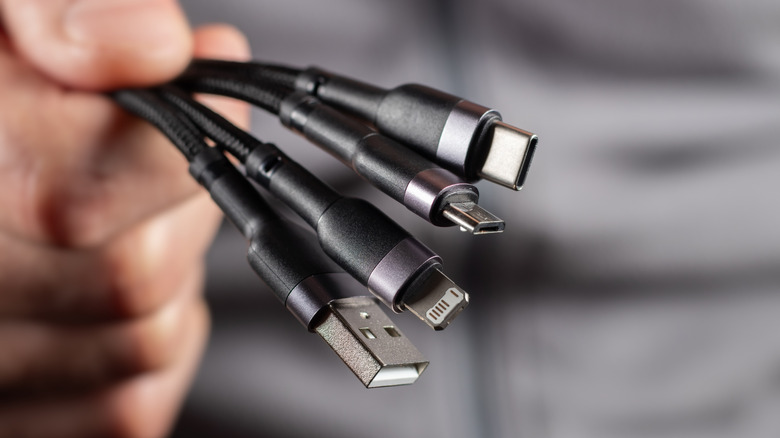
Due in part to this lack of a U.S. federal mandate, many tech manufacturers continue to sell devices with Micro USB charging ports in America. The other part is because of an abundant supply of components that exist, and the fact that Micro USB, which is very different from USB-C, is cheaper to produce. Micro ports also need just a small amount of power to charge up, so transitioning to a larger port that uses more power isn't a sensible move. Micro USB is often the most ideal port as well, depending on the device, and it's also one of the most compatible.
USB-A, perhaps the most familiar USB port, is also likely not being phased out anytime soon. This larger USB connector exists in a massive number of devices, from TVs to gaming consoles, and much more. While USB-A is outdated, it still performs well with USB 3.0. The fact that USB-A is still capable, versatile, and inexpensive to manufacture means it may always be around.