

These Rechargeable AA Batteries Pay For Themselves
We may receive a commission on purchases made from links.
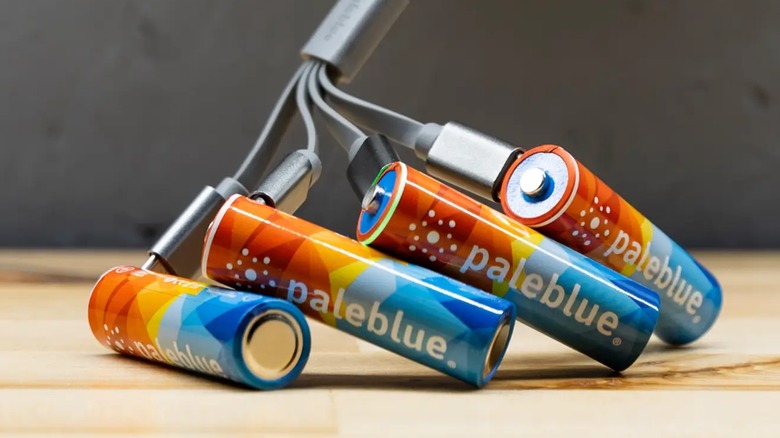
Batteries have become an essential part of everyday life. The unfortunate thing is that the majority of small batteries you'll use — AA, AAA, D, and the like — won't last forever. Once you drain them, you'll have to toss them and buy new ones. If you prefer to avoid this practice, you do have options. One of the most intriguing on the market is the USB-C rechargeable AA battery, which, as the name implies, can be recharged, saving you money in the long run — especially since you can recharge them using a USB-C cable you probably already have, instead of needing a separate charger.
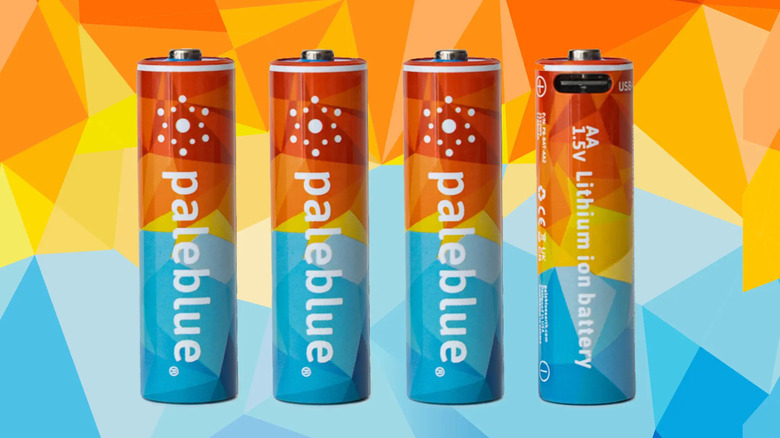
While they're nowhere near as common as their single-use counterparts, rechargeable AA batteries have slowly picked up steam in recent years. Modern ones charge with a USB-C cable, no differently than a phone or set of wireless earbuds, and will power devices through multiple charge cycles. Brands such as Paleblue, Coast, and more now offer these for sale, with their prices hovering around the $30 range for a set of four AAs.
You're not limited to AA batteries, either, with rechargeable C batteries also available. Overall, they're a decent long-term investment considering their reusability, they reduce landfill waste, and the fact that they use charging cords you likely already have around the house is a nice bonus. Though they seem like a good buy on paper, even the top-rated USB-C rechargeable batteries aren't the best choice for everyone. In some cases, the imperfect single-use battery may still be the way to go.
Choosing between rechargeable and single-use batteries
USB-C rechargeable batteries, as great an investment as they seem, are on the expensive side. Therefore, you probably won't want to use them for every battery-powered device at home. This is where the distinction between a rechargeable battery situation and a disposable battery situation comes into play. Rechargeable batteries are best suited for electronics that use a lot of battery power. If you game a lot on a battery-powered controller or use small, battery-powered lights, rechargeables are the way to go. You'll have to charge more often, but at least you're not constantly throwing single-use batteries away and going out to buy more.
With that said, disposable batteries are the way to go for devices with less active use. Think smoke alarms, emergency flashlights, TV remotes, or other devices that draw power sparingly and don't require frequent battery changes. Not only will going with these batteries save you some money around the house, but this way of use is what they're intended for. Single-use batteries have a low discharge rate, meaning they'll last longer sitting idly between uses as well as in storage, as long as they're stored correctly. That's not to say that rechargeable batteries couldn't run these devices, but for the sake of up-front costs, it's not a bad idea to pick your battles when it comes to which devices you'll have them power.
Battery waste remains an issue, even researchers explore new battery recycling methods, including one involving aluminum foil. USB-C rechargeable batteries aim to do something about this, and they're worth at least giving a try. Still, given the relatively high price, it'll likely be some time before they become the norm.