

One Of The Biggest RAM Brands Is About To Become Impossible To Buy From
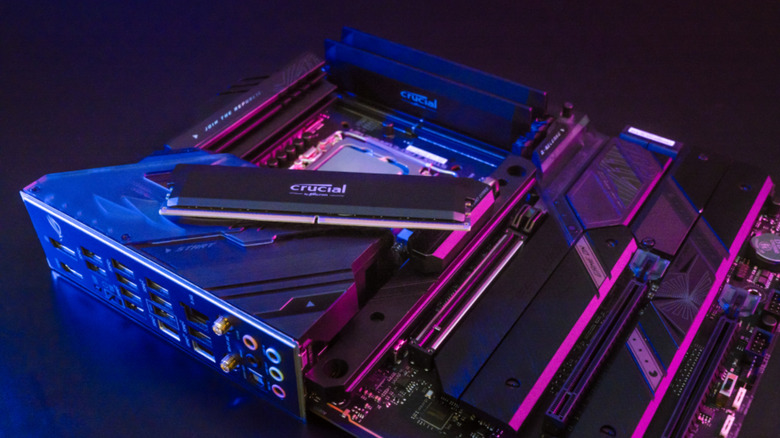
The market for PC components is rapidly being warped by ravenous demand from the AI industry. With prices on the rise, consumers have been dealt another blow as one of the most recognizable memory and storage brands in the industry is set to close its doors. Micron, one of the world's major RAM suppliers, is shutting down its consumer-facing Crucial brand, a move that could put even more upward pressure on PC prices going into 2026.
The three biggest manufacturers of computer memory are Samsung, SK Hynix, and Micron. Of the "big three," Micron is the smallest according to Counterpoint Research. All three sell to businesses and consumers, which worked out well for decades. But as the AI industry competes for historic investments in emerging technology, it has hoovered up computer components to build millions of servers for enormous data centers. The focus has until now been on GPUs, which are the beating heart of generative AI technology. But even as graphics cards have momentarily stabilized in price, memory and storage are now seeing record-breaking price hikes that have made them prohibitively expensive for many consumers.
In that environment, Micron's announcement that it will close down its consumer sales channels has sent shockwaves through the PC enthusiast community. The change will likely have ripple effects that extend far beyond computer hobbyists, with price tags likely to rise for laptops, smartphones, and more.
Crucial memory is no longer crucial to Micron, and neither is your money
In a public letter to investors on December 3, Micron announced its exit from the consumer market and the shuttering of its Crucial brand early next year. "Micron Technology, Inc. (Nasdaq: MU), a leader in innovative memory and storage solutions, today announced its decision to exit the Crucial consumer business," the statement reads in part, "including the sale of Crucial consumer-branded products at key retailers, e-tailers and distributors worldwide."
Micron will continue to ship and sell Crucial products through consumer-facing channels through the end of February 2026. That will leave consumers with far fewer choices at the store amid the global runaway pricing on RAM and storage. Micron will instead direct its efforts toward "improv[ing] supply and support for our larger, strategic customers in faster-growing segments," and specifically name-checks the "surge in demand for memory and storage" driven by the AI industry. In blunt terms, Micron has determined that it would rather make huge amounts of money all at once from AI infrastructure clients than smaller amounts over time from consumers and PC builders.
Of the three major memory suppliers, Micron owns the smallest share of the market. According to the Counterpoint Research study mentioned earlier, for five consecutive quarters, it has held between 19% and 25% of the DRAM market compared to Samsung, which most recently held 32%, and SK Hynix, which held 38%.
Computers and PC parts are becoming prohibitively expensive
RAM has traditionally been one of the more affordable components for PCs and laptops, so the recent runaway price increases have caught many consumers flat-footed. Last month, we reported that AI is making common PC upgrades painfully expensive, and the situation has only grown more dire since then. According to Amazon price tracker CamelCamelCamel, a 64-gigabyte kit of Corsair Vengeance DDR5-6000 RAM shot from a low of $190 in March of this year to $840 as of this writing. That's a 342% increase in just nine months, and there's no plateau in sight.
Micron's withdrawal from the consumer market is bound to put even more upward pressure on consumer RAM pricing. In a shocking report, The Verge found that higher prices are set to hit everything from laptops and smartphones to smart TVs, gaming consoles, and even cars. Companies that wish to keep prices stable may choose to use less RAM in their consumer products or to cut corners elsewhere. The next time you buy a laptop or smartphone, you may be faced with a decision between a worse or slower system and a prohibitively priced one. Considering the demands of modern applications, games, and operating systems, that's an unenviable choice.
Crucial's closure is a likely factor, and although SK Hynix is investing record amounts of capital into new RAM plants, they're set to produce memory for AI servers, not personal computers. If you're in the market for... basically anything with a computer in it, prepare to wait out the storm for the possibility of an AI industry bubble burst. There are signs of that pop on the horizon, such as massive California data centers sitting empty, but if or when that market correction will occur remains uncertain.