

How Hisense Keeps Its TVs So Cheap
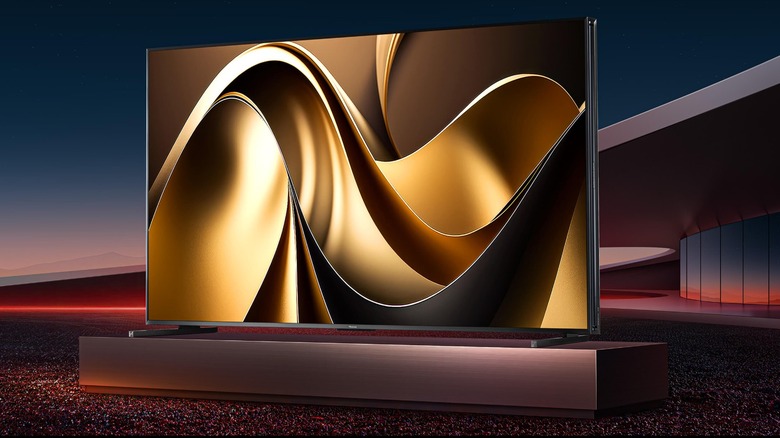
According to a statement released by Hisense in February 2025, Hisense TV comes second in global TV market share and is the only TV manufacturer to have experienced consecutive growth over the last seven years. Apart from the company's self-touted reason, its "commitment to user-centric technology and ultimate quality," one reason more people are buying Hisense TVs is that they cost less than other major TV brands, such as Samsung, Sony, LG, Panasonic, and Philips. But how does Hisense manage to keep prices low while still competing with other top brands in terms of quality?
One likely explanation for the company's low prices is its business model. Hisense makes other products besides TVs, and its low TV prices help them rack up TV sales while gaining popularity across other offerings. So while they make less money per retail unit, they dominate the market by selling more TVs, getting the company's name out there as a brand that sells affordable, but also high-quality appliances.
Hisense entered the international market in 1988 and, like many Chinese manufacturers, decided to adopt the OEM model. Whether this was intentional or not, manufacturing parts for other leading brands quite likely gave Hisense technical knowledge on large-scale production and supply-chain distribution. Hisense has built on this foundation by establishing multiple international R&D centers and industrial parks and eventually acquiring Sharp America in 2015 for 23.7 million, marking the company's direct investment in the West.
Strategic acquisitions and business deals to help lower cost of production
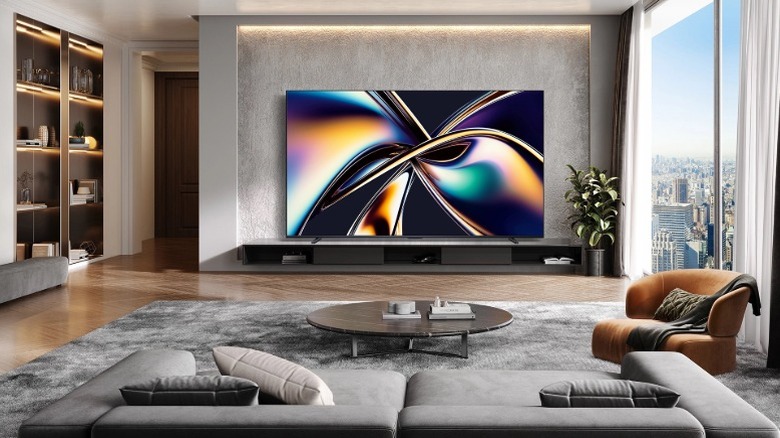
Hisense's acquisition of Sharp gave the company access to more than a century of TV industry knowledge and to Sharp's 1.3-million-square-foot factory in Mexico. By establishing a production base in North America, Hisense was able to substantially reduce transportation and supply chain costs. This, no doubt, improved Hisense's ability to sell low-cost TVs.
Again, the company acquired a 95% stake in Toshiba Visual Solutions Corporation; this deal has given Hisense access to privileged research-and-development and production secrets of yet another well-established Japanese TV and screen producer. In keeping with its business strategy of localizing raw material and labor sourcing to lower costs, Hisense announced yet again in 2021 that it was investing $260 million in a new Home Appliance Industrial Park, also in Mexico.
Before investing in the American continent, however, Hisense created an industrial park in South Africa in 2013. Entering the country was, in fact, Hisense's first attempt at internationalization. Evidently, building and maintaining manufacturing infrastructure in the specific markets they are trying to reach is an important strategy Hisense has used to lower production costs. When the company pairs this approach with its ability to endure lower profit margins to improve market share, it results in consistent affordability as a viable selling point, enough to rival more seemingly prestigious brands.