

Don't Believe This Extremely Common Heat Pump Myth
We may receive a commission on purchases made from links.
With utility bills on the rise, most homeowners are increasingly looking for ways to cut down their power bills. Depending on where you live, you may find yourself at a crossroads, wondering whether switching to a heat pump is worth the cost. They are known for being more costly to install than conventional HVAC systems, but they can be cost-effective over time, reducing your power consumption by a staggering 75%, according to the U.S. Department of Energy. Plus, they always pull double duty year-round, allowing homeowners to heat and cool their homes with the same setup.
But despite their massive perks, if you've spent your time scrolling through online forums that talk about heat pump upgrades, you've probably come across a statement like, "heat pumps don't work in cold weather." And given that this claim is repeated so often, you might take it as a fact. But is it truly factual? The simple answer is no, although it is a myth that used to be true.
Heat pumps are typically vulnerable during harsh winters. After all, they usually keep your home warm when temperatures drop by extracting heat from the outside air and transferring it indoors. This means that when it gets cold enough to freeze, the pumps will have little to no heat to absorb, reducing their efficiency. Older models struggled with this issue, but great strides have been made to make it easier for heat pumps to extract sufficient heat from freezing outdoor air, more efficiently than before.
What you should know about modern heat pumps
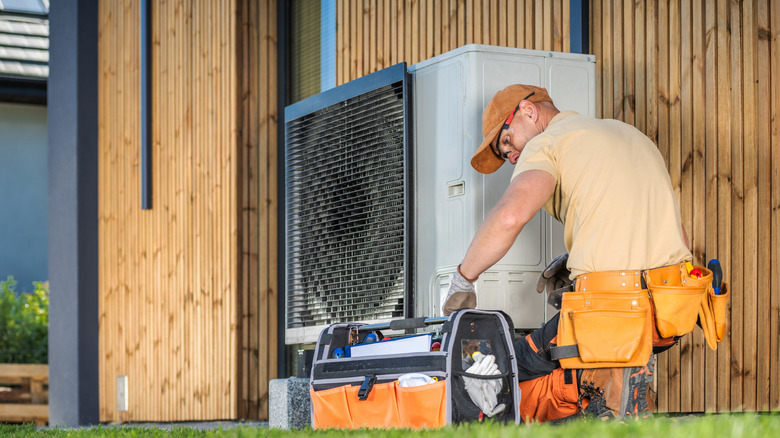
Generally speaking, modern heat pumps are a completely different story from those of the '80s and '90s, and even some of the early 2000s. Today's cold-climate models, like the Mitsubishi Hyper-Heating FX-Series (available on Amazon), feature advanced technology that provides warmth for your home even when the temperature outside dips below -13 degrees Fahrenheit. These models are specifically built to maintain strong heating output during extreme cold months, thanks to inverter-driven compressors and advanced refrigerants.
However, it's worth noting that although cold-climate heat pumps might still operate at 100% capacity, they will typically cost more. If you're trying to keep your home comfortable across all seasons while avoiding skyrocketing bills, you'll probably want to consider a hybrid heat pump. As a hybrid, this model comes with two systems: an electric heat pump that handles your heating needs when outdoor temperatures are mild to moderate and a furnace that can save the day when conditions are frigid.
Other common heat pump myths you should stop believing
Even beyond the "heat pumps don't work in cold weather" myth, there is still a ton of misinformation out there about these energy-saving appliances. Money is always a major factor when considering which type of heating system to get, and unfortunately, the idea that heat pumps are affordable is one concept that people don't believe. While there's some veracity to the idea that they're prohibitively expensive — hybrid and cold-climate models carry a higher upfront cost than standard models — but it's not true in all situations. After all, when you factor in home energy rebates, tax credits under programs like the Inflation Reduction Act, and energy savings, a modern heat pump will suddenly become much more affordable since the installation costs will be slashed by hundreds or thousands of dollars.
You might also hear the misconception that heat pumps are quite noisy. While this might have been true a few decades ago (since older units have a reputation for rattling and whining), today's pumps are built to run with a low hum. In fact, most operate at 40–60 decibel levels, which is similar to that of a refrigerator or a normal conversation. There is also the issue of maintenance. You might believe that heat pumps are more difficult and expensive to maintain than standard systems. But that's not true. Their upkeep is the same as that of a standard HVAC system. You'll just need to clean or replace the air filters, schedule annual maintenance service, and keep the outdoor unit clean.