

Why Do Cars Still Use Lead Acid Batteries?
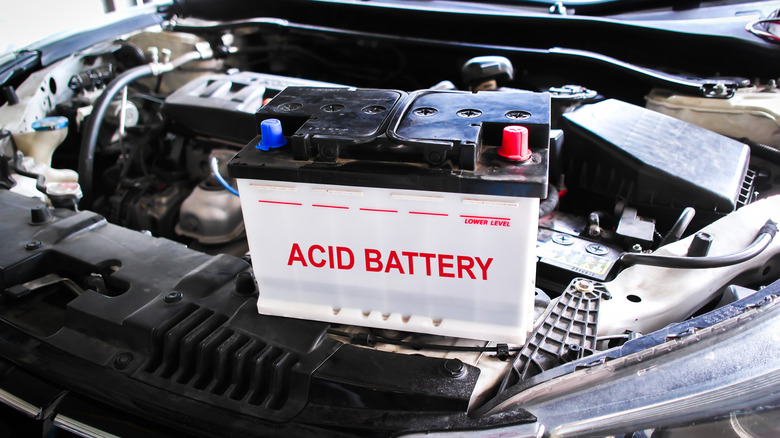
Modern cars are quite advanced. Cars equipped with different levels of autonomous driving, for example, are among the most technologically advanced vehicles on the road today, as are EVs and hybrids. So with all this technology, why do so many modern cars still have lead-acid batteries? Perhaps the simplest reason is also the most obvious: they're just cheaper. For example, a maintenance-free lead-acid battery can be had for less than $150. In contrast, a lithium-ion car battery like the Antigravity Group 24 costs $1,049.99 direct from the company.
Weather is also a big reason why lead-acid batteries are still a great choice for vehicles. A lead-acid battery, especially modern sealed and Absorbent Glass Mat (AGMs), have the ability to operate over a wide range of temperatures. Whether it's in the freezing cold, which can cause an EV's range to drop, or in immense heat, these batteries have a track record of performance. Plus, lead-acid batteries are generally free of thermal runaway issues that lithium-ion batteries are susceptible to, which can cause fires or even explosions.
Lead-acid batteries are also designed to crank the engine the moment you turn the key. Unless it's low on charge or malfunctioning, the battery should deliver every time. It's this reliability that's kept the lead-acid battery as the primary power source for today's vehicles. They're the best option overall, at least for starting a car.
Lead-acid and next generation batteries
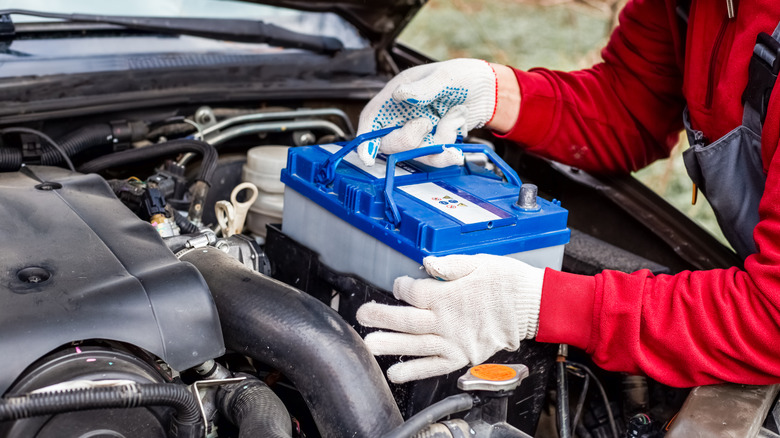
Lead-acid batteries are also a great example of the circular economy. They can be recycled quite thoroughly, with the parts being used to assemble new batteries. It's an efficient process; lead-acid car batteries are regularly recycled at a rate of 99%. This process practically eliminates all waste, saves money, and ensures the battery supply chain continues to flow without interruptions.
Most EVs on the road today still need a regular 12V car battery anyway. EVs use 12V car batteries to operate other important systems that aren't related to the vehicles' propulsion, which is handled by a Lithium-ion battery pack. Lead-acid batteries power features like door locks, keyless entry, lights, power steering, and much more. So, an EV's massive lithium-ion battery pack handles movement, while the lead-acid battery powers everything else.
However, a European research group, Battery 2030+, is pushing for more energy-dense and longer-lasting alternatives to lead-acid batteries. Engineers are developing next-generation batteries composed of new materials and internal components that more closely align with modern technology. These could even exceed today's lithium-ion batteries. If the group does manage to come up with a viable alternative, it's possible that lead acid batteries may eventually be phased out.