

This State Could Make Driving With Studded Tires A Crime
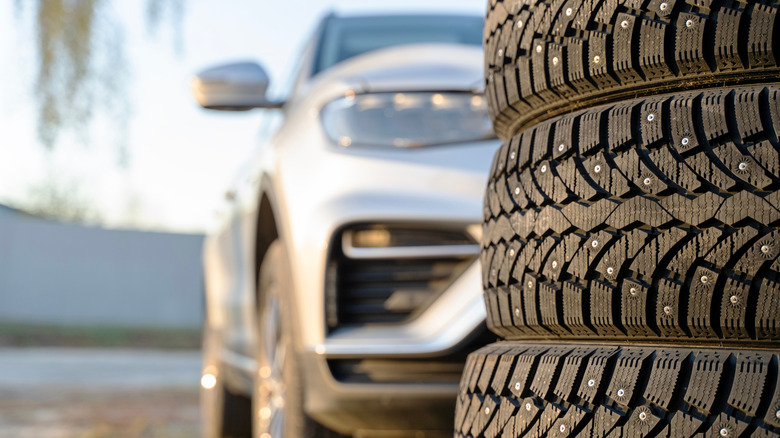
For drivers experiencing harsh winters, the threat of snow is always just around the corner. But driving with studded tires, which are designed with small metal spikes across the treads, can help navigate through the mess. As a result, these tires can give drivers peace of mind during their daily commute. However, government officials in Washington are trying to ban those tires, arguing that they just cause too much damage.
The Washington State Transportation Commission (WSTC) addressed the subject in a January 2025 report. The report states that studded tires, which are legal in the state from November 1 to March 31, cause more than $20 million worth of road damage per year. Washington residents are currently required to pay $5 per tire when buying studded tires, but the WSTC wants that number increased to $50 per tire. The commission gave a timeline of no less than five years before studded tires should be removed from the road, making them unlawful to use.
This isn't the first time that Washington's tried to regulate studded tires to the point of no return. Previous efforts date back to 1984, with the most recent attempt coming in 2019. The 2019 bill, presented to the Washington State House of Representatives, called for studded tire fees to increase from $5 to $100 per tire in July of that year. By January 1, 2020, dealers would be penalized for selling studded tires. Had the bill passed, studded tires would've been fully prohibited by July 2025.
Why studded tires can be a problem on the road
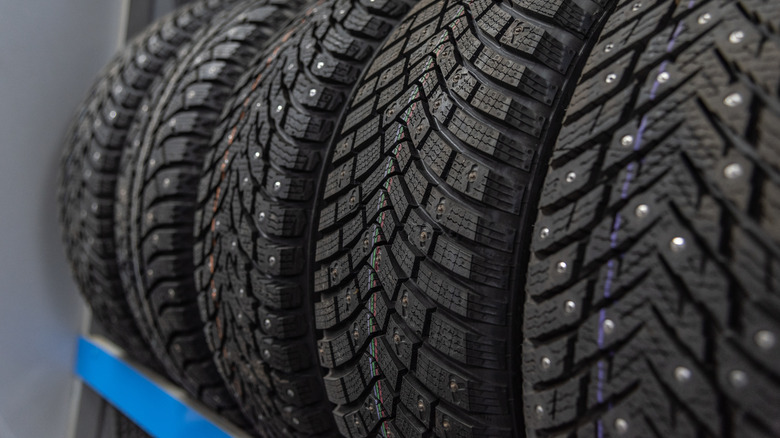
Washington's move to ban studded tires stems from years of research conducted by state officials. In a 2021 update, the Washington State Transportation Commission (WSTC) published a decade's worth of findings, concluding that studded tires were causing serious problems. The studs were digging into the pavement, creating long grooves, and even holes. This was causing highways to drastically transform over time, thus becoming less safe. The risk of hydroplaning, which even an AWD won't prevent, greatly increased, as water would settle into the crevices left behind by the studs.
Ironically enough, what makes studded tires effective is the same thing that makes them destructive. Studded tires tend to work best when they're used on roads that are covered in snow and ice. The metal studs punch their way through, giving drivers the traction they need. But once those studs penetrate and make physical contact with the road, that's where the problems begin. Plus, if drivers use studded tires on clear roads, versus using winter tires in non-winter weather, the impact is immediate and the effects are much worse over time.
Public reaction to possibly losing studded tires in Washington has been mixed. Many drivers feel the ban is way overdue, while others insist they won't be able to navigate winter conditions with them. Several states currently restrict the use of studded tires and some have already prohibited them, including Louisiana, Michigan, Minnesota, and Texas.