

These Are Your Home's Most At-Risk Pipes In Wintertime
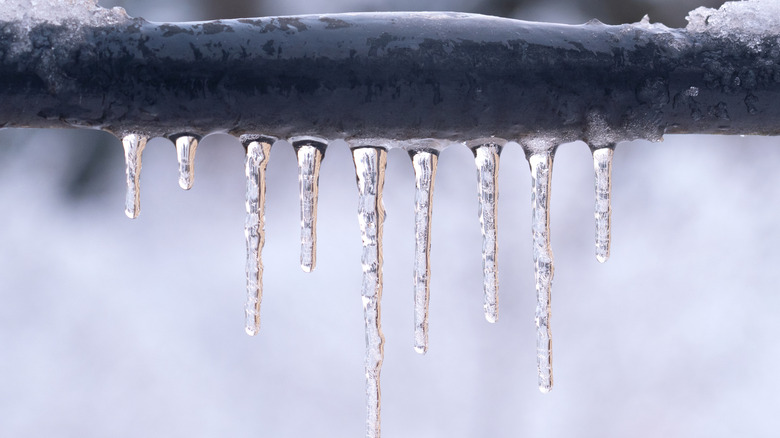
The winter season has officially begun, and it's time for folks to prepare for dropping temperatures. This can mean ensuring snowblowers are in working order and having furnaces checked before turning the heat on. One element that can be overlooked is home plumbing, which can be a problem in freezing temperatures. While all pipes could theoretically sustain damage during the colder months (and no, boiling water is not the answer to frozen pipes), some are more susceptible to cold damage than others.
The pipes most at risk in the wintertime are those on the outside of the house, such as those connected to spigots and those that run along exterior walls without insulation. Also, any that run to water-intensive outdoor elements like swimming pools and sprinklers. Inside the house, you should also be mindful of the pipes in areas that may not be as climate-controlled as others. This includes pipes that run through crawlspaces, basements, attics, and garages. If the pipes in your home freeze, it can lead to expansion, cracking, and other similar forms of damage. To avoid such costly repairs, it's a good idea to winterize your home plumbing, protecting as much of your house's pipework as possible.
What winterizing entails for home plumbing
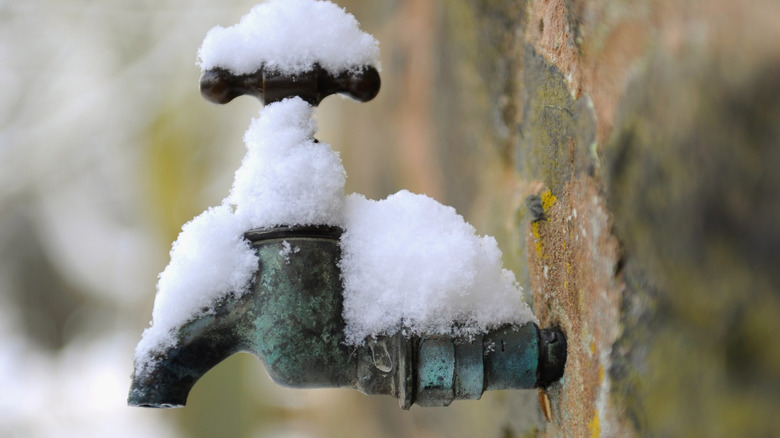
Depending on the house in question, winterizing can look different. In the case of a summer home or somewhere that won't be lived in during the winter season, this primarily entails draining water from all of the pipes. Turn off the water main, turn on all faucets, and flush all toilets to remove leftover water from the system. This way, leftover water doesn't freeze, expand within the pipes, and cause leaky cracks and broken seals. In a house you're living in for the winter, this step isn't required, seeing as you'll continue to use most of your plumbing throughout the season.
For pipes needed throughout the winter, their seals should be checked and repaired if needed. This is especially true for external pipes, as poor seals around them as they exit the home could let in cold drafts, allow inside warm air to escape, and expose more pipe to the elements. External pipes should be insulated, and hoses should be disconnected, since they can retain water, which will freeze and harm the attached pipe. Before removing hoses, though, there's some draining to do. Similar to how a whole house-worth of pipes can be winterized, external pipes can be cleared on their own. They can be isolated with a designated shut-off valve and then opened so that they can drain out.
Winter prep is so much more than getting must-have gadgets to keep your house warm for the season. It's also about taking good care of what you have to keep it safe. Plumbing will last you, but it should be well taken care of, particularly in its most vulnerable areas.