

Is WD-40 Safe For Wiper Blades, Or Will It Ruin Them?

There are a few products that are worth keeping in your garage, with WD-40 being one of the most prominent. The original WD-40 multi-purpose solution, as the name implies, can help you out in a host of scenarios. It's ideal for everything from cleaning off dirt and grime to getting stuck metal parts moving again. However, as versatile and helpful as it is, this product does have limitations. More specifically, there are some materials it shouldn't be used on, or else its downsides will swiftly outnumber the desired benefits.
For instance, if you want to use them to clean your windshield wipers or get them moving without squealing, you shouldn't. One of the materials WD-40 shouldn't come into contact with is rubber. While it is good for cleaning, WD-40 is equally effective at removing moisture from a given area. This means when it's sprayed on the most common rubber materials, only a few applications will dry it out and cause it to crack and break. However, WD-40 does make a specific product that works: the WD-40 Specialist Silicone Lubricant. Unlike the original formula, this silicone variant is safe for rubber and can actually help keep your blades pliable.
While it's a given you'll have to replace them eventually, it's still a good idea to follow the right steps to maintain your windshield wiper blades to get the most from them. That includes using the right WD-40 solution to clean them or avoiding the brand entirely.
The right ways to clean your windshield wipers
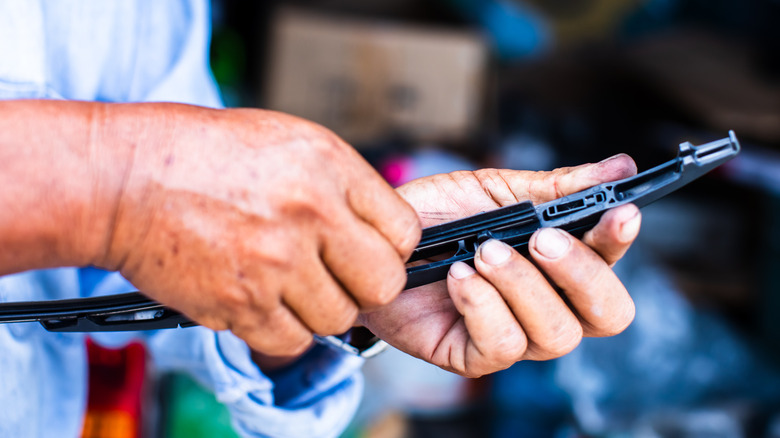
Even though the classic WD-40 formula isn't effective for windshield wipers, WD-40 Specialist Silicone Lubricant spray works pretty well. Not only will it go a long way toward cleaning and protecting the rubber elements of your wiper blades, but it will also work much like standard WD-40 on metal, providing smoother movement for longer periods. Ideally, this means less streaking, sticking, and whining when the wipers are in use.
Alternatively, if you're still unsure about using WD-40 product on your wipers, you can clean them by other means. The easiest and most cost-effective route is to use water, a clean rag, and a little mild cleaning detergent, or even windshield wiper fluid. Simply lift the wiper up, apply your chosen cleaning solution to the cloth, and wipe the blades down. For more stubborn debris, a sponge or soft toothbrush should do the trick. Rinse with clean water and dry the wipers with a clean cloth, and you'll be all set. Of course, if the blades are already cracked, leaving large areas of the windshield uncleared or making a lot of noise, you're best off replacing them rather than rehabilitating. Fortunately, replacing your windshield wipers is neither hard nor expensive.
Windshield wiper care is key to both their long-term functionality and your safety on the road. As long as you don't use the wrong cleaning products, like standard WD-40, you shouldn't have any trouble getting the most use out of them.