

Expecting Snow? Here's The Best Time To Break Out The Shovel
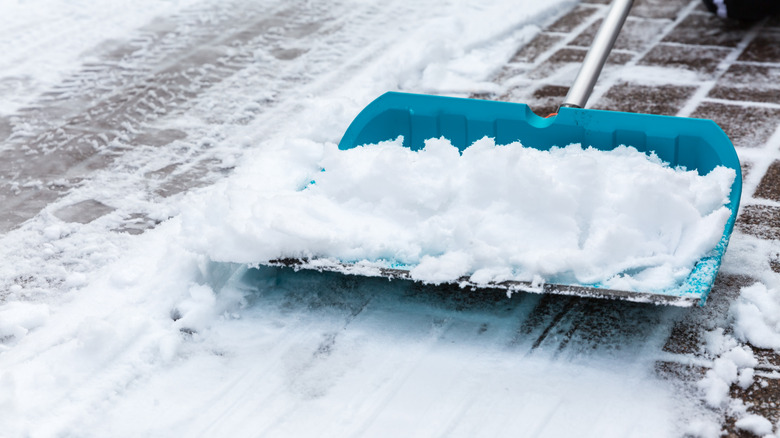
Snow in the winter often meant a day away from school, snowball fights, and snow angels. As we get older, though, those pesky life responsibilities start to pile up around us. If heavy snowfall is a common occurrence where you live in the winter, it's more likely to mean difficulty getting the car started, the hard reality of getting all that snow out of the way of your driveway in the first place, and the frequent dangers that can come along with shoveling snow. In December 2019, The Washington Post reported that approximately 100 deaths in the United States were caused by shoveling snow. The primary cause of these deaths is heart attacks, the outlet explains. The hard work, coupled with potentially freezing conditions, can make the activity particularly dangerous, as it strains the heart and puts you at risk of other conditions, such as hypothermia, too.
As such, the National Safety Council highlights the importance of lifting with your legs, not overfilling a shovel, and, where possible, 'leading' the snow with the shovel rather than lifting it high. It's a job that's best completed as efficiently as possible, with you exposed to the elements for as short a time as possible, without overexertion. The key, then, is to shovel at the best time. This time will depend on factors such as the condition of the snow in your area, the schedules of local plowing, and how capable you are with a shovel in the first place. All of these things are vital concerns for your safety and that of your family, so let's take a closer look at how they might affect the job at hand. After all, while there are some valuable uses for snow shovels when it isn't snowing, this is their time to shine.
The plow is your friend, not your enemy
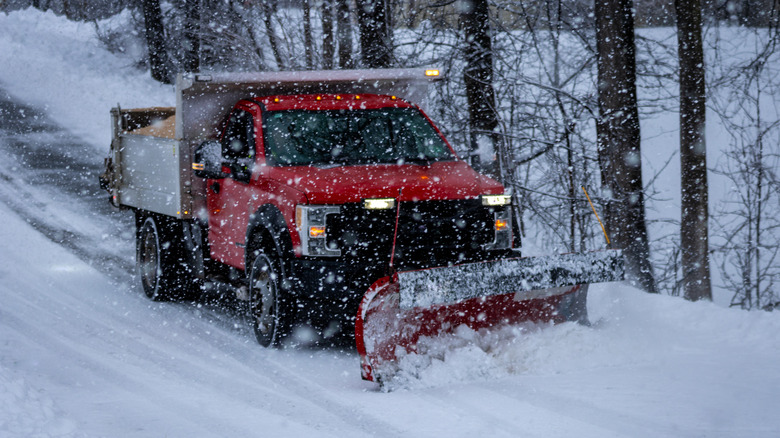
Plows do a large-scale, efficient job of clearing roads, moving large amounts of snow out of the way. Often, though, these large-scale efforts to clear highways and roads can make the remaining snow more challenging to deal with when it comes to shifting it from your driveway. The force of a snow plow can compact the snow it's moving, with the end result being that it's heavier and potentially much harder to move by hand using a shovel. With this in mind, it's important to be aware of the plows' schedule and act accordingly. As Wellesley Public Works puts it, "If possible, wait until the street is plowed before shoveling the end of your driveway. Most roads are pushed back several times and take 3 to 4 hours before the plow trucks have completed their routes."
This may not always be possible, if you're unsure when the snow plows will be by, or you're in a hurry before work, for instance. The critical thing to remember, though, is that this is a preferable route to take when you can. In the entrance to your driveway, after all, the danger is that the plow will deposit compacted snow, thereby doubling your workload. There's nothing more discouraging than getting back inside from the cold, warming up, and then realizing that you'll have to grit your teeth and head back out before there's more snow to take care of. Some cities have developed creative ways to help facilitate this. For instance, in Portage, West Michigan, the Portage Trax app was introduced in early December 2025. This provides real-time information about the snow plows' routes, when certain streets are being plowed and when they're due.
All snow is not created equal
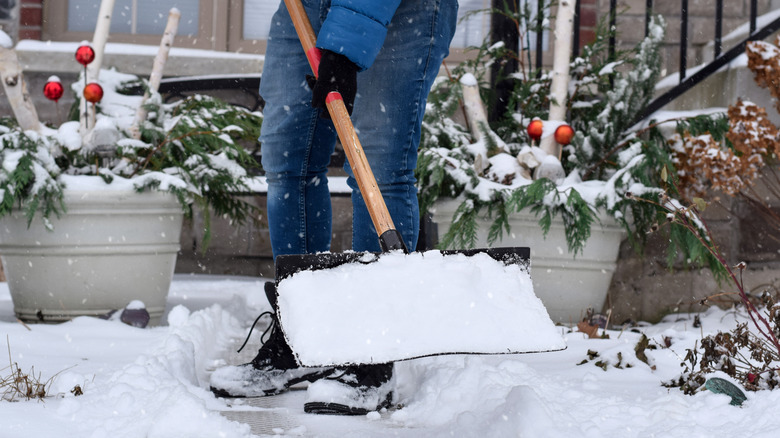
Freshly fallen snow is the lightest and most manageable, and so the priority should be to shovel first thing in the morning. This raises the risk of further snow throughout the day, effectively erasing your hard work, but the alternative is often shoveling snow that has settled and become compacted, whether from the work of plows or simply by passers-by in a high-traffic area. Managing the strenuous physical work of shoveling snow is all about understanding your fitness level and embracing the concept of working smarter, not harder. Another element of that is to tackle the problem while it's still fresh. If you can clear a path while it's still snowing, and follow up again soon after it's stopped, you'll have the best effect, and some salt afterwards can prevent some of the dangers of ice forming (it's best to avoid using water because of that danger).
Snow blowers can be used as an alternative to shoveling, but bear in mind that they can be quite hefty machines themselves and should be used as per the manufacturer's instructions for safety and efficiency. Note that there are some serious mistakes to avoid when using snow blowers. Ideally, snow will be lighter and fresher when shoveling, in which case a wider, plastic shovel can be the most effective tool to tackle it. If you've no choice but to try and shift heavier snow, a metal model can make it more manageable. In either case, though, take great care with the weight, just as you would when moving heavy boxes, for instance. As William Beaumont Health's director of preventative cardiology and cardiac rehabilitation, Barry Franklin, put it to USA Today, "It's important that older people simply don't go out and shovel and clear heavy, wet snow."