

Florida Man Claims Tesla Sparked Fire That Completely Destroyed Home
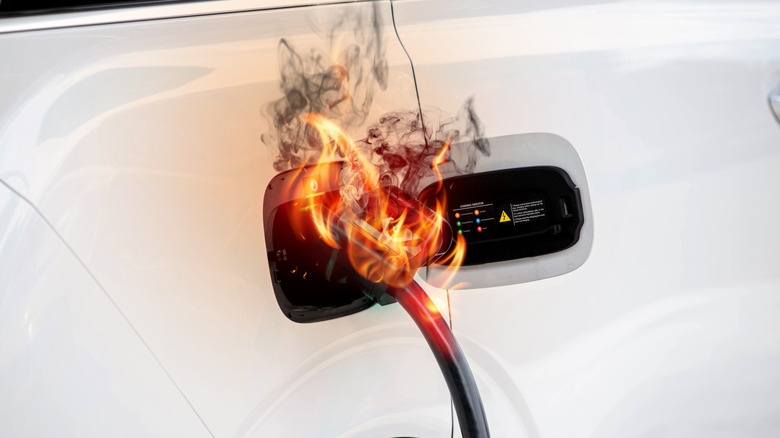
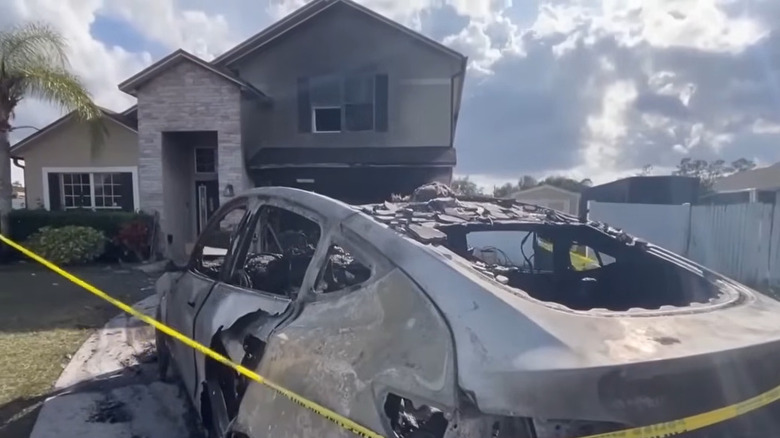
A family from Sanford, Florida, had a close shave in early December 2025. On December 2, the Raky's family home was destroyed by a fire that may have its origins in the family's Tesla. According to a WESH 2 report, the Sanford Fire Department believes the origin of the fire to be "at or around the Tesla charging station in the garage," although nothing has been confirmed at the time of this article.
Raky was woken up around 5 a.m. when he heard the distinctive sounds of a fire. He followed the crackling sound to his garage, where his Tesla was charging at the time. Raky told reporters that he saw black smoke coming from the bottom of the car before he raced back inside the house to wake up his wife and four kids. His oldest daughter, Lily Raky, had to jump out of a second-story window to escape the fire, but everyone — including the family's dog, which a police officer rescued — survived without any injuries.
Are Teslas a fire hazard?
Tesla has been fighting reports that its cars are more prone to catching fire than other vehicles since 2013. Back then, Tesla's charging system was accused of starting a garage fire in a Seattle, Washington home. While Tesla denied that the vehicle or its charging system started the fire, there have been many similar reports since then. This includes a Tesla's battery compartment spontaneously combusting while the car was traveling at highway speeds in Rancho Cordova, California, and a massive garage fire in Des Moines, Iowa that was possibly caused by the homeowners' Tesla. There are also plenty of news stories where Teslas involved in collisions end up catching on fire — but is a Tesla more likely burst into flames compared to other vehicles?
In general, electric vehicles most often catch on fire due to their lithium-ion batteries. While these batteries are found in many household items and are generally safe, they can combust if damaged. However, there is no evidence that EVs catch fire more frequently than their gasoline-guzzling counterparts. In fact, EVs are said to catch fire less often. However, if a Tesla catches on fire, it could be more difficult to put out since the lithium-ion battery inside is massive and cannot be easily removed. The results are also more catastrophic due to the flammable gases released, which can cause chain reactions, forcing firefighters to devise new ways to fight EV fires.