

Speed Makes Some Fighter Jets Easier To Track, Not Harder: Here's Why
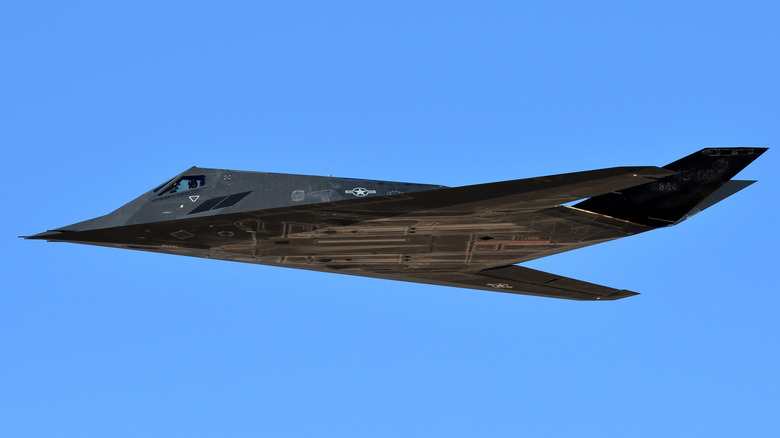
Military fighter jets are among the fastest aircraft in the history of aviation. But for some of these planes in the early 1990s, their incredible speed made them a target for enemy radar. One example is the F-117 Nighthawk, an early-era stealth fighter jet that's retired but is still flying, which generated immense heat and aerodynamic fluctuations while in flight. This essentially gave away its position in the sky, typically happening at very high speeds. When it did, the fighter's ability to stay hidden was gone.
The problem was with the stealth aircraft's overall design. The combination of the plane's shape, the use of radar-absorbent materials, and its exhaust created a distinct signature. That signature became more apparent the faster the fighter jet flew until it became fully detectable on radar. Plus, enemy radar capability was improved to better track stealth planes, which only made the problem worse. Because of this, pilots were forced to fly below supersonic speeds in order to avoid detection. It was the only way they could maintain any degree of stealth and remain safe in the process.
Another stealth aircraft, the B-2 Spirit, dealt with similar problems; like the Nighthawk, it had no afterburners. This was done intentionally to help reduce the radar footprint the planes were leaving behind. But with this focus on stealth, these aircraft typically avoided high-speed maneuvers, which limited their effectiveness. Pilots had to maintain a narrow flight path, and any deviation from that could spell trouble.
The evolution of stealth aircraft
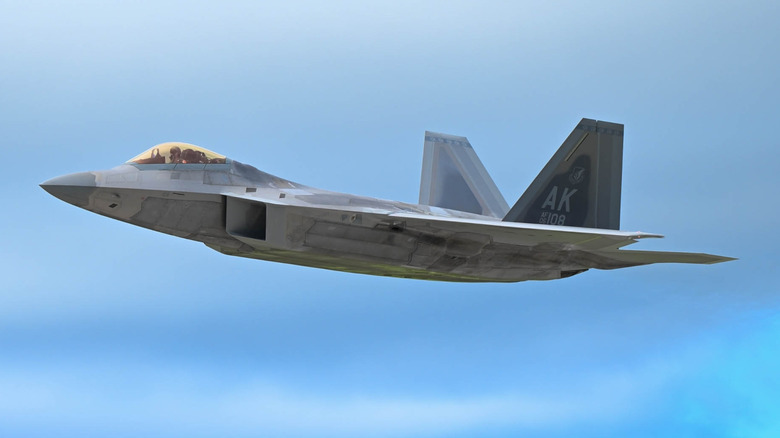
While early stealth aircraft faced some problematic trade-offs for the sake of staying hidden, the technology did improve in the years afterward. Jets became more advanced, thanks to improvements in airframe design and exhaust, both of which meant that fighters no longer had to sacrifice speed for stealth. By 2005, engineers had solved many of those problems, as the new F-22 Raptor became the stealthiest fighter jet ever built.
Radar-absorbing materials were improved as well, and engine placement changed from what it was before. This allowed pilots to alter course as needed, eliminating the need to stay within the narrow flight envelopes that once restricted them. As a result, these aircraft overcame the issues they once had. Plus, they did so without losing the advantage of stealth, which was what made them special to begin with.
Today's modern stealth fighters are some of the most advanced aircraft in the world. The F-22 Raptor remains an elite fighter, using powerful engines and a thrust that gives it the ability to maintain supersonic flight without using afterburners. The F-35 Lightning II, one of the 17 best fighter jets in the world today, is equally impressive, with the ability to take on a variety of missions. That includes everything from air-to-air combat, strikes, and more. Both of these aircraft are the epitome of stealth technology, showing just how far that tech has evolved.