

The Reason Why You Can't Fix Turbo Lag In A Diesel Engine
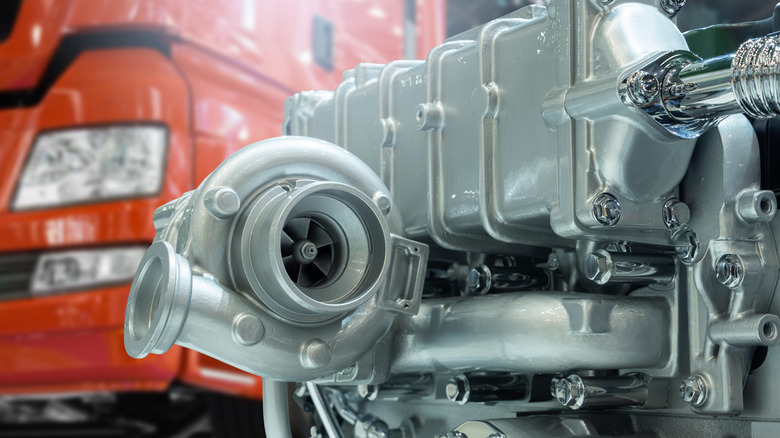
About a decade after Rudolf Diesel came out with the namesake engine, someone had the great idea to stick a turbocharger onto the diesel engine, creating the turbo diesel. As it turned out, the turbocharger was one of the best things to happen to the diesel engine, allowing it to have a more usable power band, and it turned out to be helpful for emissions control as well.
Even then, there's one thing that plagues just about every turbodiesel engine, particularly those with single turbochargers, and that's turbo lag. Turbo lag is a phenomenon that occurs when you're out of the rev range of the turbocharger, resulting in a significant drop in performance, until there are enough revs to spin up the turbo to give you the performance you need.
Can you get rid of it? The short answer is no, you can't entirely stop a turbo diesel engine from lagging, but there are a few different methods to increase the usable powerband to give you more freedom and more usable power.
What causes turbo lag on diesels?
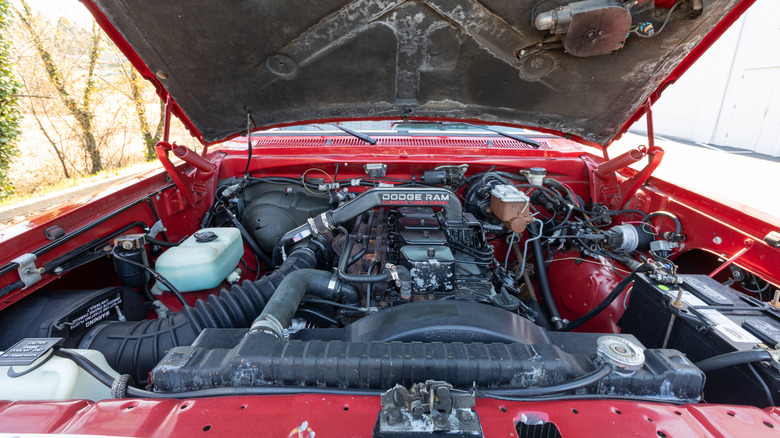
As mentioned, turbodiesels allow the engine to produce more power, and they make the power much more usable, not to mention the emissions benefit. Usually, a twin-turbo setup would have one turbocharger taking care of the lower part of the rev range, while a larger turbo would take care of boost at higher revs. This method was notably adopted by the E60 BMW 535d, as explained by Jeremy Clarkson on "Top Gear."
For single turbo units, they don't have this sort of luxury, but it's not just their inherent design that causes lag. Diesel engines, as you're likely aware, are dirtier than gas engines, and they like to clog things like DPFs and EGR valves. Carbon deposits are a common issue with older diesels, and they can build up over time and decrease boost.
Diesel engines are also prone to clogged injectors due to, again, the dirtiness of diesel fuel. Malfunctioning injectors can mess up the air-fuel mixture, which will hamper power delivery. Finally, this one isn't unique to diesel engines, but boost leaks are a common occurrence. A turbocharging system includes a lot of pipework, and these pipes can develop cracks or holes, allowing the compressed air from the turbo to escape, which can lead to lag.
It's pretty easy to prevent lag
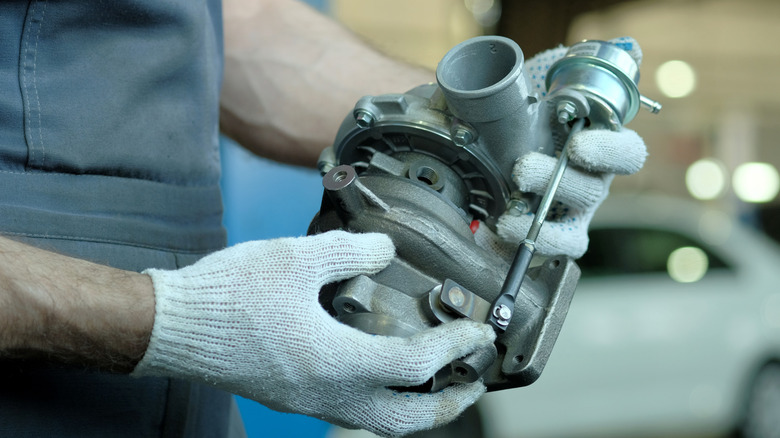
All of this might sound a little scary, but it's easy to prevent or fix. One common solution to turbo lag is replacing or repairing the fuel injectors. This can be a really expensive repair, depending on how many injectors you have, but new injectors mean that your engine will be getting the right amount of fuel, and that means the air-fuel mixture won't be out of whack. In theory, that should mean less lag.
Some other notable methods to decrease turbo lag are a tune, replacing the turbocharger altogether (assuming it's faulty), and, perhaps unsurprisingly, proper maintenance and using high-quality fuel. That last one is standard for anything, really, but it'll pay dividends for a healthy turbocharger and less turbo lag on your diesel engine. If you're particularly into modifying your car and messing around with aftermarket upgrades, an improved variable geometry turbo, or even a twin-turbo conversion (if available) can get the job done for you.