

Here's How Much A 2020 Lexus IS Depreciates After 5 Years
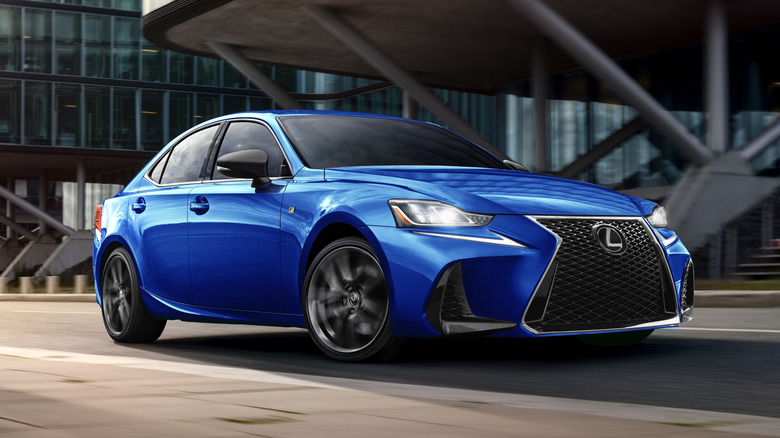
The modern Lexus lineup, like so many other brands, is increasingly laden with crossovers and SUVs. However, the Lexus IS is a bit of a throwback. It's a rear-drive, four-door sports sedan with a lineage that goes back to the original 2001 Lexus IS 300, which was a rebadged version of the Toyota Altezza. Though the IS has evolved a lot since then, it's nonetheless carried on the same sport sedan formula. It has continued to offer buyers the power of a naturally aspirated V6 engine in an era when V6s have become increasingly rare across the Toyota and Lexus lineups.
The IS model itself has even been rumored to be discontinued, though Lexus recently squashed those rumors (at least for the time being) by debuting a refreshed version of the car for the 2026 model year. So, with the Lexus IS and the sport sedan segment itself on the endangered species list, what does this mean for the resale value of an older model IS? We looked into the depreciation of a five-year-old, 2020 model year Lexus IS and found, not surprisingly, that the car has held its value quite well. While obviously the exact value will depend on trim level, condition, and your location, an expected five-year residual value comes in around 60%.
Why the Lexus IS retains so much resale value
The great resale value of the Lexus IS is not unexpected at all. The IS has had a strong following since its debut, and it's regularly ranked among the Lexus models with the best resale value overall. If anything, the fact that the IS is part of a shrinking segment on the new car market has only strengthened its position on the used car market. Part of that strong demand has to do with the fact that the Lexus IS hasn't really changed a lot in recent years. In fact, the current third-generation Lexus IS has been on sale since the 2014 model year.
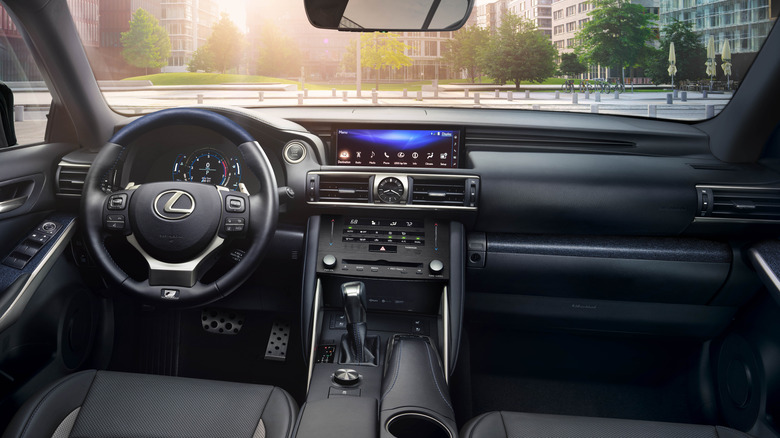
Yes, there have been changes and updates along the way, including a fairly heavy styling and interior refresh for the 2021 — but beneath those fascia and cabin changes, the car is still on the same third-gen IS platform that's been on sale for over a decade now. That means while a brand-new Lexus IS might not have all the same high-tech features as the competition, a used one has a lot of appeal because it hasn't been made obsolete by the newer model years. There might be more advanced infotainment or safety aids, but the actual driving experience between a 2014, a 2020, or a 2026 IS 350 is not going to be fundamentally different. Going back even further, the horsepower rating of the IS 350's 3.5-liter V6 has only climbed by five horsepower over the last 20 years.
A popular sedan in an SUV world
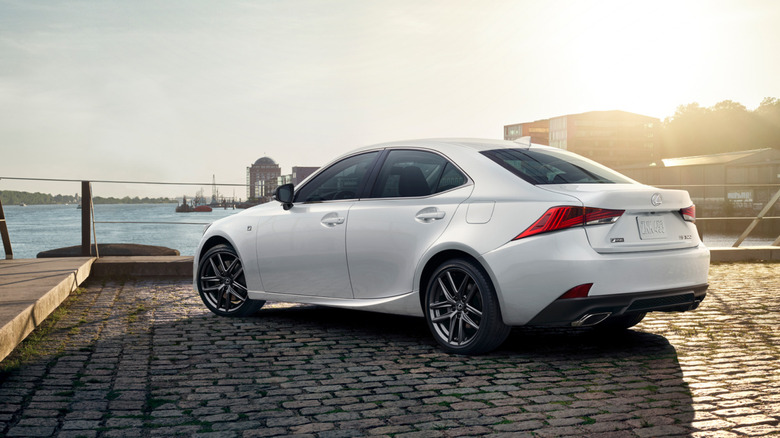
For the 2020 model year, you could get an IS with either a turbocharged 2.0-liter four-cylinder or a 3.5-liter naturally aspirated V6, and naturally, the more expensive, more powerful IS 350 will be worth more five years later. As for the specifics of depreciation, using a 2020 IS 350 as an example, iSeeCars shows a five-year residual value of 60.8%, while CarEdge shows 60.37%. In either case, those numbers are better than typical for its class, which shows an average five-year residual value of less than 50% for compact luxury cars.
Performance-wise, the biggest change to the Lexus IS in the 2020s came with the addition of the highly unique, V8-powered IS 500 F Sport, but that didn't happen until the 2022 model year, and the rarity of those will likely give those cars an extra boost of cult appeal in the coming years.
When looking at the popularity of the IS more broadly, you have to consider that one of Lexus' big selling points was always reliability compared to the competition, even if that meant performance or technology weren't quite as strong. Even back in 2020, reviewers noted that the IS 350 felt like it was aging behind the competition in terms of performance and features, but as its excellent resale value has shown, in the long-term view of a used car, "old tech" doesn't have to be a bad thing at all.