

How To Keep Your Outdoor Faucets From Causing A Massive Winter Repair Bill
We may receive a commission on purchases made from links.
There's a pretty long list of things one should do to help protect their house and yard from the potentially damaging effects of winter weather. For many, that includes tending to things like birdbaths, gutters, windows, and drains. If you've got gas-powered yard care gear in the garage, you'll want to take care of that too.
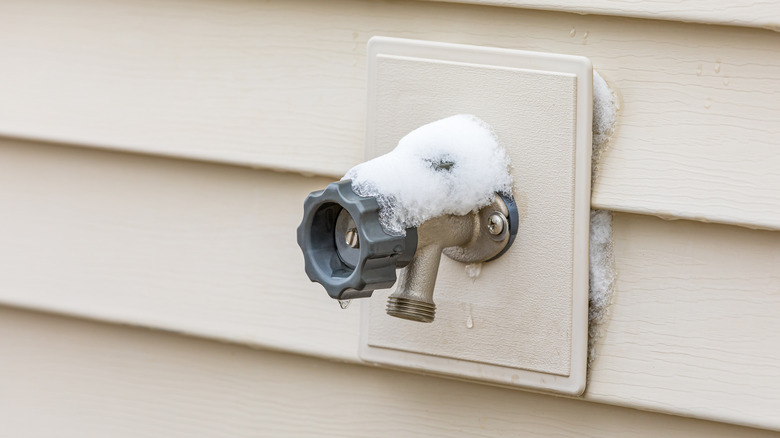
If you are a new homeowner, you should know that snow, ice and freezing rain can absolutely ravage things like your roof, gutters, window frames, and, really, any fixture that exists on the exterior of your house. Exterior faucets are, understandably, particularly susceptible to the effects of winter weather. And we'd wager there are too many homeowners out there who've found out the hard way just how problematic it can be if you do not properly take care of that exterior faucet before the onset of freezing temperatures and icy winter weather.
If you're on the fence about tending to that exposed faucet, you should know that failure to do so may well result in freezing pipes or spigots with even short-term exposure to sub-freezing temps. While pipes can sometimes be unfrozen, things get even more dicey when ice and snow begin to accumulate on the exterior features. Should the pipes or spigot rupture, the damage could include flooding inside your home, as well as water damage to your home's exterior. Just FYI — repairs for such issues are pricey to say the least. Here's what you can do to help prevent those problems.
What to do to prevent burst pipes in winter
Taking care of your exterior faucets ahead of winter can be done without much effort on your part. Interestingly enough, one of the first steps you should consider can even be undertaken in the relative comfort of your home's interior. That step is to stop the flow of water to the exterior spigot altogether, which you can do by simply turning off its water supply from inside.
That goal can typically be achieved with the turn of a lever or knob, which should be located on one of the pipes that connect water to the exterior faucet. These features are typically located in a home's basement, crawlspace, or utility room. Once you've closed the water supply from the inside, you'll also want to go outside and let the water that has already accumulated inside the pipe drain out completely. While you're there, do the same with any hoses attached to the spigot, and be sure to remove any smart faucet gizmos, as they also need to be stored for winter.
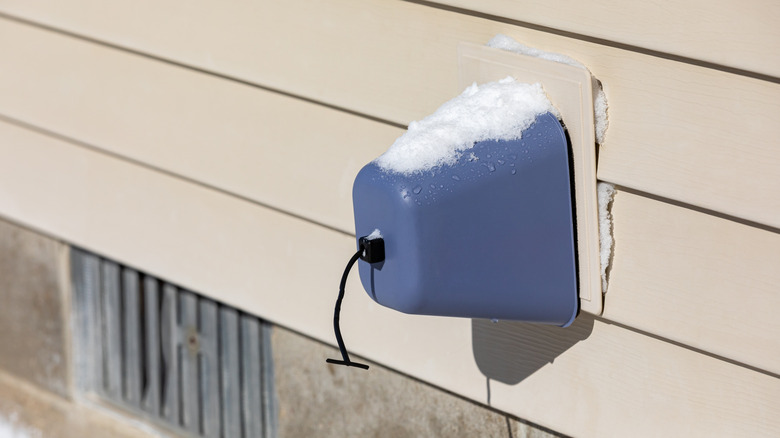
Once that step is complete, you should also find a way to cover and/or insulate the exterior spigot, protecting it from sub-freezing temperatures and accumulated ice or snow. You can purchase covers for as little as $5 through Amazon or at most hardware stores like The Home Depot. When you consider the grief they may save you, the cost is more than worth the investment. But if you just don't want to spend the money, wrapping a towel covered with a plastic bag can be an efficient DIY method to achieve the same effect.