

These US States Have Made It Illegal To Live In An RV, Even On Your Own Property
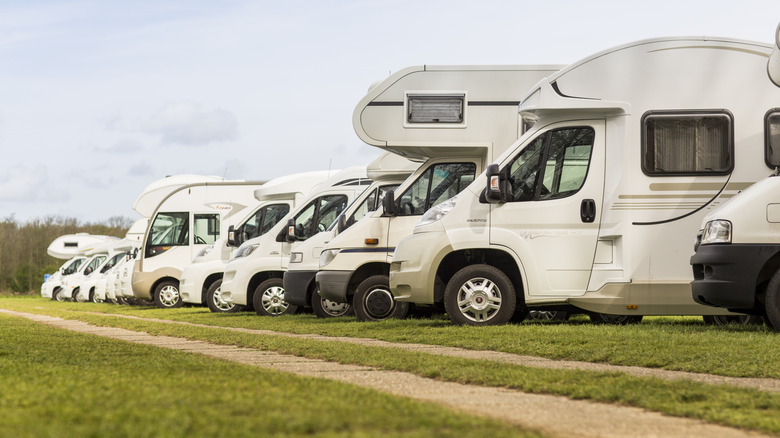
For a lot of people, the idea of a recreational vehicle, or an RV, which is different from a camper, seems incredibly tempting, no matter the direction you take it in. It's either a great alternative to a regular home for people who like to explore and see the world, or an excellent investment as a home away from home, giving you a slew of opportunities and, not to mention, accommodation on your own terms.
Of course, one important thing to consider when shopping for an RV is parking. They're not exactly small vehicles, so you need to ensure that your property is large enough to accommodate the whole thing. Irrespective of whether you own a home or not, if you decide to just live in the RV for a little while, or maybe even permanently, you might want to stay away from the U.S. states of Michigan, Hawaii, Indiana, and Delaware, as they have made it illegal to live in an RV — even if you're parked on your own property!
Is living in an RV allowed elsewhere?
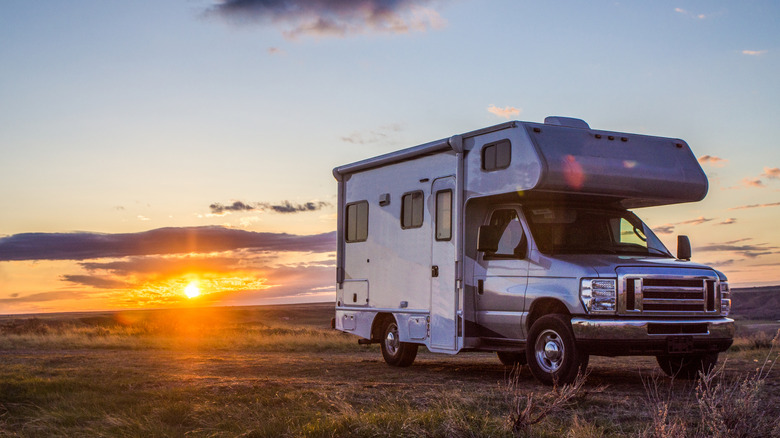
The aforementioned four states have explicitly banned living in an RV because, according to state law, RVs are either vehicles or temporary accommodations, not permanent residences. The state of Hawaii, for example, views RVs as just regular vehicles — ones you don't need a special license for — like any other car or truck, and state law says that "No person shall use any vehicle for purposes of human habitation." The only way to get around that is to take your RV and frequently move from campground to campground. Meanwhile, the state of Indiana sees it as a temporary residence, so it can't be your full-time home.
Delaware is, arguably, the strictest of all, as, along with the sentiment that RVs are not permanent residences, the state also has strict RV parking laws, and there are only five state parks that allow you to park an RV, no more than that. A lot of the concern centers on the fact that RVs really aren't permanent living facilities, no matter how many RVers see them as such, because many don't include essential features of most houses, like plumbing.
Another way RVers are looking to get around these laws is to build dedicated RV housing and neighborhoods on private land, consisting solely of full RVs and tiny houses. That way, no law is being broken, since the state can issue an RV park permit for that particular piece of land. If you're an avid RVer, it's best to check with local state laws to see if you're allowed to live in your house on wheels permanently — states like Texas, Colorado, and Oregon have very lax RV laws, for example.