

Can Battery-Powered Snow Blowers Handle Heavy Snowfall As Well As Gas?
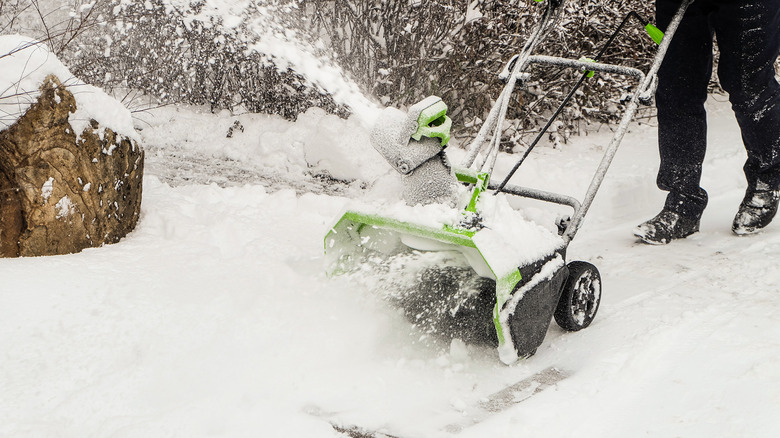
Sometimes an imperfect early implementation can sour the reputation of a piece of tech for many years to come. Look no further for an example than battery-powered tools. Before lithium-ion batteries came into the picture, tools had to run on antiquated (at least by modern standards) nickel-metal hydride batteries, which were problematic to say the least. They were bulky, prone to voltage drops, slow to charge, and generally underpowered, which didn't help battery-powered tools win out over classic gas options. Battery tech has come a long way since, as portable versions of tools such as snow blowers can give gas-powered tools a run for their money. But what if you're faced with more extreme circumstances such as heavy snowfall?
An electric system with high enough voltage, say 80 volts (such as the Greenworks Pro 80V Cordless Snow Shovel, a top-rated snow blower on Consumer Reports), can provide similar output to tools running on gas for a limited time. In other words, battery-operated tools do a good job of matching the overall power of their gas counterparts. Cordless electric blowers now also come in both single- and two-stage variants, so there's no reason to think that you'll miss out if you go down the battery route.
Are there problems with battery-powered snow blowers?
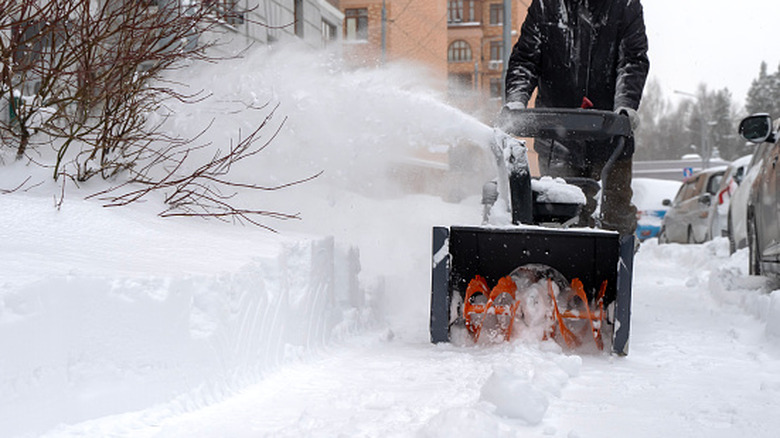
Keep in mind that even if you have the best and most powerful machine available in the world, you have to take a few precautions, and this goes for both gas- and battery-powered blowers. There are plenty of snow blower mistakes that could make the job needlessly harder, such as waiting for the snow to accumulate before you fire up the tool or not clearing out debris (a clear recipe for a clog). If you opt for a battery-powered version, be aware of its biggest downside – limited battery capacity.
One reason why professionals gravitate toward gas is that they don't have the luxury of charging batteries on a job that could last hours. Considering that a blower battery can last for 45 minutes or less, you're toast when the space you need to clear is large. So unless you pack an extra battery or two, you can either take a break in the middle of the action or reach for a shovel.
The main issue is something you can circumvent relatively easily, but you also need to remember that not all snow blowers are created equal. For instance, complaints about Ryobi snowblowers, like the 40-volt version, claim they can struggle with heavy or wet snow. Some users even said the machine can't handle accumulations that are higher than a few inches, which defeats the purpose of a snow blower. So don't just assume all electric blowers are up to the task. Invest wisely, and if the size of your yard requires it, go for the higher-powered model just to be on the safe side.