

Do Electric Tankless Water Heaters Work As Well As Gas?
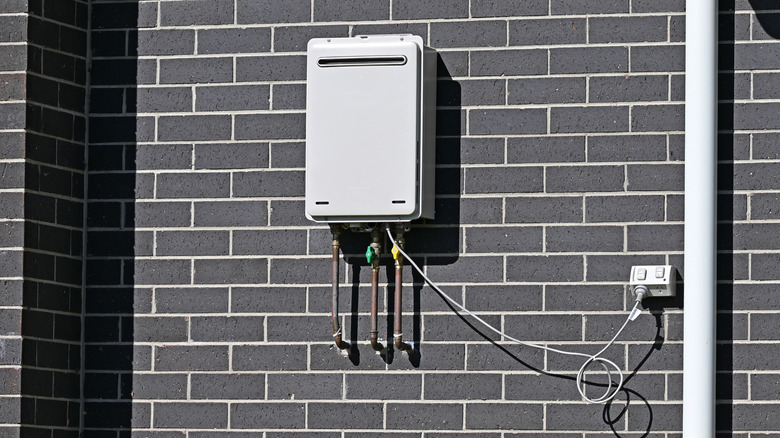
Tankless water heaters are, as the name suggests, household appliances that provide hot water on demand without relying on a storage tank. They work by bringing cold water into the device's heat exchanger, where it rapidly increases in temperature and comes out the other end as hot water. Tankless water heaters have a few drawbacks, from higher upfront installation costs to reduced performance in cold temperatures, but are arguably better than conventional tank-style heaters in several ways. Because these devices heat water on demand, owners will technically never run out of hot water. Plus, they're more energy efficient, take up less space, and have a longer lifespan, capable of lasting 20 years with proper maintenance. For the right house, a tankless water heater is a worthwhile upgrade.
There are two main types of tankless water heaters: gas-powered and electric. While both perform well, gas models are generally better. The main reason is that gas tankless water heaters can deliver higher hot-water flow rates than electric models. Flow rate is the amount of water being discharged, measured in gallons per minute (GPM). Depending on the model, a gas-powered unit can deliver 4.5 GPM, plenty to support showers, faucets, and other appliances simultaneously, all without being super taxing on electrical systems.
Gas tankless water heaters also have the advantage during cooler months. Gas heaters have burner capacities ranging from 140,000 to 199,000 Btu/h. By comparison, residential electric heaters have roughly equivalent capacities of 47,770 to 109,100 Btu/h (14 to 32 kW). This means that gas tankless models have a higher heating capacity to raise the temperature of incoming water to the desired level.
The Cost of Gas Tankless Water Heaters
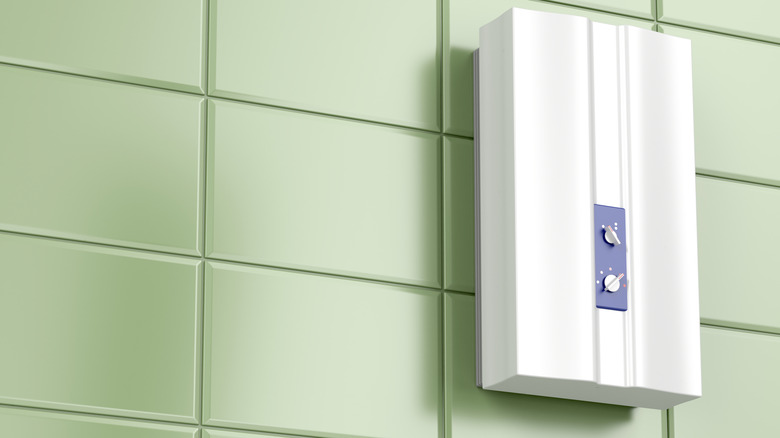
Overall costs play a huge role when buying a water heater. Upfront, gas heaters are more expensive. A typical gas model will run you $1,160 on average, and that doesn't account for installation costs. Electric heaters, on the other hand, will cost you an average of $650. That may sound great, but operating costs are higher. Many electric units require a minimum of 120 amps and multiple 240V circuits to run— that's a lot of power. To put that into perspective, a conventional electric tank water heater only needs 18.8 amps at 240V. If your house can't provide enough power, then you'll need to upgrade the electrical panel. And a full panel upgrade can cost up to $2,000.
The environment also plays an important role, as colder climates are harder on electric heaters. An electrical unit rated at 5GPM might only output 3GPM if it has to heat up cold groundwater and the power demand is high. A high-powered 36 kW unit will need to draw in 150 amps to heat up water by 80 degrees Fahrenheit. That is a ton of energy, and it puts a lot of pressure on a house's electrical infrastructure.
Back in 2019, Consumer Reports tested gas and electric tankless water heaters. They found that when the incoming water was warm at 74 degrees Fahrenheit, both the gas and electric models were able to heat and maintain the water. However, when the water was 58 degrees Fahrenheit, the electric unit struggled to deliver. It's for this reason that electric heaters are recommended for mild climates where the groundwater is warmer.
Where Electric Tankless Water Heaters are Better
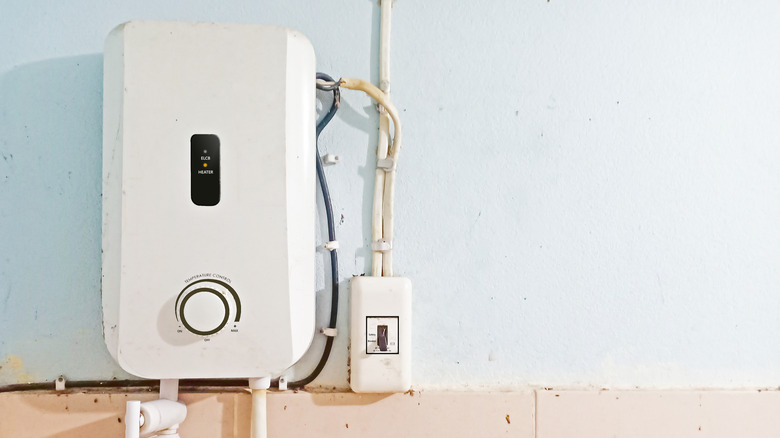
Despite their shortcomings, there are still some scenarios where an electric tankless water heater is a better option than a gas unit. For example, small living spaces or households that don't utilize a lot of hot water for appliances are perfect. Demand in these locations is low, so an electric heater won't be too taxing on your home's electrical or water systems. Also, these machines work better in warmer climates.
Although gas-powered heaters perform better in colder months, they still perform well during warmer weather. It's just that the gap between gas and electric is much smaller. Warm climates have warmer groundwater, which means that the machines can use less energy to heat water. Electric units are better in this scenario because they are cheaper upfront. Additionally, gas water heaters produce exhaust and need a ventilation system. With electric units, that's not an issue.