

Can Driving Simulators Really Help Someone Learn To Drive?
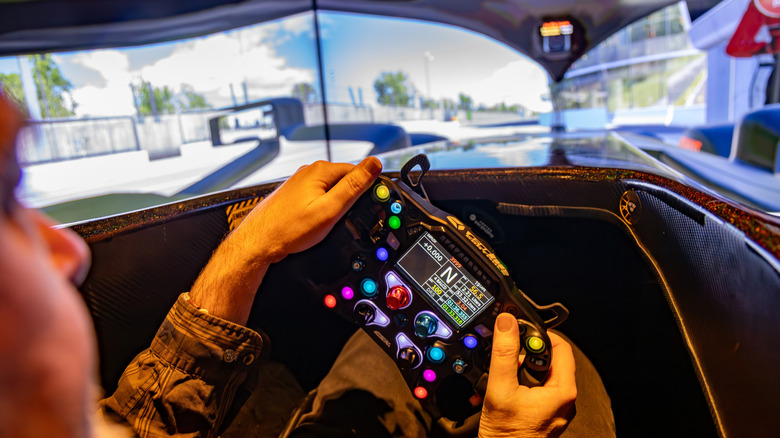
Driving simulators have been teaching tools for a very long time, both in professional motorsports and for aspiring young road drivers who have never been behind the wheel. As far back as 2010, for instance, Lexus developed what was then considered the world's most advanced driving simulator in a 15-foot-high, 56-foot-diameter dome. Formula One teams, meanwhile, spend millions on bespoke simulators to give their drivers every possible edge on real-world tracks when race day rolls around.
As that level of investment suggests, it's possible driving simulators can help develop driver proficiency, though the evidence isn't conclusive. According to a 2024 systematic review of 15 studies published in the Journal of Safety Research, training with a simulator can improve performance in virtual driving scenarios ranging from speed regulation to reaction to stimuli, but it wasn't clear from the data how well those abilities transferred to the real world.
Auto manufacturers like Lexus and Volvo (which built the "ultimate driving simulator" based on gaming tech in 2020) use simulators to help improve vehicle safety and develop autonomous driving technology. Racing schools, however, claim that simulations can contribute directly to skill building, like strengthening a driver's hand-to-eye coordination, enhancing spatial awareness, and making quick decisions in high-pressure scenarios.
Virtual practice shouldn't replace road lessons
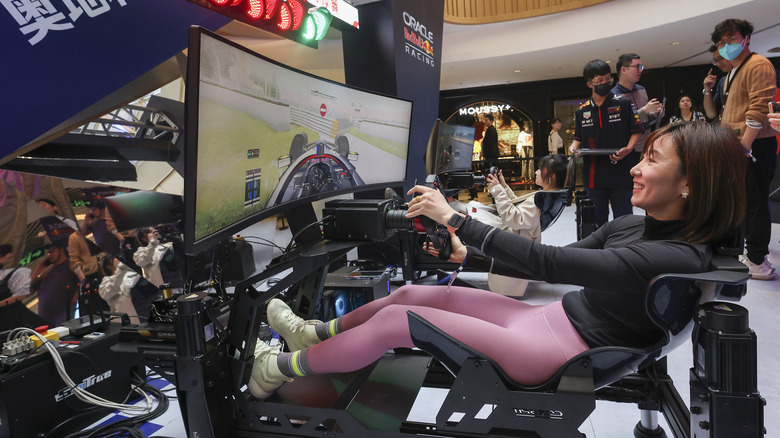
That said, simulated driving alone shouldn't be considered a wholesale replacement for real-world road lessons. The aforementioned 2024 study review, for instance, pointed out that various factors, like selection bias or weaknesses in the design of the research, could be skewing the data. They concluded that simulator training should instead supplement existing driver education programs.
While they have come a long way, even the most realistic manual driving simulators have some practical drawbacks, which may prevent certain learners from participating. A number of sims, especially those built for virtual reality headsets, can cause dizziness or intense nausea that makes it impossible for some people to use them in longer sessions.
There are some pretty remarkable success stories, however, of sim racers transitioning to professional motorsports, one of which was captured by Hollywood back in 2023. The film "Gran Turismo" tells the real-life account of a Welsh gamer who sharpened his skills playing the video game of the same name and went on to win actual racing competitions in the real world. While driving sims shouldn't replace real-world training, they can potentially be a helpful supplement.