

Not NYC Or Philadelphia: This City Has The Oldest Subway System In The US
Trains, streetcars, and subways move millions of people worldwide, yet many of us know little about them, like how trains are even able to stay on track. If you ask the average person which American city has the oldest subway system, they'll probably think of New York City's sprawling subway or another major East Coast center, Philadelphia. Guessing the former makes sense, as the Big Apple's transit system — the MTA — carries millions of commuters daily and has been immortalized in countless films and TV shows. It's also the great equalizer, where Wall Street bankers and blue-collar folk sit side by side, because even "free" parking isn't free in NYC. But if you thought NYC or Philly launched the country's first underground subway system, you'd be mistaken.
Long before Mayor George McClellan took the controls of New York's inaugural subway train in October 1904, another city on the Eastern Seaboard had solved its traffic issues by digging tunnels. That city is Boston, Massachusetts. On September 1, 1897, Boston inaugurated its Tremont Street Subway line, beating New York City to the punch with the first subway tunnel in North America. While Philadelphia wouldn't officially open its own tunnels until 1907, Beantown was already shuttling millions of commuters beneath its downtown, proving that underground electric transit wasn't a sci-fi concept, but the blueprint for modern urban mobility.
America's first subway is still carrying commuters today
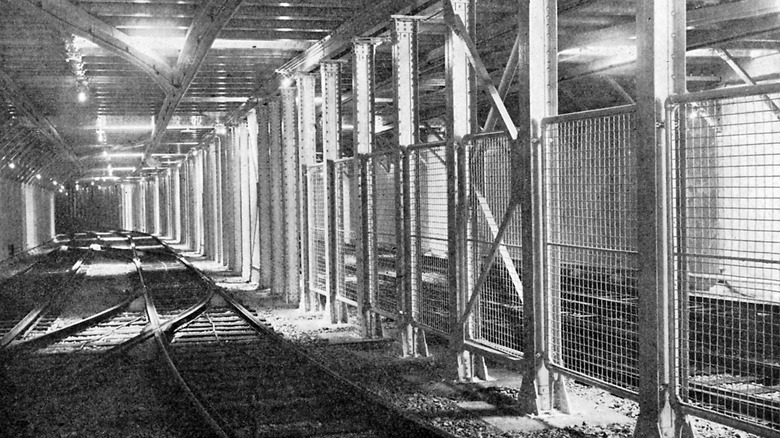
While at least 11 of the world's oldest locomotives are still operational today, only a few U.S. subway systems date back to the late 19th century. In Boston, the need for underground transit stemmed directly from its colonial city planning. Unlike Manhattan's rigid grid plan, Boston had a maze of narrow, winding downtown streets — laid out along centuries-old cow paths — which often slowed to a halt with horse carriages and delivery carts trying to cross town. As it happened, Tremont Street was ground zero for brutal gridlock. To ease these traffic jams, Chief Engineer Howard A. Carson and the Boston Transit Commission pioneered a marvel of engineering: shallow cut-and-cover tunneling, vertical steel support columns, and electric trolley power.
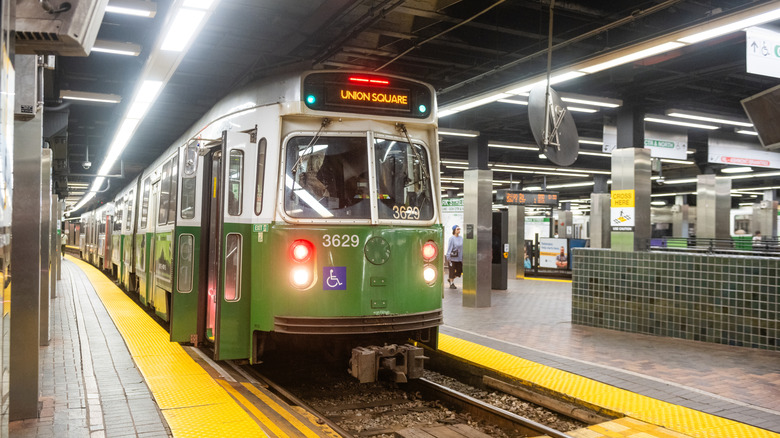
Fast-forward to 2026, and those historic 129-year-old subterranean channels act as more than a museum piece. Today, the original Tremont Street tunnels, dug in the 1890s, are actively integrated into the Massachusetts Bay Transportation Authority (MBTA) Green Line system. This serves as a main artery for eastern Massachusetts' public transit network— the fourth-largest metro transit system in the country. Those old tunnels beneath Boylston and Park Street stations safely carry thousands of Beantown commuters through the same corridors carved out at the end of the 19th century. All these years later, Boston's subway system isn't just trivia; it's a functional backbone of modern urban American transit.